Line Art Travel Poster
Your photo on top, with one line from it running on as pen drawing below
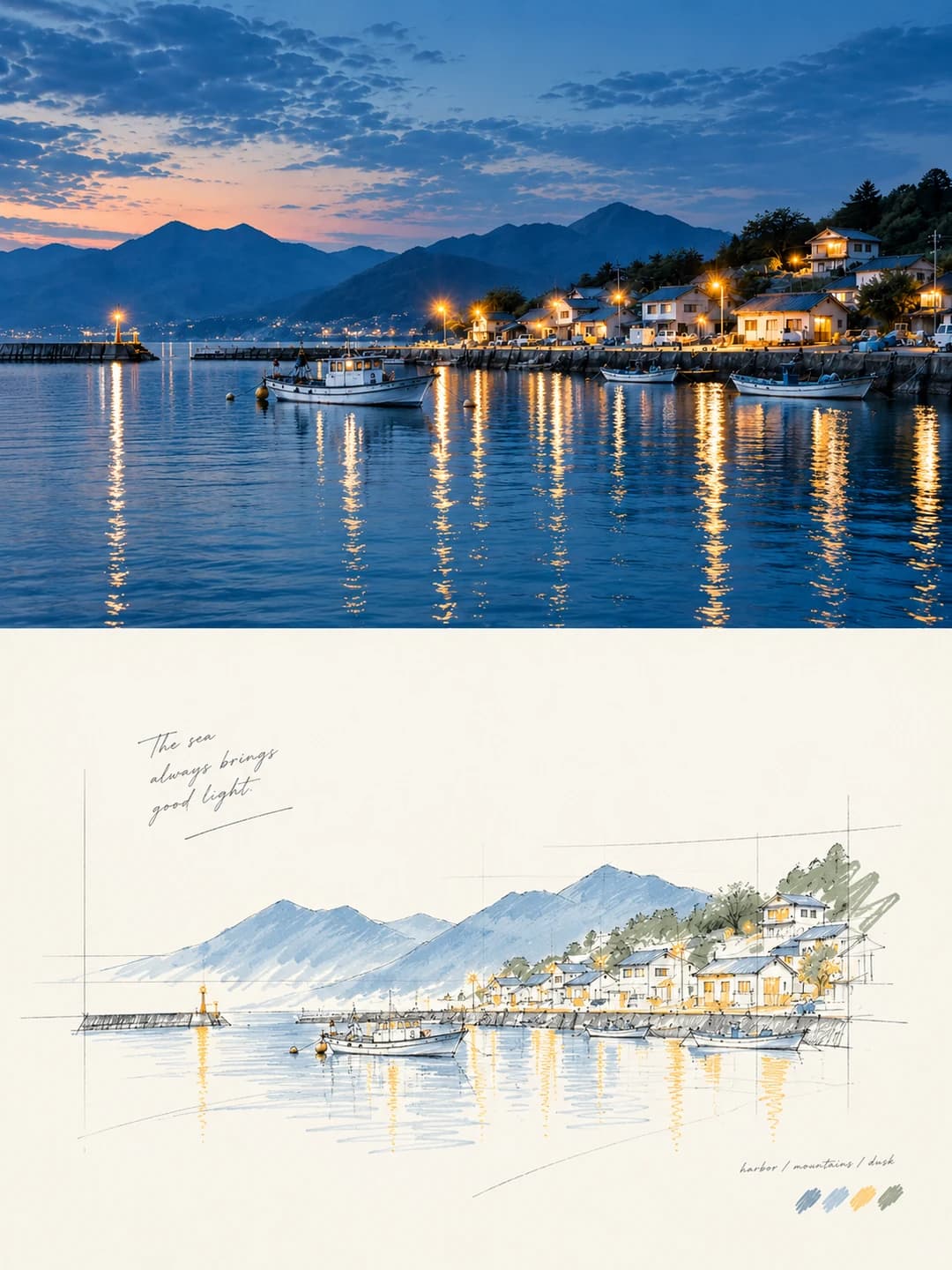
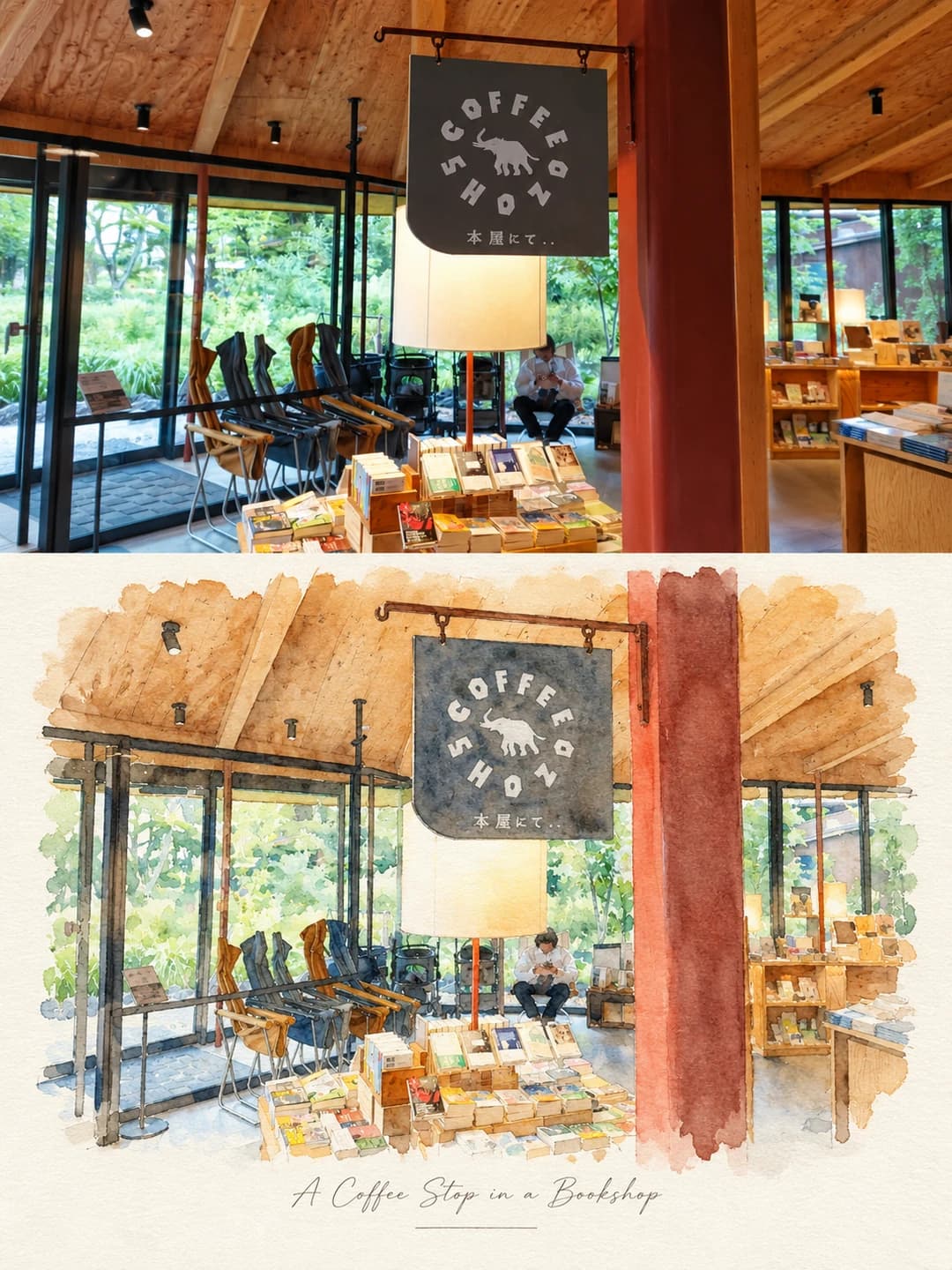
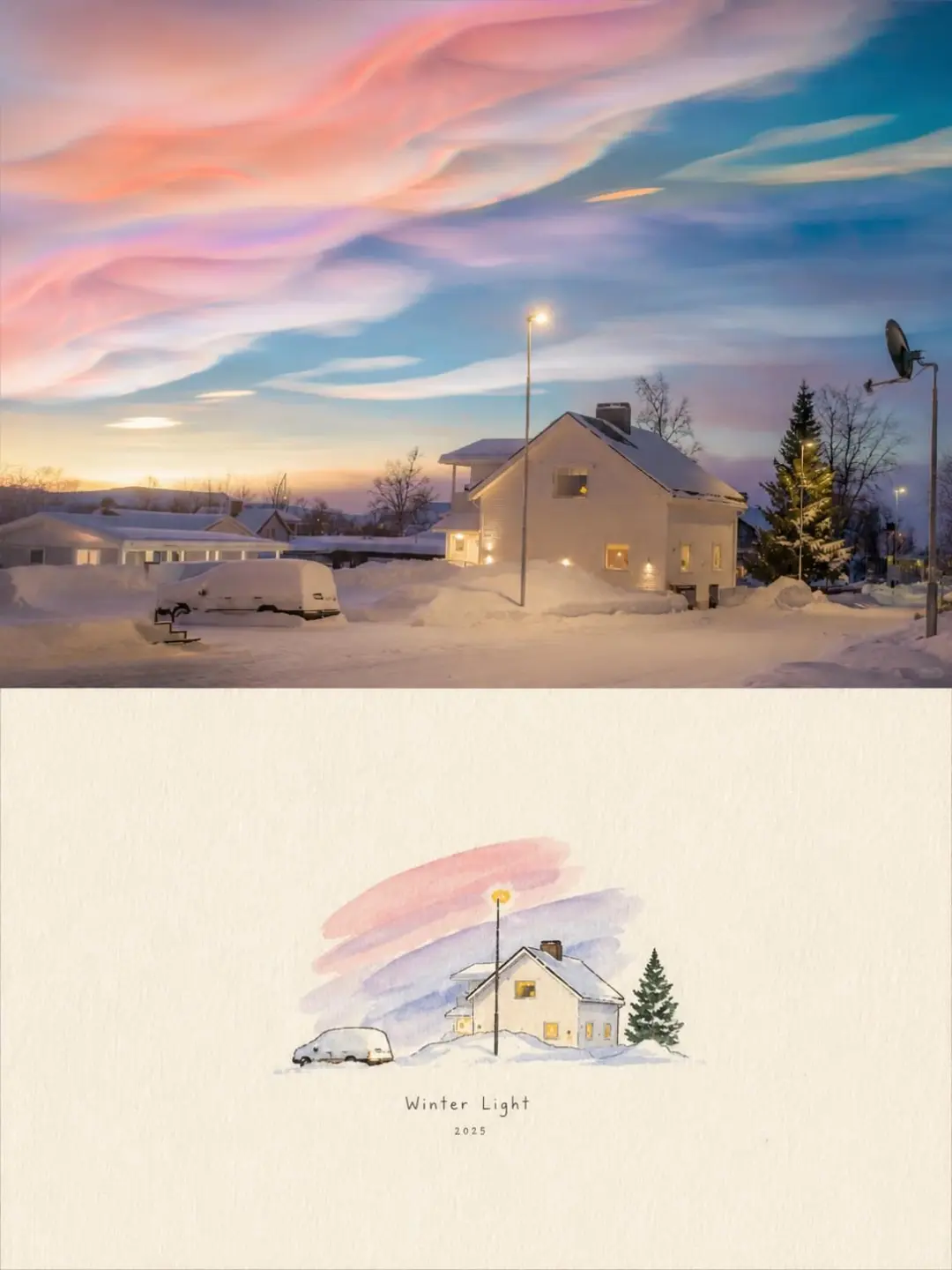
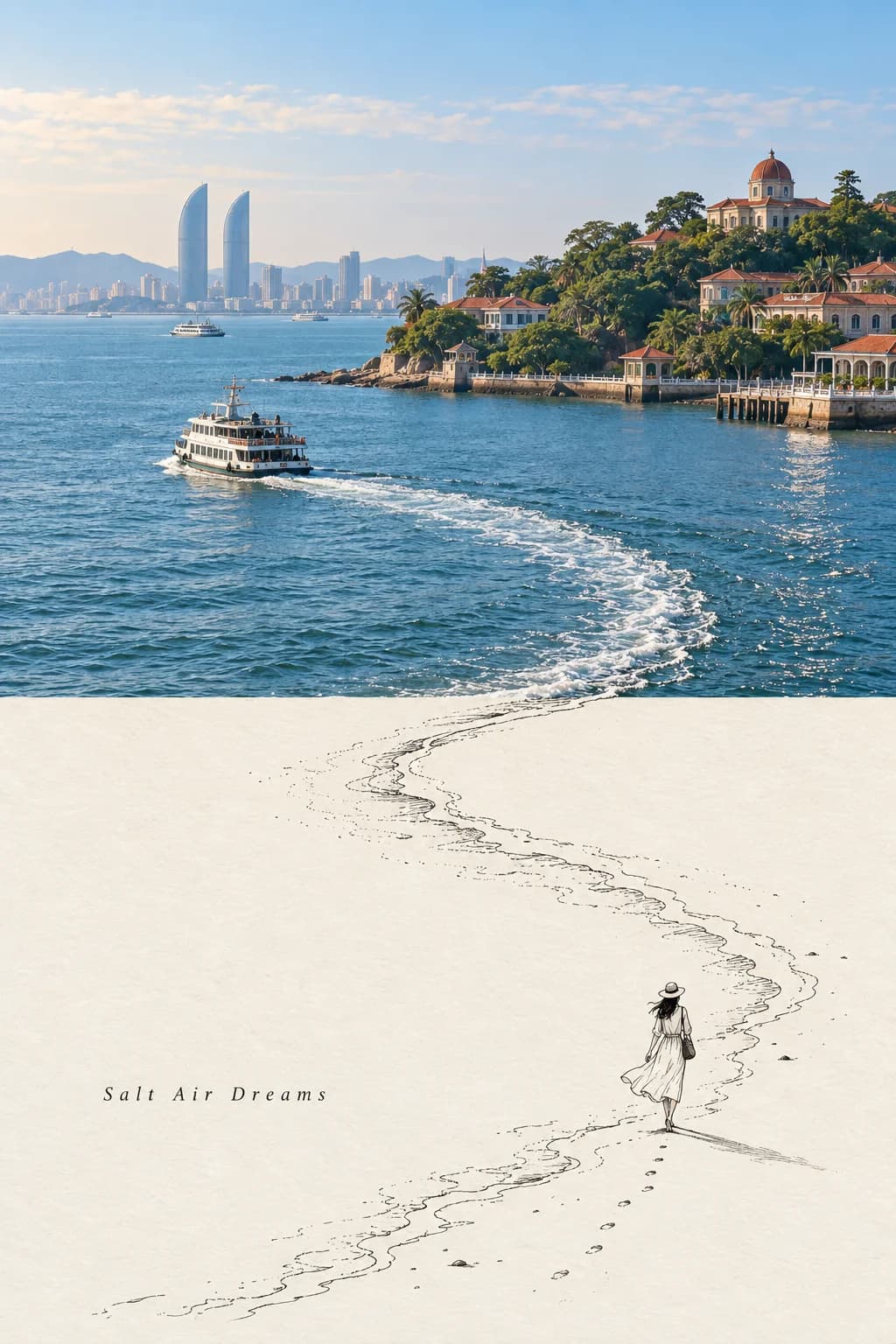
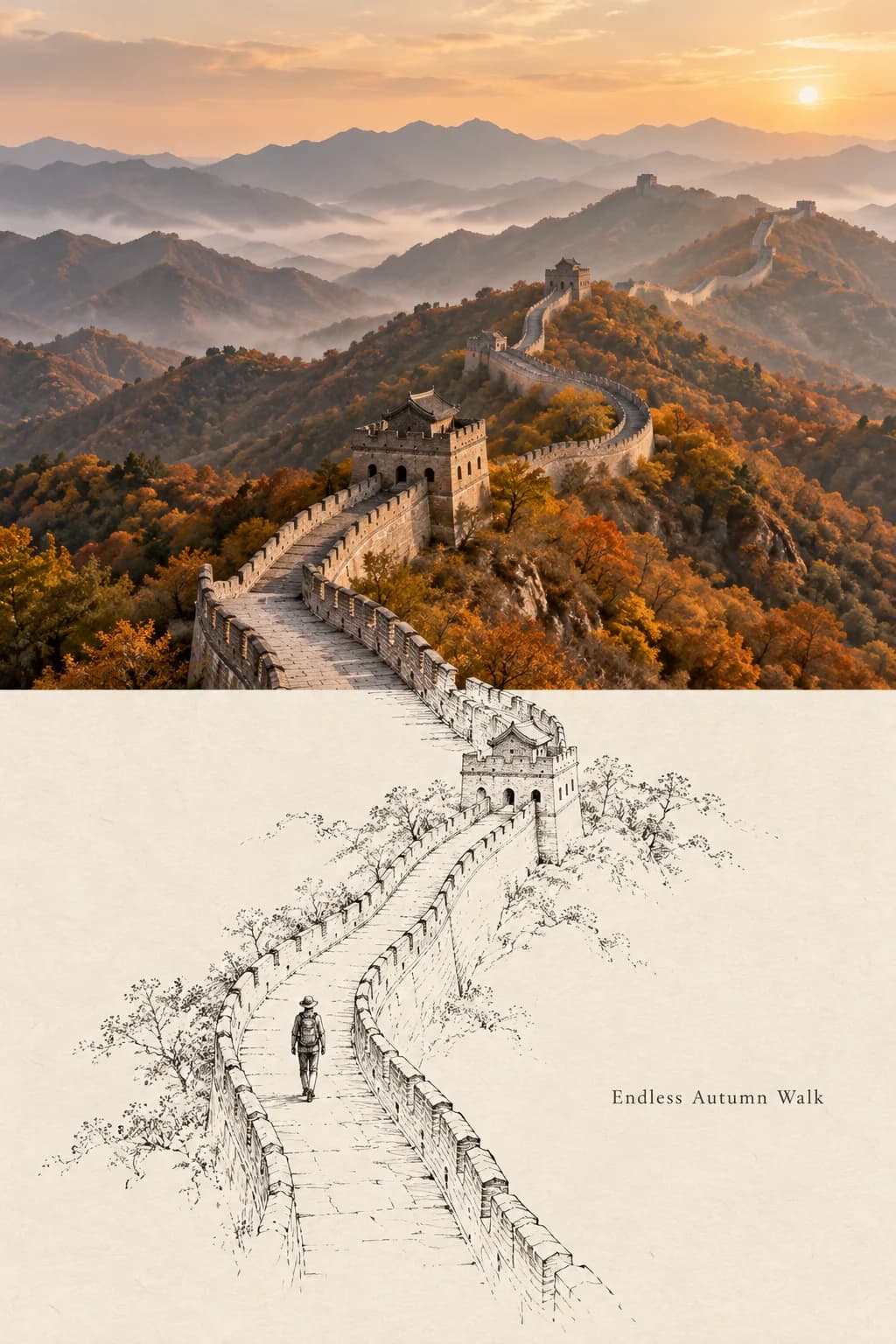
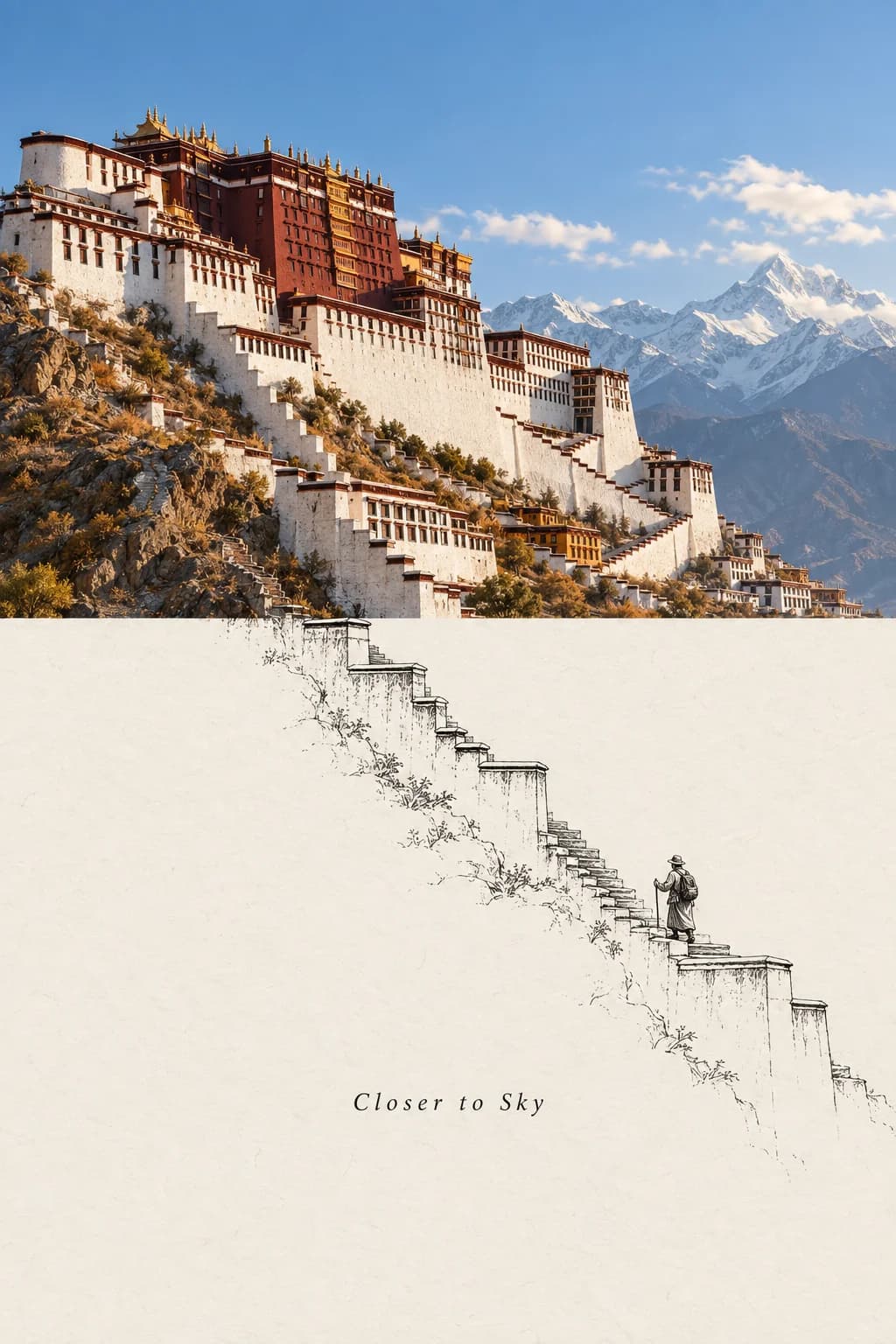
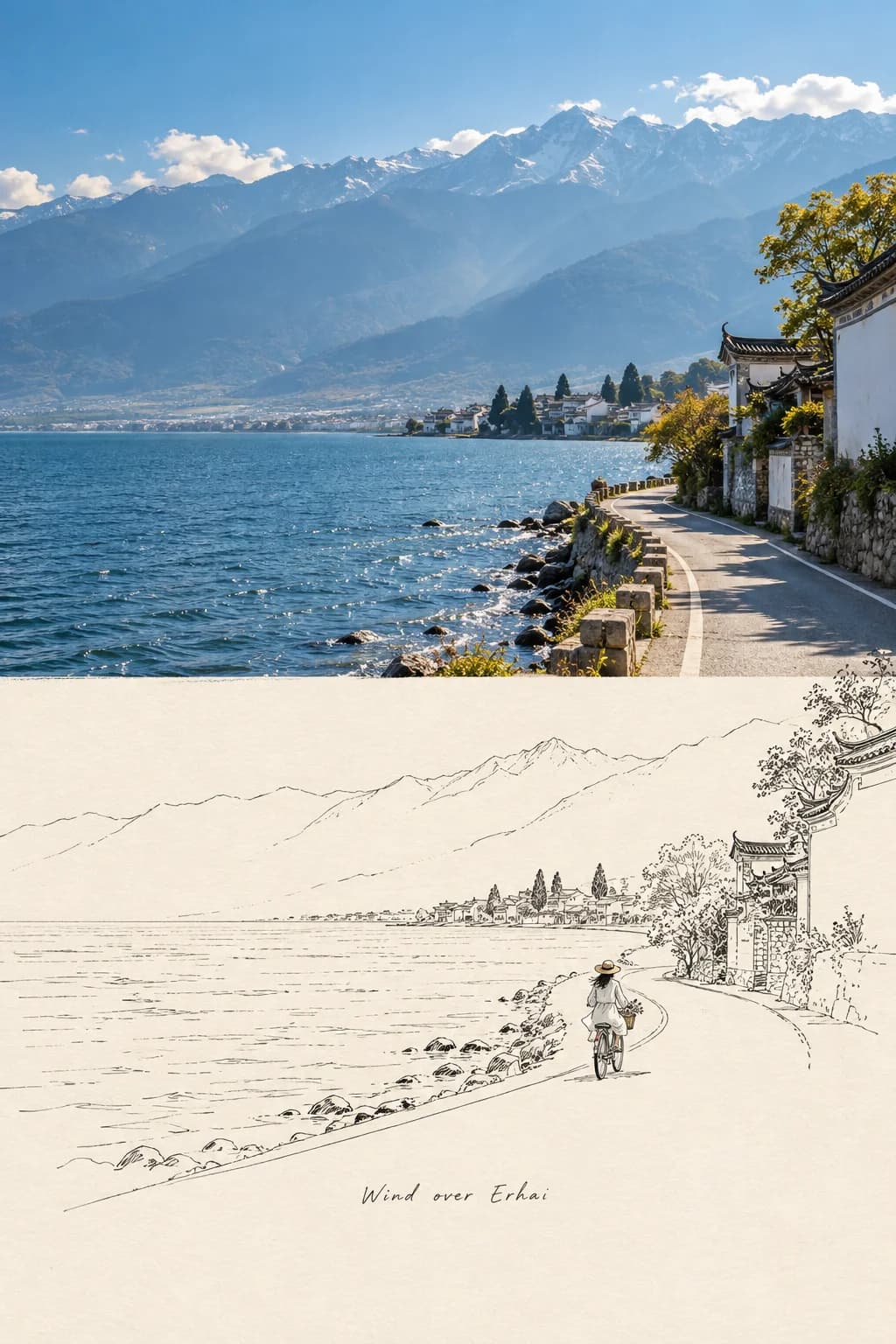
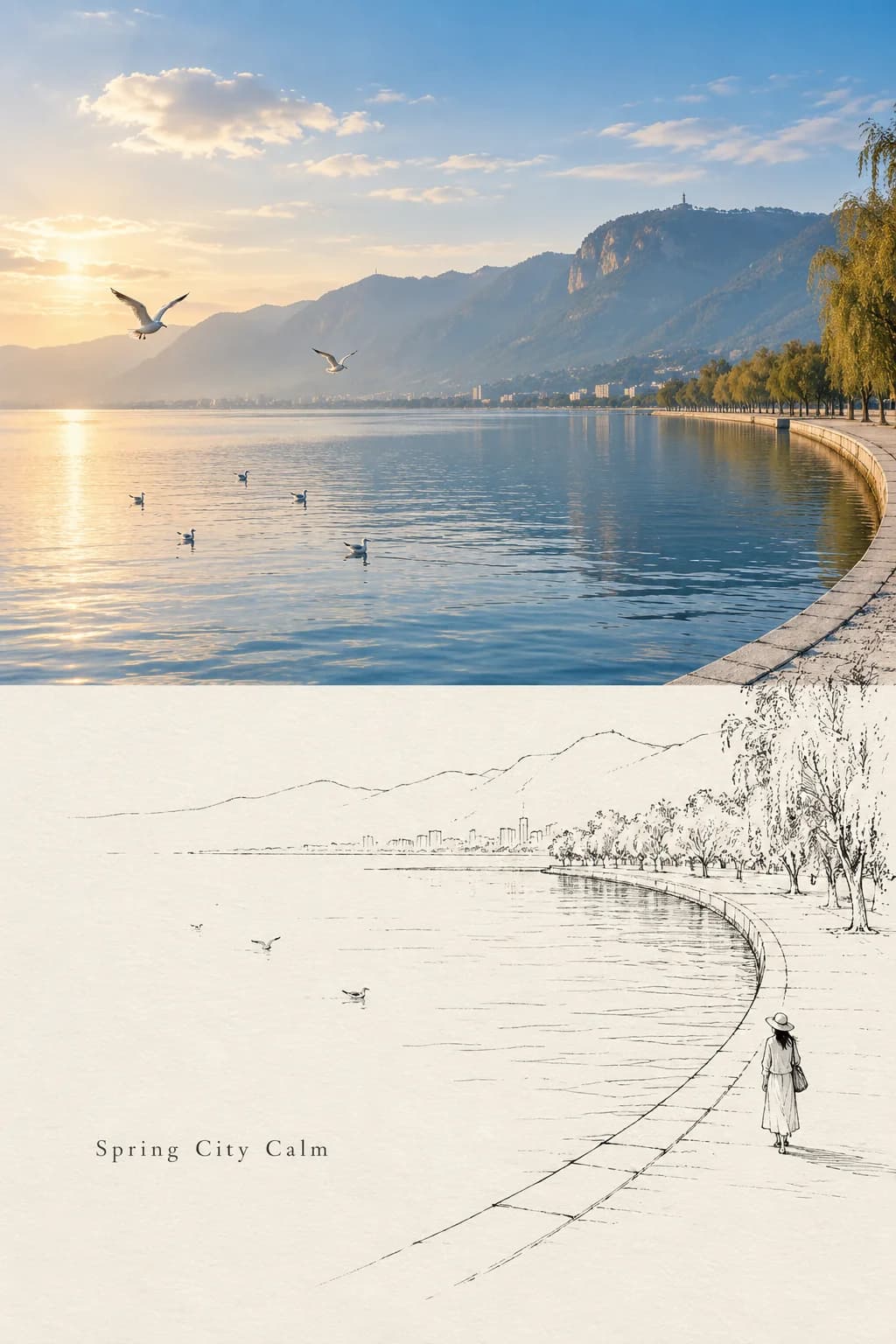
Upload a travel photo and get back a 2:3 poster: the photo across the top half, and below it, on warm ivory paper, one element of the scene — a road, a shoreline, a wall — carrying on across the centre as delicate black pen line art, with a tiny ink figure walking, climbing or resting on it and a short caption in the white space.
100 credits per image · about a minute · New accounts get 500 credits — 5 free images.
Try it with your own photo
New accounts get 500 credits — 5 free images.
Examples
Every image below was made with the prompt on this page.
What is a Line Art Travel Poster?
A line art travel poster splits a 2:3 vertical frame exactly in half. The top half is your photo, kept as it is. The bottom half is plain warm ivory paper with a faint fibre texture. One element of the photo — water, a road, a bridge, a shoreline, a flight of steps — runs across the centre line and turns, without a gap, from photographic detail into thin black pen line art. A tiny ink figure, about a tenth of the poster's height, interacts with that line, and a two-to-five-word caption sits quietly in the white space. The rest of the paper is left empty on purpose.
Which photos work well?
Landscape-shaped travel photos with one strong line heading towards the bottom edge: a road or path, a city wall, steps, a riverbank or lakeshore, a boat's wake, a bridge, a railway. Landmarks, coastlines and mountain roads all work, because the drawing only needs one element to continue.
Which photos struggle?
Portraits and close-ups of people — the drawn figure is a tiny generic character, not a likeness, and a face-filling photo has no line to extend. Photos with nothing crossing the lower edge, such as a flat sky or a busy crowd, give the model nothing to continue. It also wants a landscape photo: the top half is 4:3, so a tall portrait gets cropped. For a looser architectural sketch with blocks of colour, the architectural sketch poster suits better; for a watercolour version of the whole scene, the watercolor painting poster.
How to turn a photo into a Line Art Travel Poster
- 1
Pick an effect
Browse the samples on each tool page to see exactly what you will get before you spend anything.
- 2
Upload your photo
JPEG, PNG or WebP, up to 12 MB. Your photo stays private and is never used to train anything.
- 3
Add your own caption
Most effects let you set the text that appears in the final image, in any language.
- 4
Download the result
You get a high-resolution image, yours to use. 2K is 100 credits, 4K is 200.
The prompt behind this tool
This is the full prompt, translated into English. Copy it and use it with any image model that accepts a reference photo.
Using the uploaded photo, create a high-end 2:3 vertical "photo × line art" travel editorial poster.

Composition
Divide the piece into two equal 50/50 halves. The top half keeps the uploaded photo itself: preserve the scene, landmark, architecture, landscape or cultural detail in it, along with its structure, real texture, natural light and original colour. Do not redraw, replace or alter what is in the photo; the background around it may be extended naturally to fit the frame.

The bottom half gives way to clean, warm ivory paper with an extremely subtle fine-fibre texture and generous white space.

Continuous visual link
Pick out one distinctive element in the top-half scene — water, a road, a rope, a cable, a bridge, a branch, a shoreline, the edge of a building, a reflection or a beam of light — and let it carry on naturally across the centre line.

That element must turn continuously from realistic photographic detail into delicate black pen line art. The transition should feel seamless, deliberate and visually clever, with no gap and no abrupt restart.

Line-art character
Draw one tiny black-ink figure interacting with the extended line. The figure should take up only about 7–10% of the total height of the piece, with a simple, expressive action such as pulling, climbing, carrying, pushing, watching, walking or resting.

Use thin, slightly imperfect hand-drawn lines, simplified clothes and props, minimal facial detail, and an easy editorial-sketchbook figure style.

Typography
Add one short, gentle English phrase of 2–5 words, written for the place in the photo. Keep it small and understated — an emotional caption, not a headline.

Final aesthetic
Realistic travel photography × minimal black line art × a clever visual continuation × contemporary editorial poster × poetic travel storytelling. Keep the composition refined, quiet, spacious and high-end. Each place should get its own connecting idea, drawn from its visual identity.

Avoid: a disconnected top and bottom, floating figures, isolated icons, oversized figures, detailed faces, anime, cartoon styles, heavy lines, dense sketching, a fully illustrated scene, infographic layouts, grids, collage panels, stamps, borders, too much text, yellow paper, logos, watermarks or UI elements.

Format: 2:3 vertical, an exact 50/50 composition, high-end editorial travel poster aesthetic.
Frequently asked questions
Will it change my photo?
- The top half is meant to stay your photo. The prompt was originally written to generate the whole scene from text, so this version rewrites that part: it tells the model to keep the uploaded photo's scene, structure, texture, light and colour and not to redraw it, only extending the background if the frame needs it. Check the top half before you use the poster, and run it again if the model has drifted. In six test runs the photo was kept every time; once the drawn figure was large enough that its head poked over the centre line into the photo.
Which part of my photo turns into line art?
- The model picks one element that can run across the centre line — a road, a wall, a shoreline, a ferry's wake, a flight of steps — and continues it downward as black pen line. You do not choose it; photos with one obvious line leading towards the bottom edge give it the easiest job.
Who is the little figure?
- A tiny ink character the model adds, about a tenth of the poster's height, walking, climbing or resting along the drawn line. It is not a drawing of anyone in your photo, and it has almost no face on purpose.
Can I choose the caption?
- Yes. Type a short line and it is written into the white space exactly as you give it — that is more reliable than letting the model invent one. Leave it empty and the model writes its own 2–5 word English phrase for the place, as in the samples. In testing, supplied captions were written exactly every time; invented ones were spelled correctly but sometimes came out in larger capitals than the samples.
What language can the caption be in?
- The original prompt asks for English, and English phrases of two to five words look most like the samples. Other languages will be written as typed, but a long line crowds the quiet layout the effect depends on.
Why does it want a landscape photo?
- The frame is 2:3 and your photo gets exactly the top half, which is a 4:3 landscape shape. A landscape photo fills it with little cropping; a tall portrait one loses much of its height.
What size do I get, and how long does it take?
- A 2:3 vertical poster at 2K for 100 credits or 4K for 200. Most images come back in 60 to 90 seconds.
What happens to my photo?
- It is stored privately, used only to make your image, deleted on a schedule, and never used for training. The full prompt is shown on this page if you want to use it elsewhere; the page itself does not take a custom prompt.