Food Illustration Card
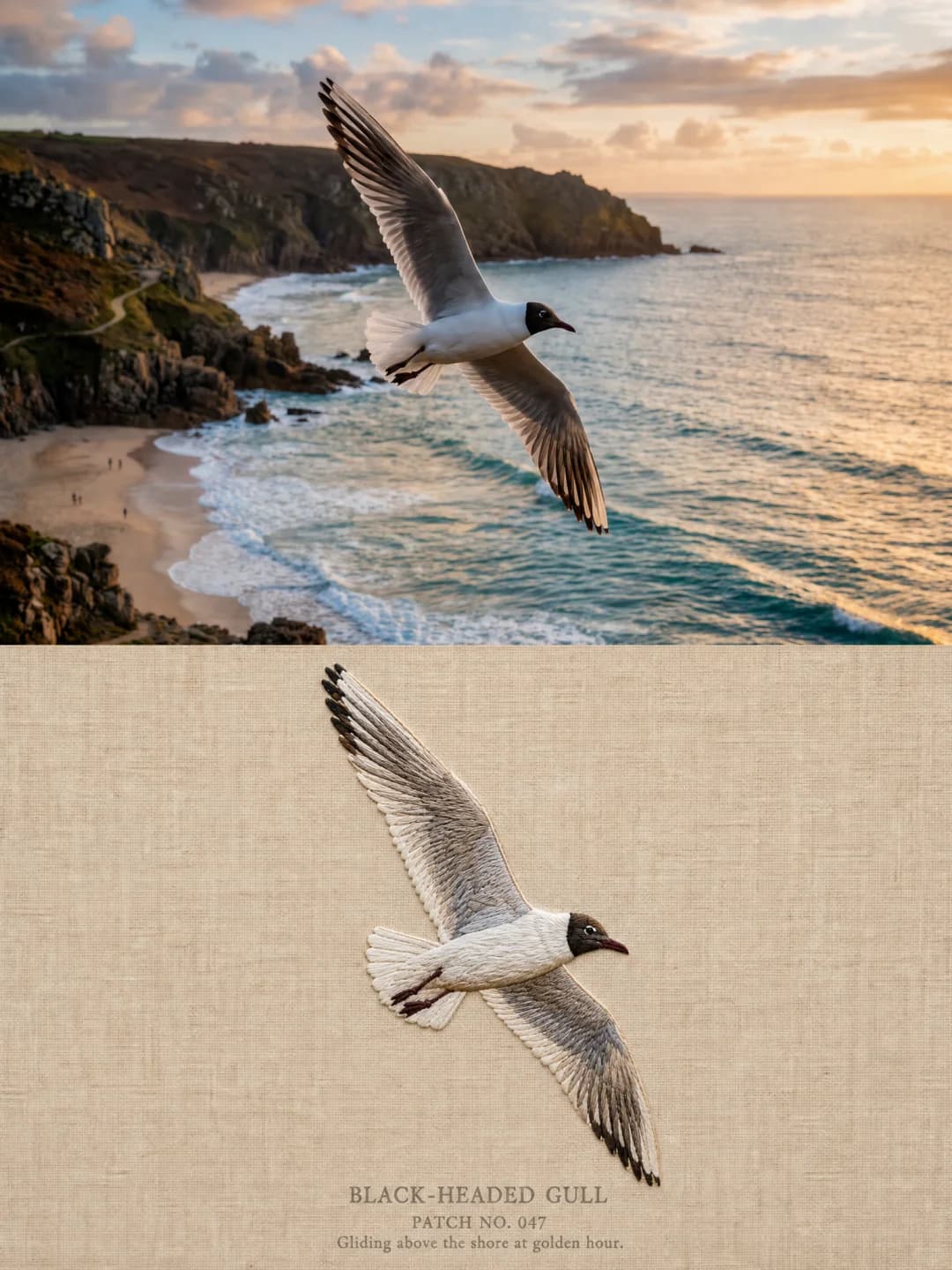
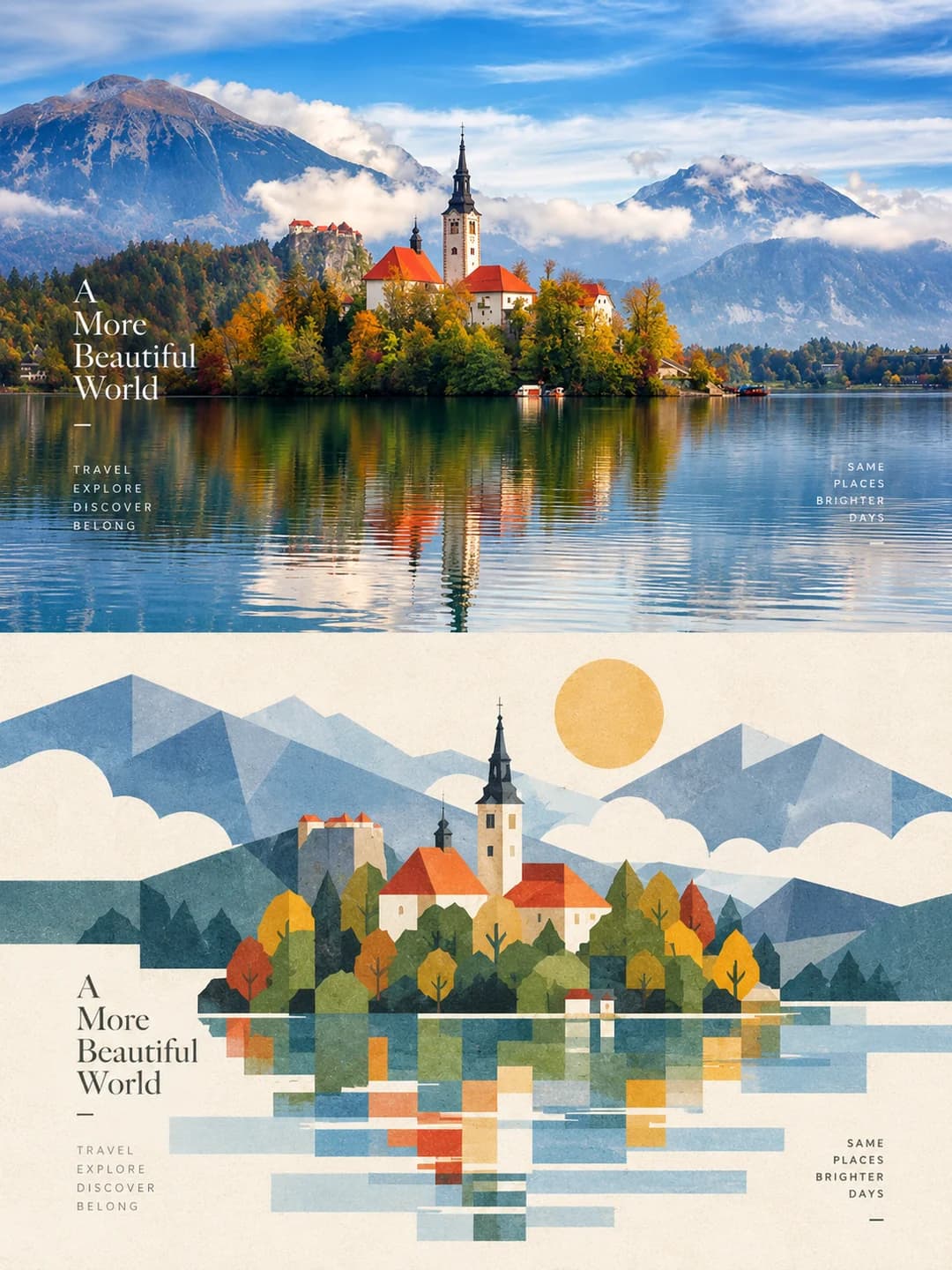
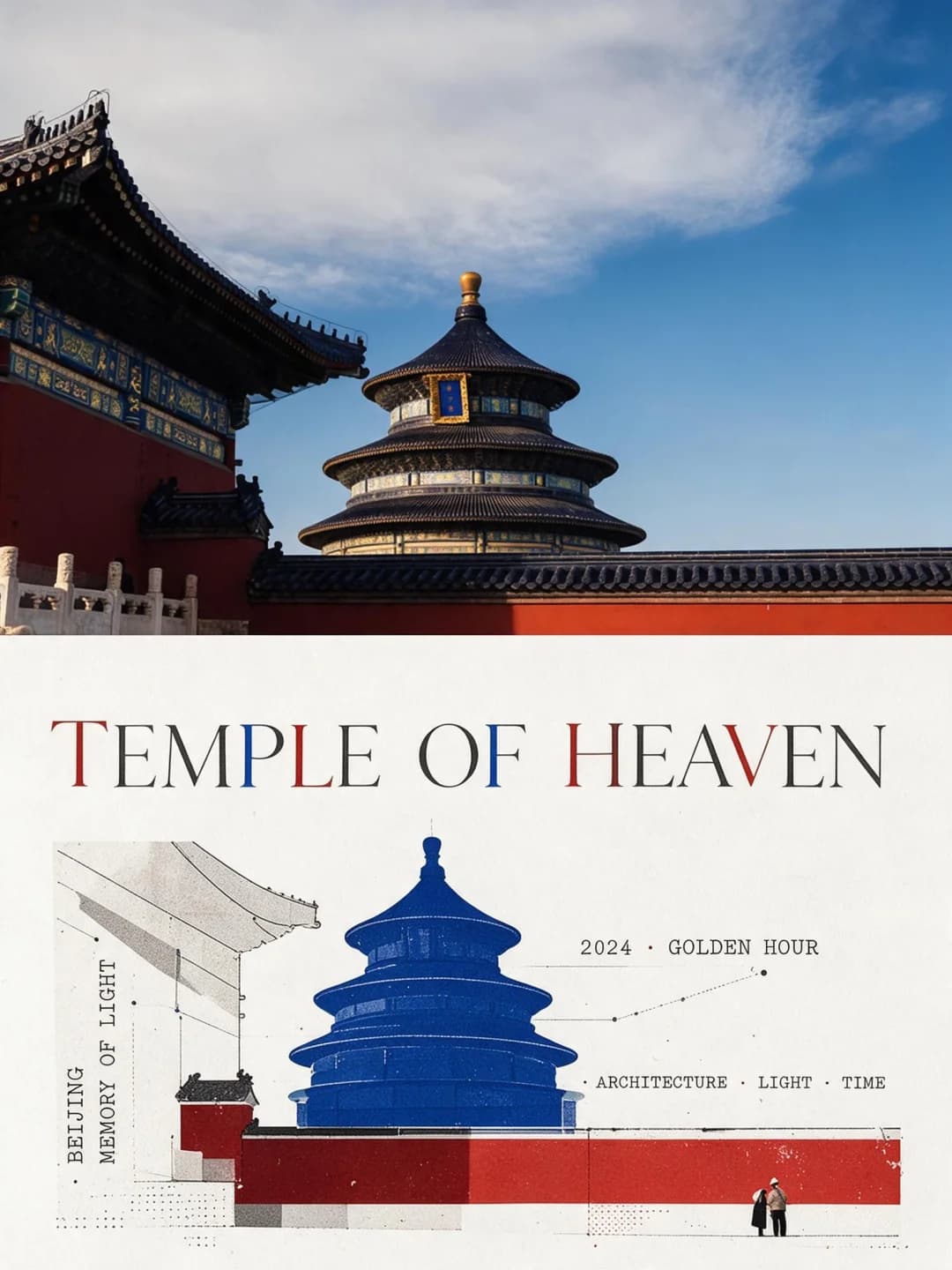
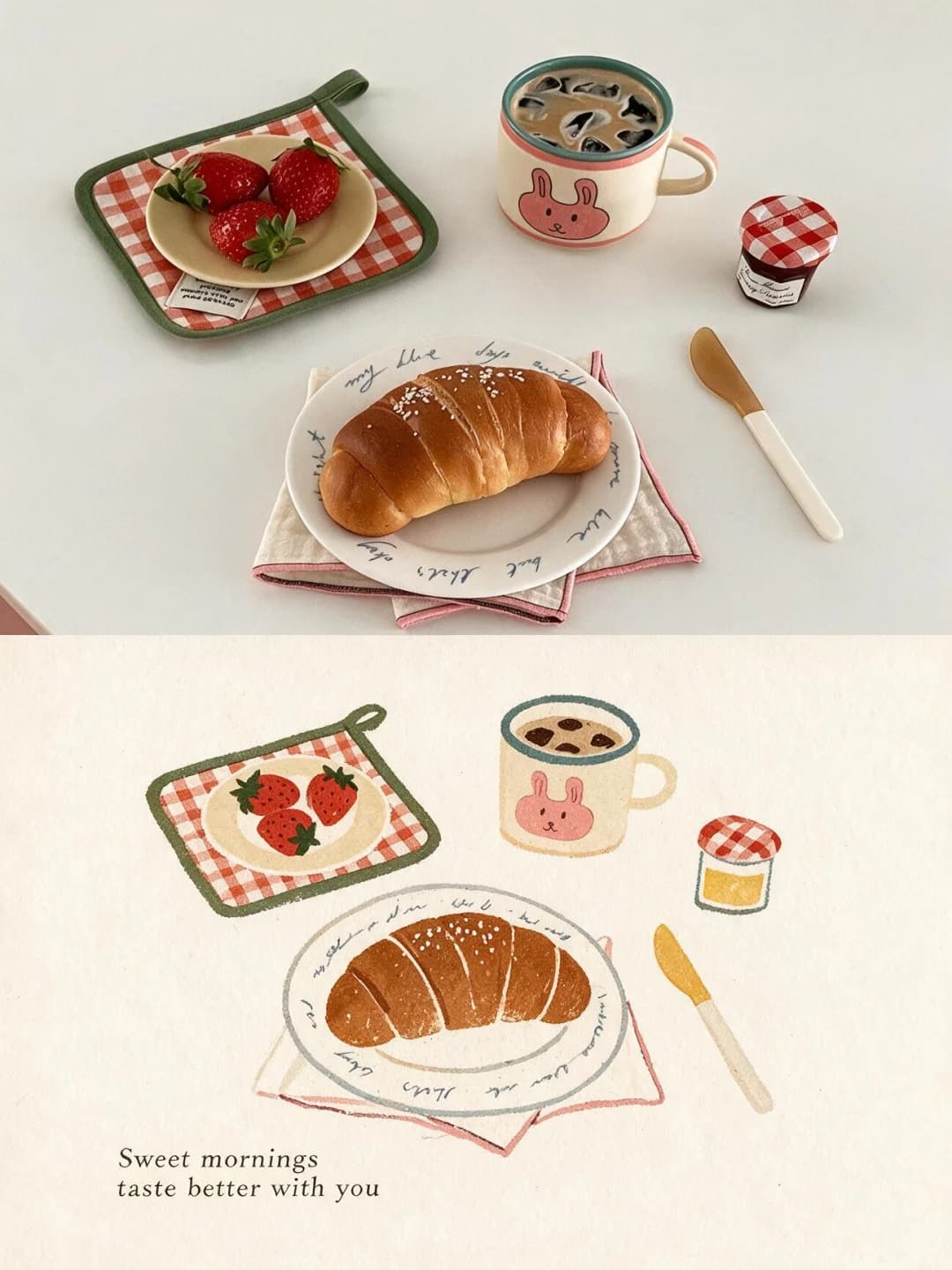
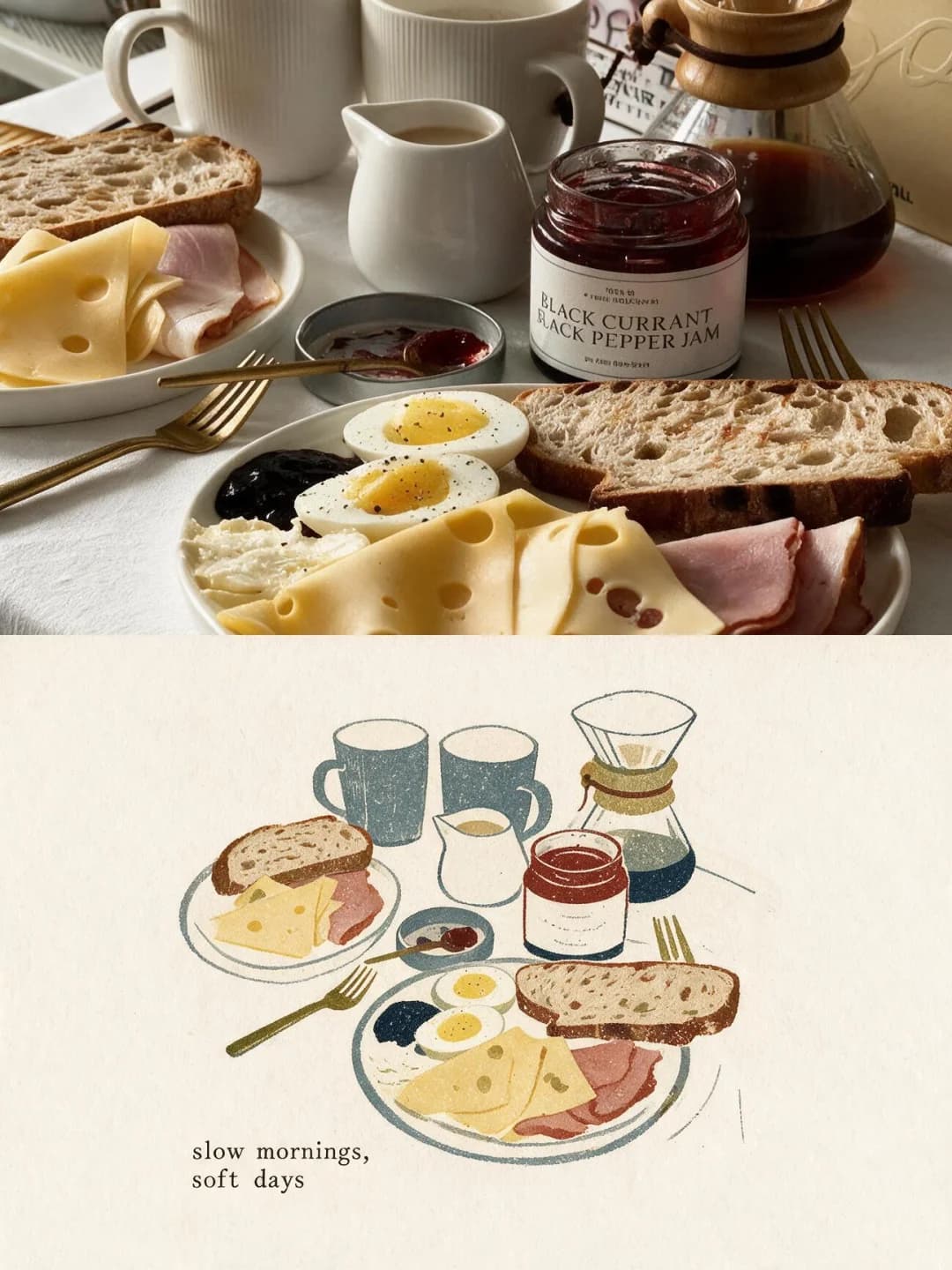
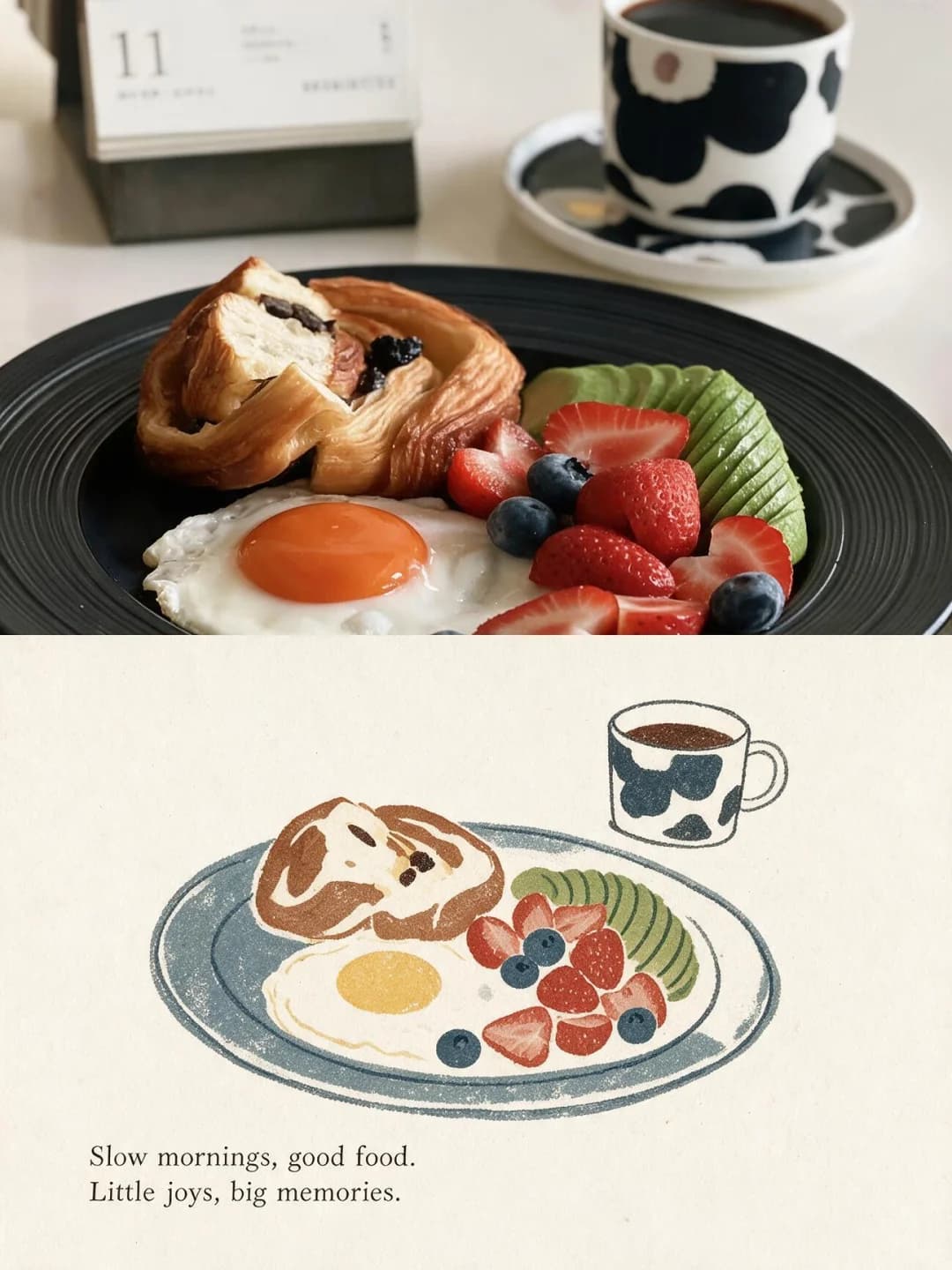
Your table photo on top, the same table redrawn below as a printed illustration
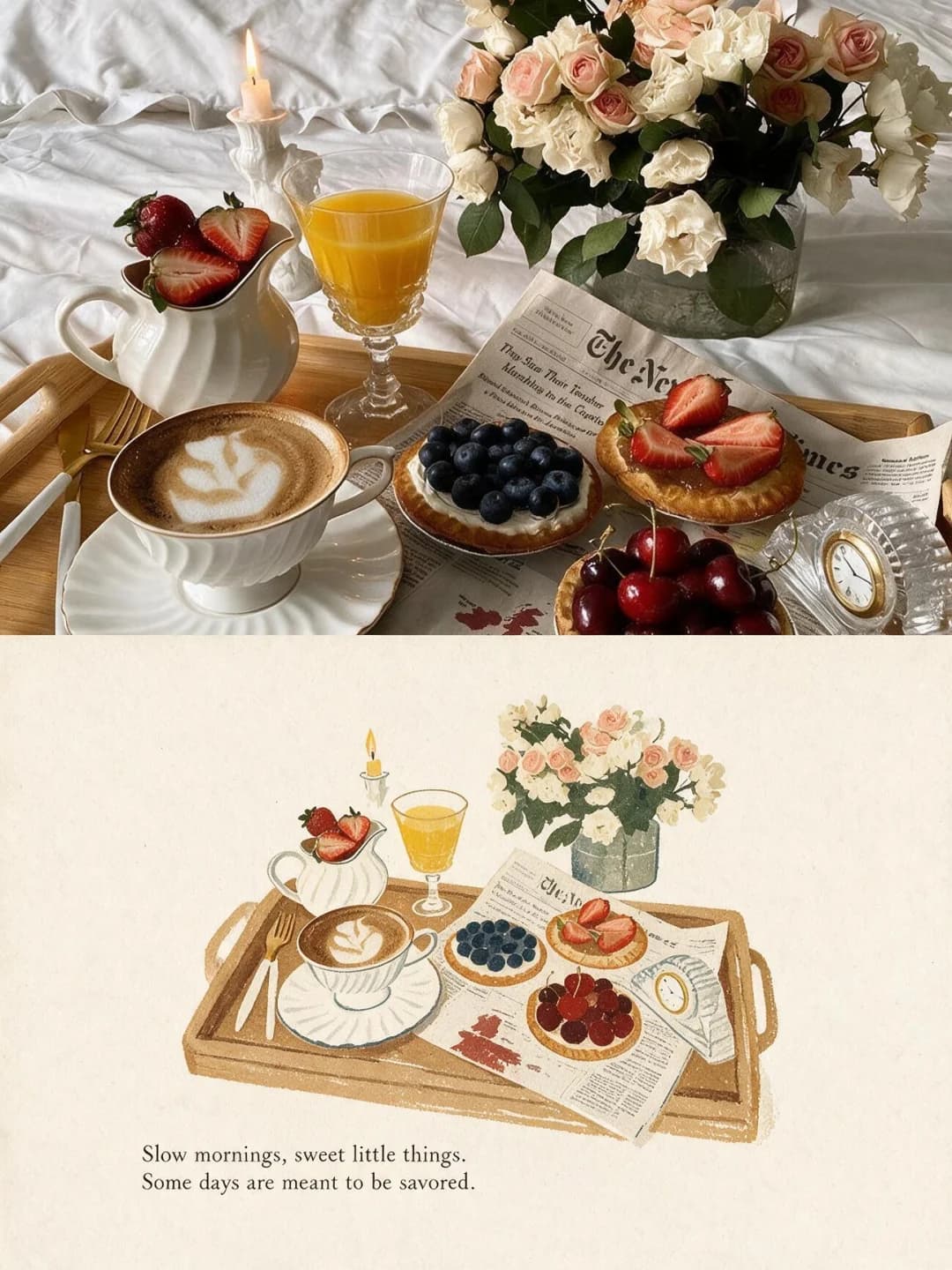
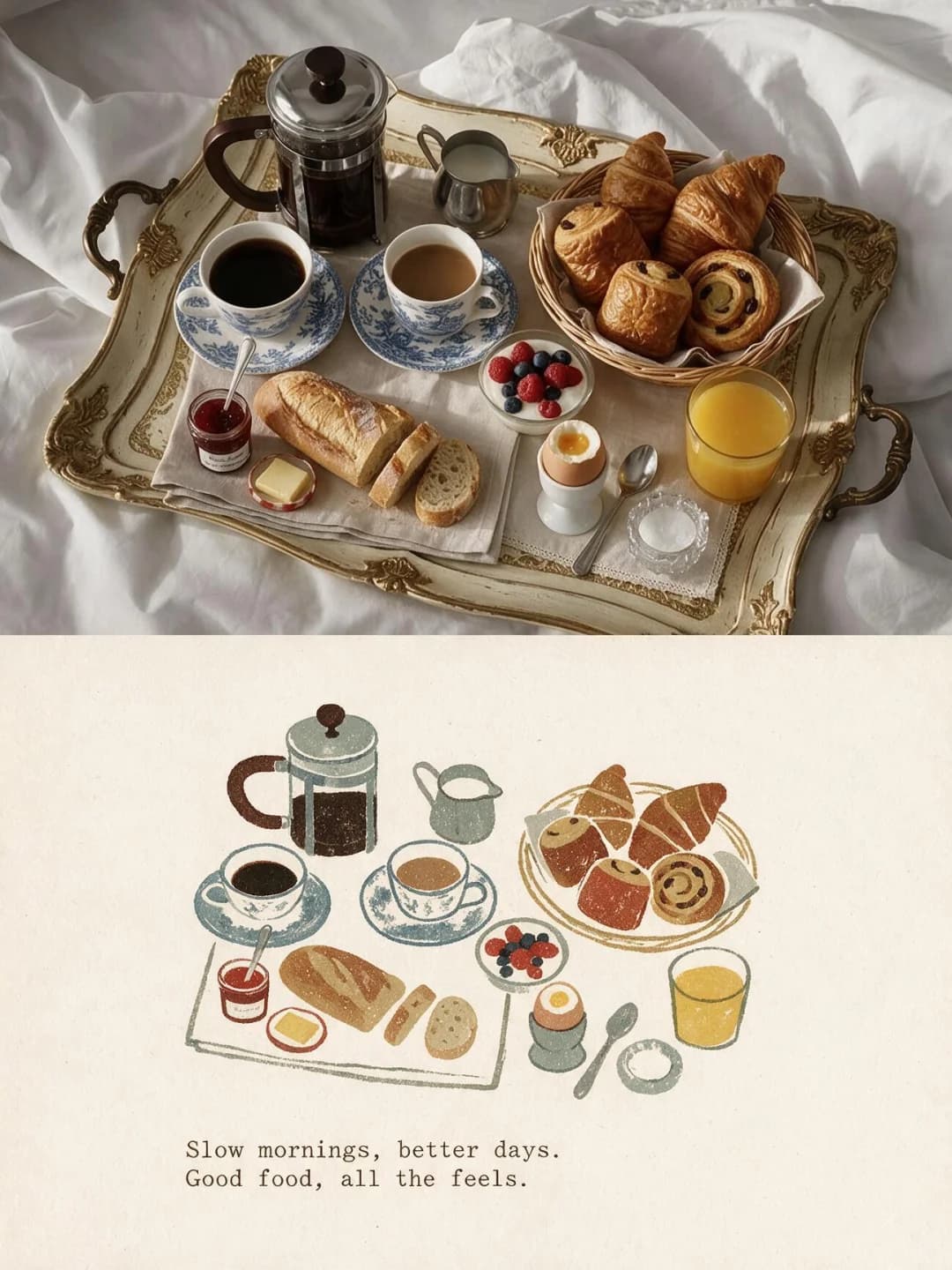
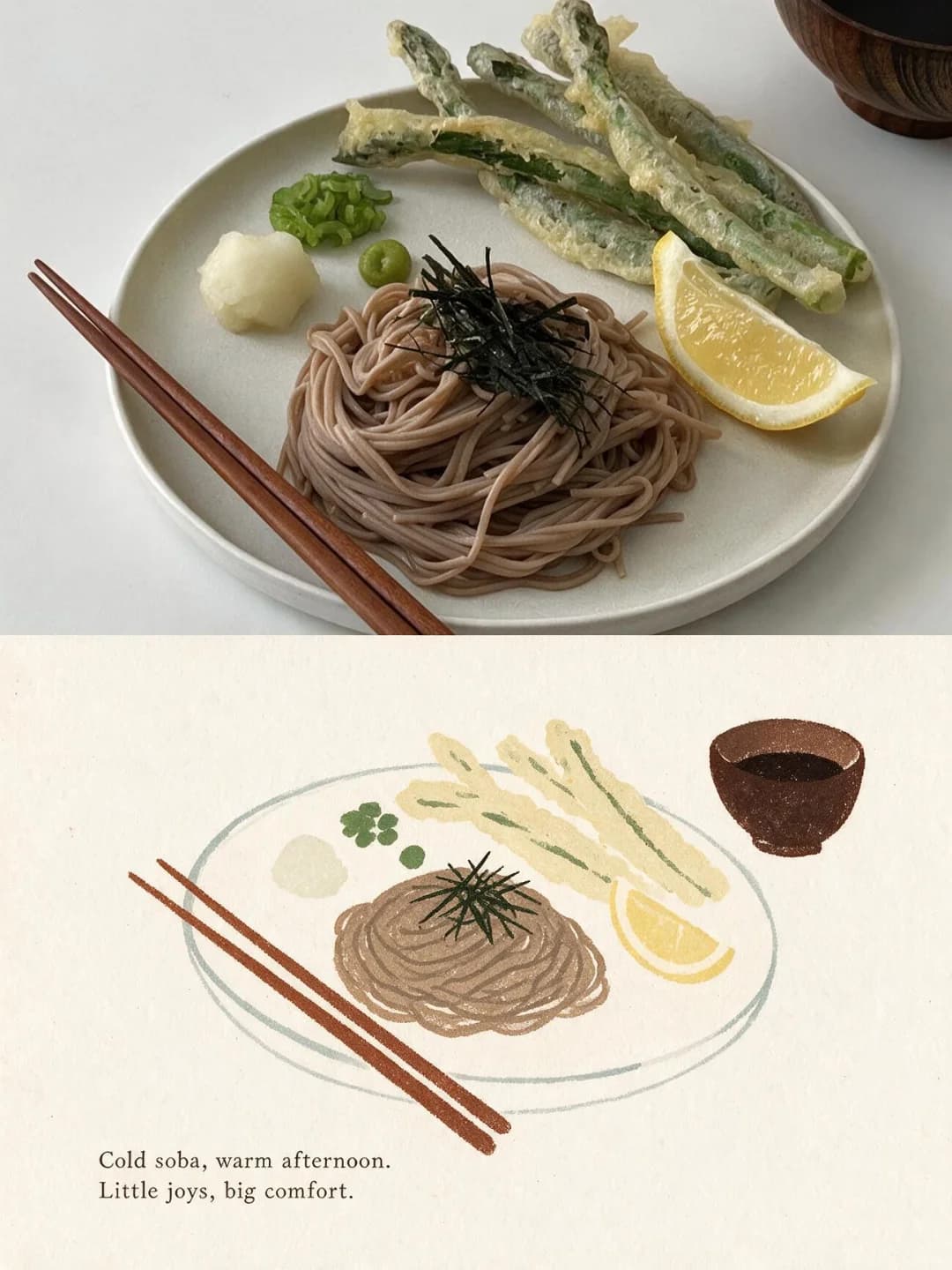
Upload an everyday tabletop photo and get back a 3:4 keepsake card: your photograph across the top, the same spread redrawn underneath as a flat, low-saturation illustration on ivory paper, with the grain and misregistration of an old printed page.
100 credits per image · about a minute · New accounts get 500 credits — 5 free images.
Try it with your own photo
New accounts get 500 credits — 5 free images.
Examples
Every image below was made with the prompt on this page.
What is a food illustration card?
A food illustration card splits a 3:4 frame into two halves of equal height. The top is your tabletop photograph, cropped to the horizontal area and otherwise untouched. The bottom is warm ivory handmade paper carrying the same spread redrawn as a centred horizontal illustration: table texture, clutter, real shadow and secondary detail all deleted, each object reduced to simple, slightly clumsy geometric colour blocks and fine hand-drawn lines. Four to six colours are taken from the photo and flattened into cream, grey-blue, brick red, caramel and olive. Crayon, pastel and screen-print texture, paper show-through and a slight registration offset make it read as a printed magazine page, with two small lines of type below.
Works well with
Everyday tabletop shots taken slightly from above: breakfast, afternoon tea, a dessert plate, a coffee, a bento, a soft toy beside a mug. A plain surface and soft daylight help. The prompt names soft toys and decorative objects alongside food, so it is not strictly limited to meals.
Struggles with
Rooms, people, landscapes and anything without a clear set of objects on one surface. It is a still-life format — the illustration works by listing a handful of recognisable things, so a scene with no countable objects has nothing to redraw. Screenshots and photos with phone interfaces in them are explicitly stripped.
The prompt behind this tool
This is the full prompt, translated into English. Copy it and use it with any image model that accepts a reference photo.
Using the uploaded everyday tabletop photograph as the only content, generate a 3:4 vertical "real photo + simple illustration" keepsake card. Keep the food, drinks, tableware, soft toys and decorative objects that are in the photograph, making sure the number of items, their placement, their outward characteristics and their relationships to each other stay unchanged. Do not add anything irrelevant.

Composition
Divide the frame into an upper and lower zone, 50% each. The upper zone preserves the original photograph and its real photographic quality in full, cropped naturally to suit the horizontal area. The lower zone uses a warm ivory-white handmade paper background, and redraws the tabletop scene from the photograph as a centred horizontal illustration. The illustrated subject occupies about 60% of the lower zone's width, with generous white space all around it.

Form
Delete the table texture, any cluttered background, the real light and shadow, and secondary detail. Keep only the most recognisable food outlines, the shapes of the vessels, and the expression of any soft toy. Render the subjects with simple, slightly clumsy geometric colour blocks and fine hand-drawn lines. Contours may be a little crooked, broken or misaligned; do not aim for accurate perspective or fine structure.

Colour
Extract four to six representative colours from the original photograph and convert them into soft, low-saturation cream white, grey-blue, brick red, caramel brown, olive green and pale yellow. Use flat fills — no complex gradients, no three-dimensional modelling, no strong shadows.

Texture
Blend the qualities of crayon, pastel, screen printing and old book illustration. Keep the show-through of the paper, a fine dense grain, uneven colour, worn edges and a slight registration offset, so the image reads like an independent magazine illustration printed on old paper: warm, quiet, plain, and worth keeping.

Text
Two short, relaxed lines of English copy may be set below the illustration, in a small vintage serif, left aligned. If they cannot be rendered accurately, leave the space blank rather than producing garbled characters.

Do not change or omit any of the main objects. Remove phone interfaces, video-call windows, subtitles and screenshot elements. Avoid realist painting, fine watercolour, anime, vector, oil painting, impasto, 3D, logos, watermarks and black borders.
Frequently asked questions
- Will it change what is on the table?
- It should not. The prompt is unusually strict about this: the number of items, where they sit, what they look like and how they relate to each other all have to stay unchanged, and nothing irrelevant may be added. The illustration simplifies each object into flat shapes, but the same things should be in the same places.
- Can I choose the two lines of text?
- Yes, and it is the more reliable path. Type your own two lines and the model sets them exactly as written, small, left aligned, in a vintage serif. Leave them blank and it writes its own — and the prompt tells it to leave the space empty rather than produce garbled text if it cannot render your string cleanly.
- What kind of photo works best?
- An everyday tabletop shot from slightly above: breakfast, afternoon tea, a dessert plate, a cup of coffee, a bento, a soft toy beside a mug. A plain table surface and soft daylight help, because the prompt strips the table texture and shadows out anyway.
- Does it work on things other than food?
- Yes, within reason. The prompt explicitly names soft toys and decorative objects alongside food and tableware, and asks for a toy's expression to be kept. It is built for the tabletop still life — one surface, a handful of objects — rather than for rooms, people or landscapes.
- Where do the colours come from?
- From your photo, reduced to four to six representative colours and shifted into a soft low-saturation palette — cream, grey-blue, brick red, caramel, olive, pale yellow. The fills are flat, with no gradients or modelled shadows, so expect the illustration to read quieter than the photograph above it.
- What size do I get?
- 2K is 1792 × 2400 pixels, which prints cleanly at postcard or poster size. 4K doubles that and costs 200 credits instead of 100.
- Can I use my own prompt instead?
- Not in this tool — it runs one fixed prompt. The full text is published on this page, so you can copy it and run your own variations anywhere that accepts image prompts.
- What happens to my photo?
- It is stored privately so the generator can read it, and deleted on a schedule. It is never made public, never shown to other users, and never used to train a model.