Fabric Collage Poster
Your photo rebuilt from cloth scraps, stitched onto linen
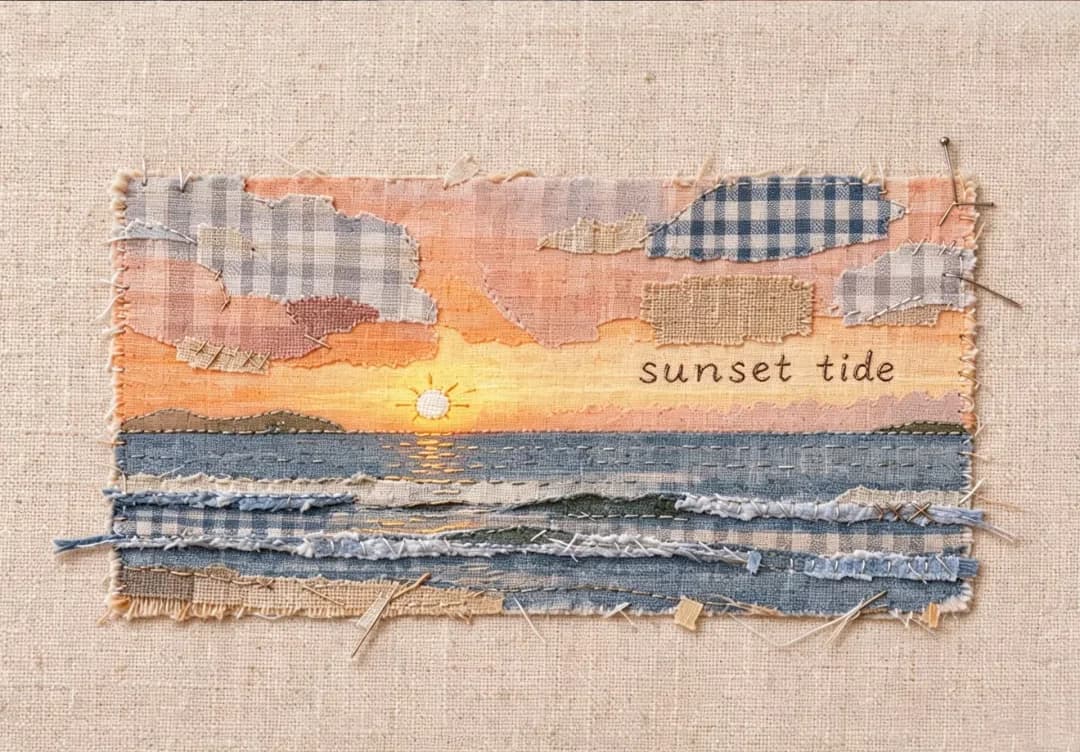
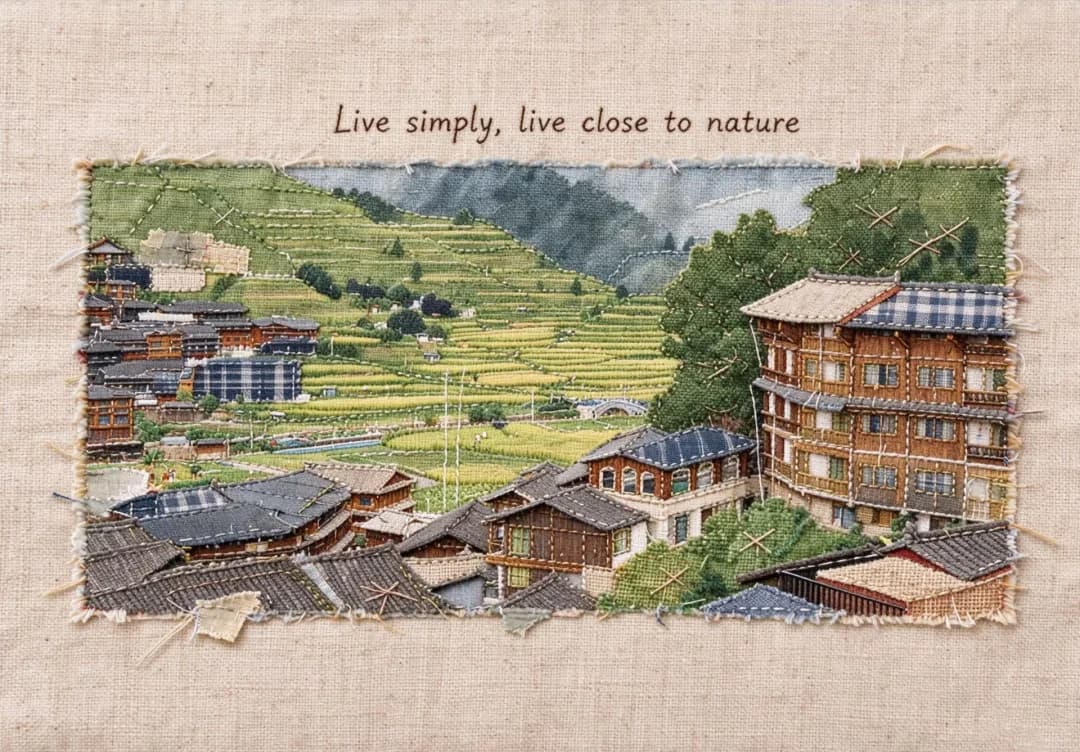
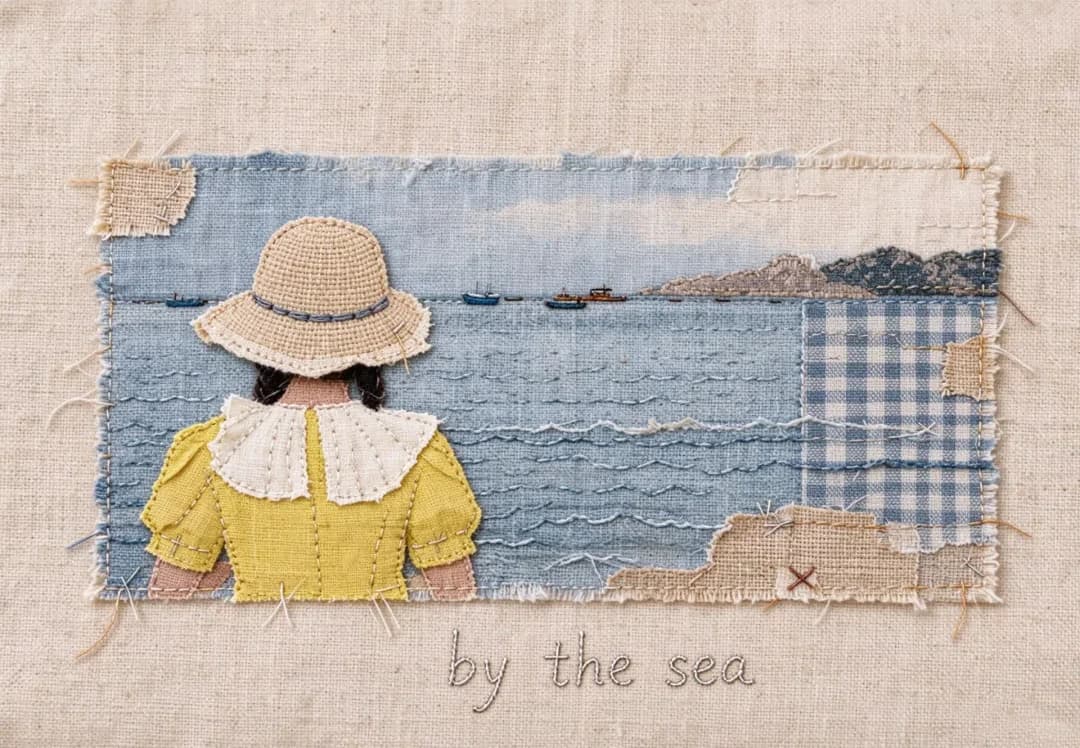
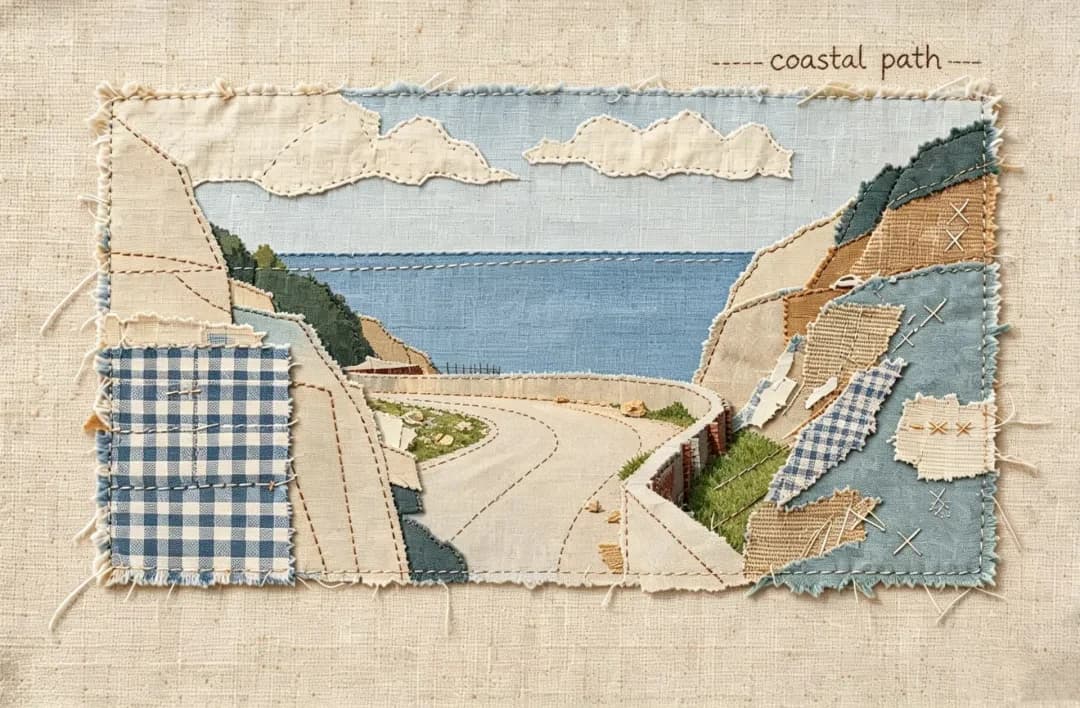
Upload a landscape photo and get back a single piece of textile art: the scene cut from gingham, linen and washed burlap, hand-stitched onto a beige canvas. You can set the line of thread lettering that sits in the empty canvas beside it.
100 credits per image · about a minute · New accounts get 500 credits — 5 free images.
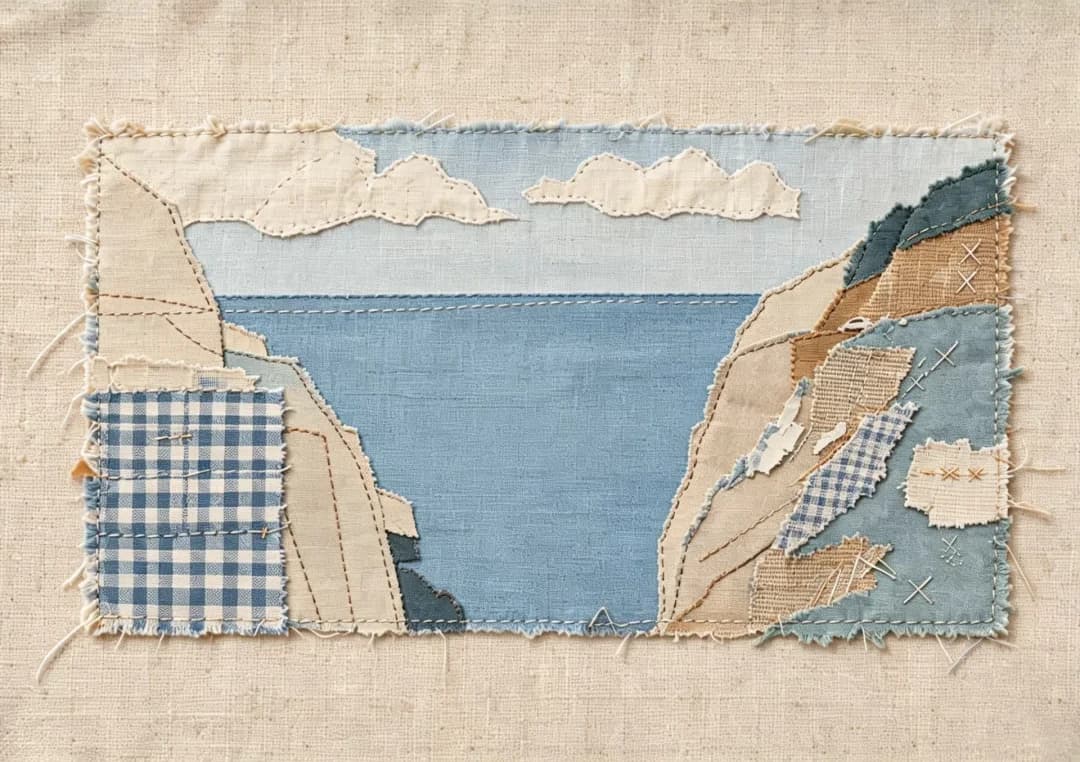
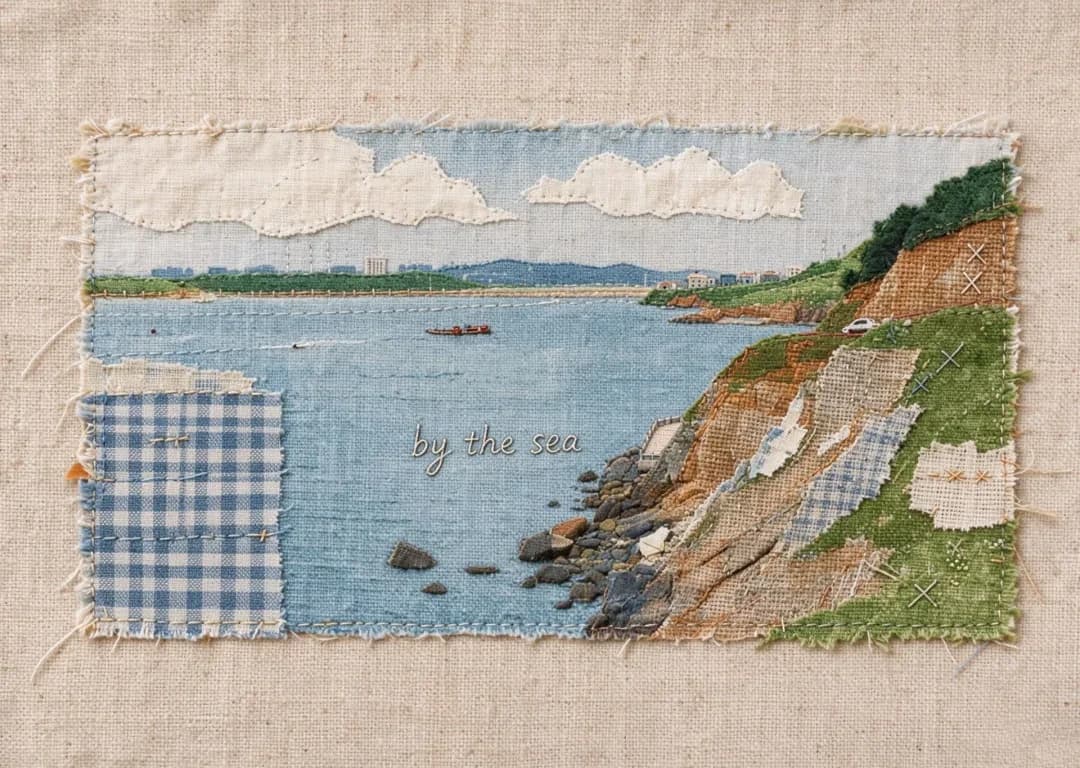
Try it with your own photo
New accounts get 500 credits — 5 free images.
Examples
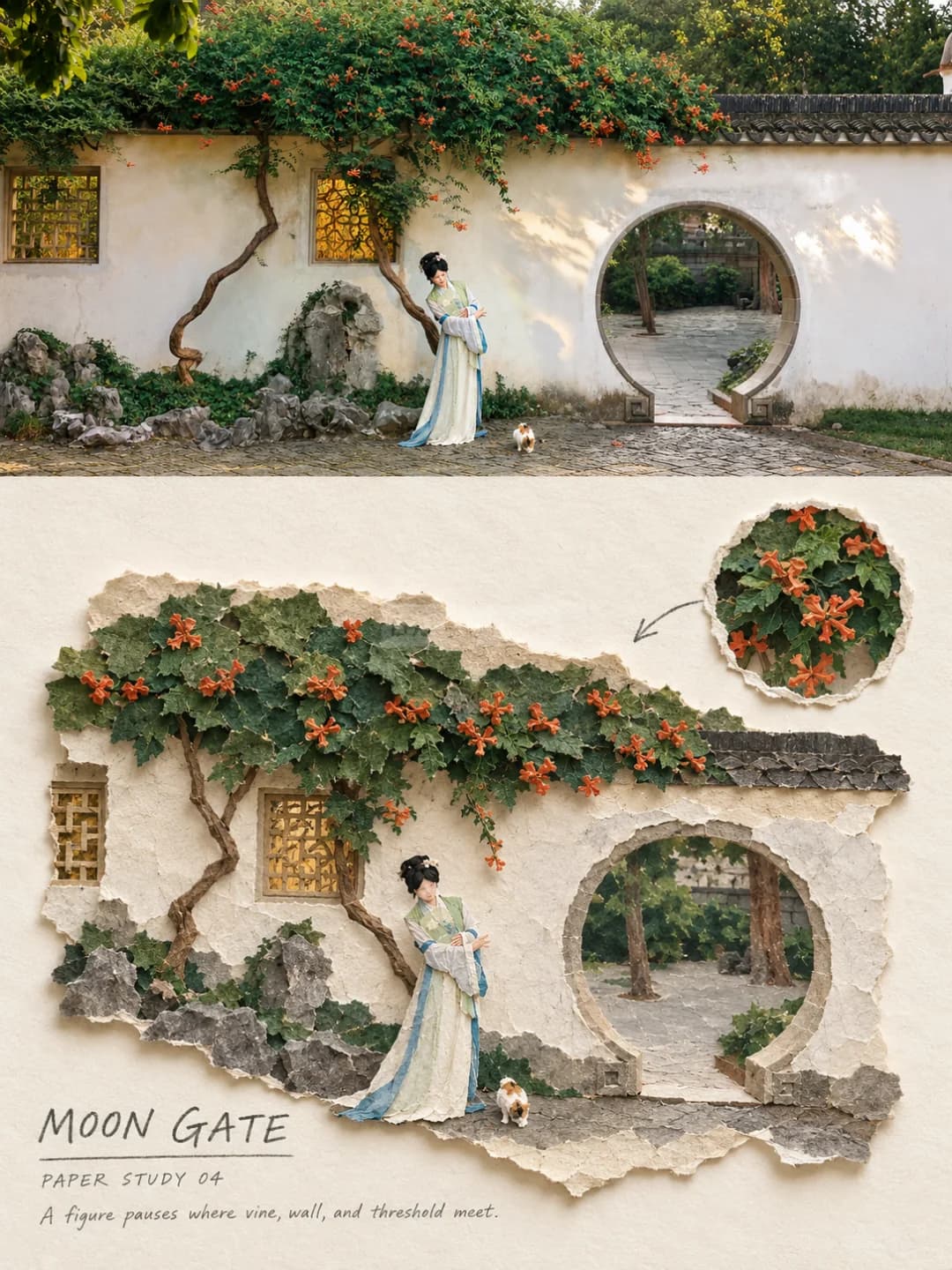
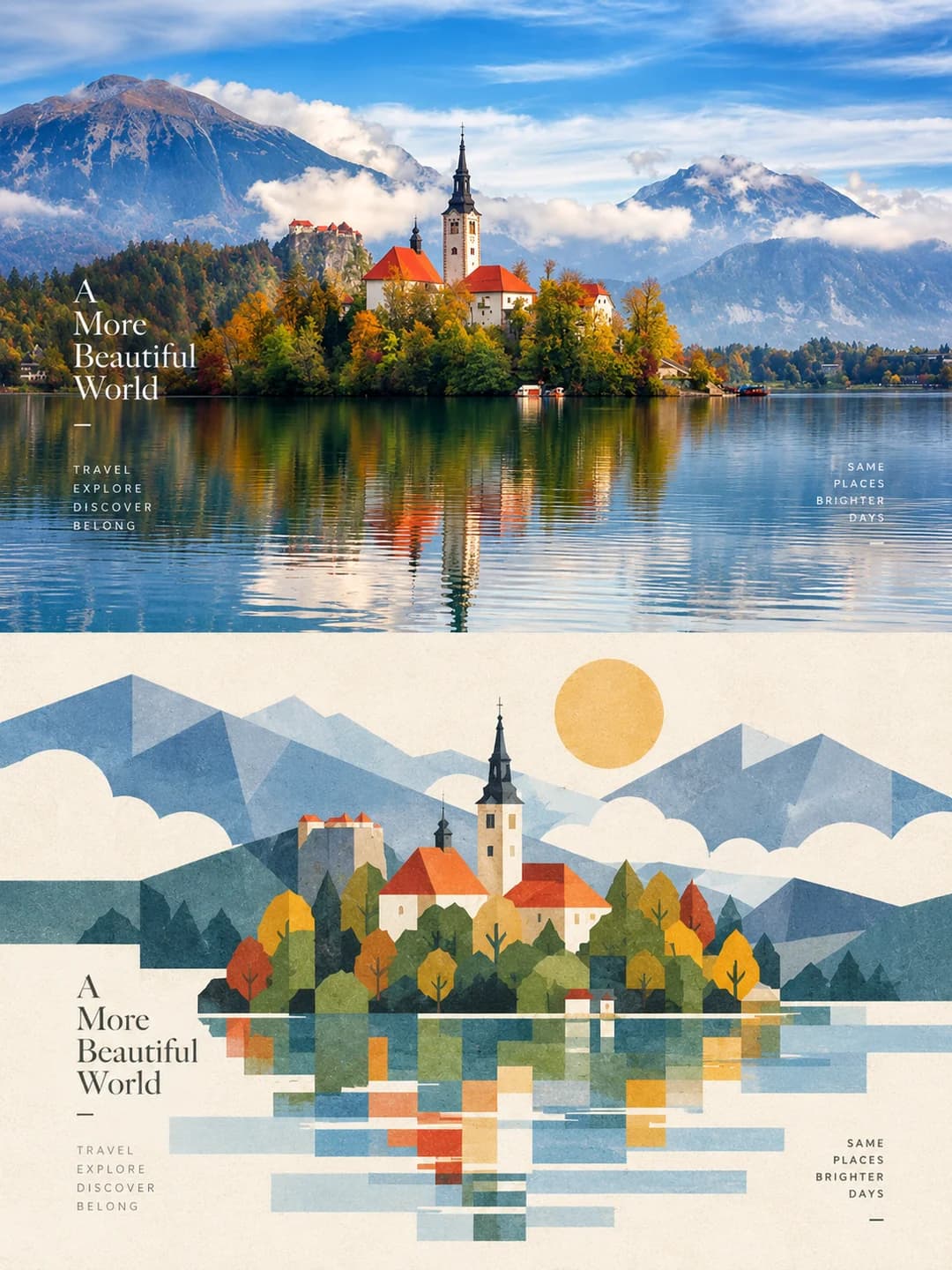
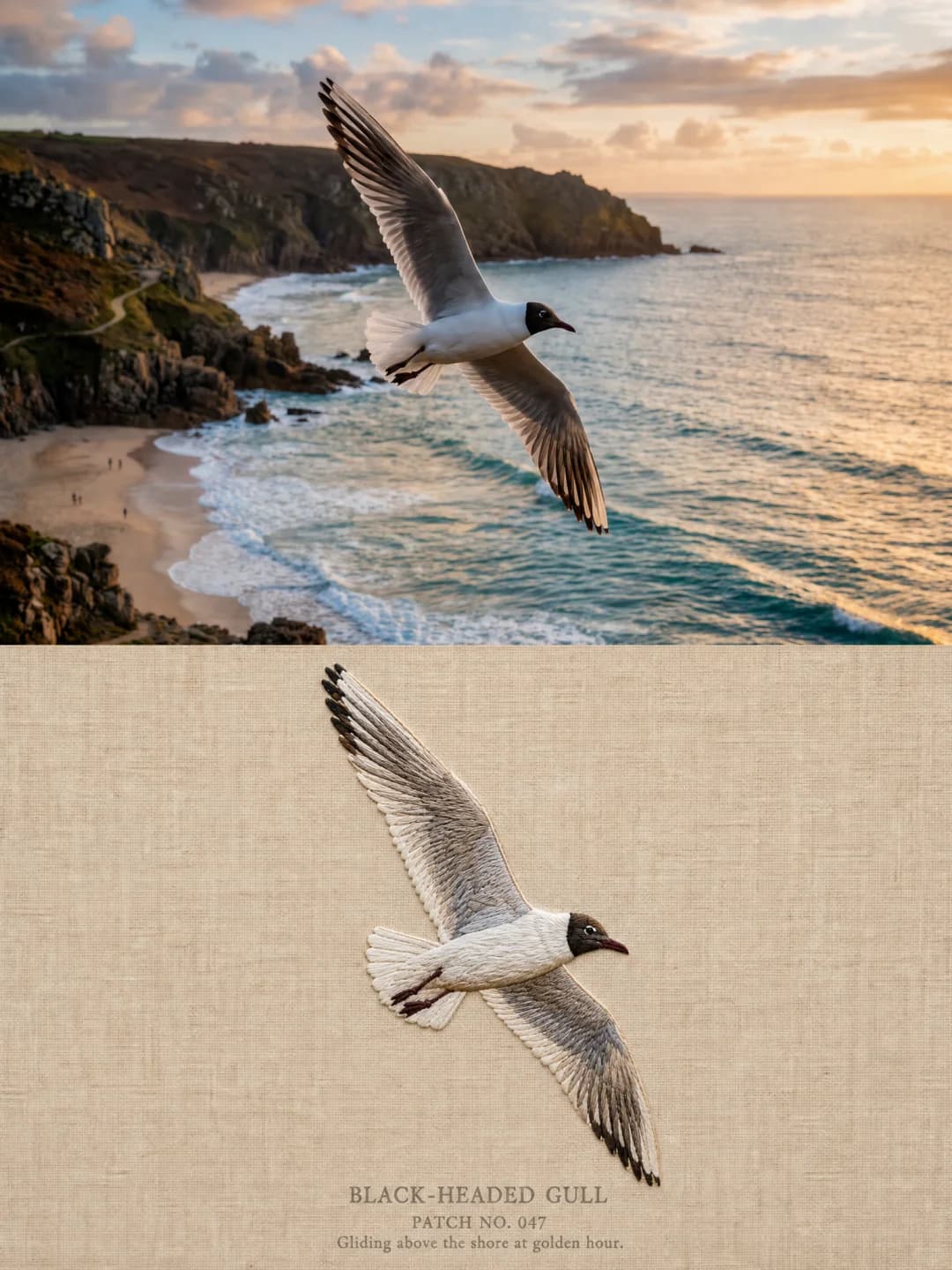
Every image below was made with the prompt on this page.
What is a Fabric Collage Poster?
A fabric collage poster rebuilds a photograph as flat cloth shapes sewn onto a coarse linen ground. The scene sits on a long, narrow patchwork panel whose edges are deliberately torn and left with loose threads, and every outline carries visible hand stitching. Shapes are allowed to break out past the panel's border rather than being boxed inside it, which is what keeps the result reading as a made object instead of a filter. A short line of thread lettering sits in the surrounding canvas.
Which photos work well?
Wide landscape photos with a clear horizon and a few large shapes: a coastline, a terraced hillside, a road curving out of frame, a single figure seen from behind. Strong flat colour areas — sky, water, fields — become whole pieces of cloth and survive well.
Which photos struggle?
Close-up portraits and anything that depends on fine detail. The technique flattens everything to cut cloth, so faces, text on signs, crowds and dense foliage lose their definition. Vertical photos also fight the format, because the patchwork panel is a wide horizontal strip.
The prompt behind this tool
This is the full prompt, translated into English. Copy it and use it with any image model that accepts a reference photo.
Turn the photo I upload into a single piece of fabric collage art. Do not assemble multiple images, output only the face of the artwork, and do not generate a frame, a wall or a hand-held mockup.

The whole background is a coarse pale-beige linen canvas, and its colour may shift slightly to suit the photograph's own palette. Centred in the frame sits a long, narrow horizontal patchwork panel occupying a third of the frame's height. Its outline must not be a perfectly regular rectangle: the edges are deliberately torn into a frayed fringe with loose threads hanging from them.

Cut scraps of gingham cotton, linen and washed burlap into flat, simplified shapes that reproduce the original photograph's composition and the positions of its objects, allowing some irregular edges and pieces that stick out. Every outline carries clearly visible hand sewing — running stitches and outline stitches — with a flat, rustic, artlessly childlike charm, layered up with obvious fabric patches, cross stitches and strips of torn paper.

The scenery in the picture is not confined by the patchwork panel's border: fabric shapes may extend, protrude and break out past its edge, and objects may grow beyond the patchwork area as though the real scene were pushing out through the canvas. Do not force every object inside the rectangle.

Thread lettering · generated
Add one short line of small English text, relevant to what the picture shows, in the empty space of the collage. The letters are drawn and sewn in fine thread — stitched lettering that matches the patchwork style overall. Keep the type size small, place it at random in the empty area, and do not cover the main subject.
Frequently asked questions
Will it change the people or the buildings in my photo?
- It rebuilds them rather than keeping them. Everything is re-cut as flat cloth shapes, so a person becomes a silhouette in a few pieces of fabric and a building becomes its roof line and wall blocks. Composition and object positions are held; photographic likeness is not.
Can I choose the stitched line of text?
- Yes, and you should. Type it into the field and the model transcribes it exactly. If you leave it blank the model invents a short English phrase from what it sees, which is usually fine but occasionally reads oddly.
What language can the stitched line be in?
- Any language. The samples on this page are English because that is what the original prompt asked for, but a supplied line is transcribed as given. Very long lines get crowded — the thread lettering is small by design, so keep it to a few words.
Where do the fabric colours come from?
- From your photograph. The prompt asks for gingham cotton, linen and washed burlap in the scene's own palette, and lets the beige of the backing canvas shift slightly to suit it. A cold blue seascape and a warm sunset produce noticeably different cloth.
What size do I get?
- 2K is 100 credits and 4K is 200. Both come back as a landscape image — this effect outputs 3:2, because the patchwork panel is a wide horizontal strip and a portrait frame would leave it stranded.
How long does it take?
- Usually 60 to 90 seconds. A 4K render is a larger job and can run a little longer.
Can I use my own prompt instead?
- Not in this tool — it runs one fixed, tested prompt. The full text is published on this page, so you can copy it and run your own variations anywhere that accepts image prompts.
What happens to my photo?
- It is stored privately so the generator can read it, deleted on a schedule, never shown to other users, and never used to train a model.