Oil Painting Diorama Poster
Your photo on top, the same scene rebuilt below as a floating impasto miniature
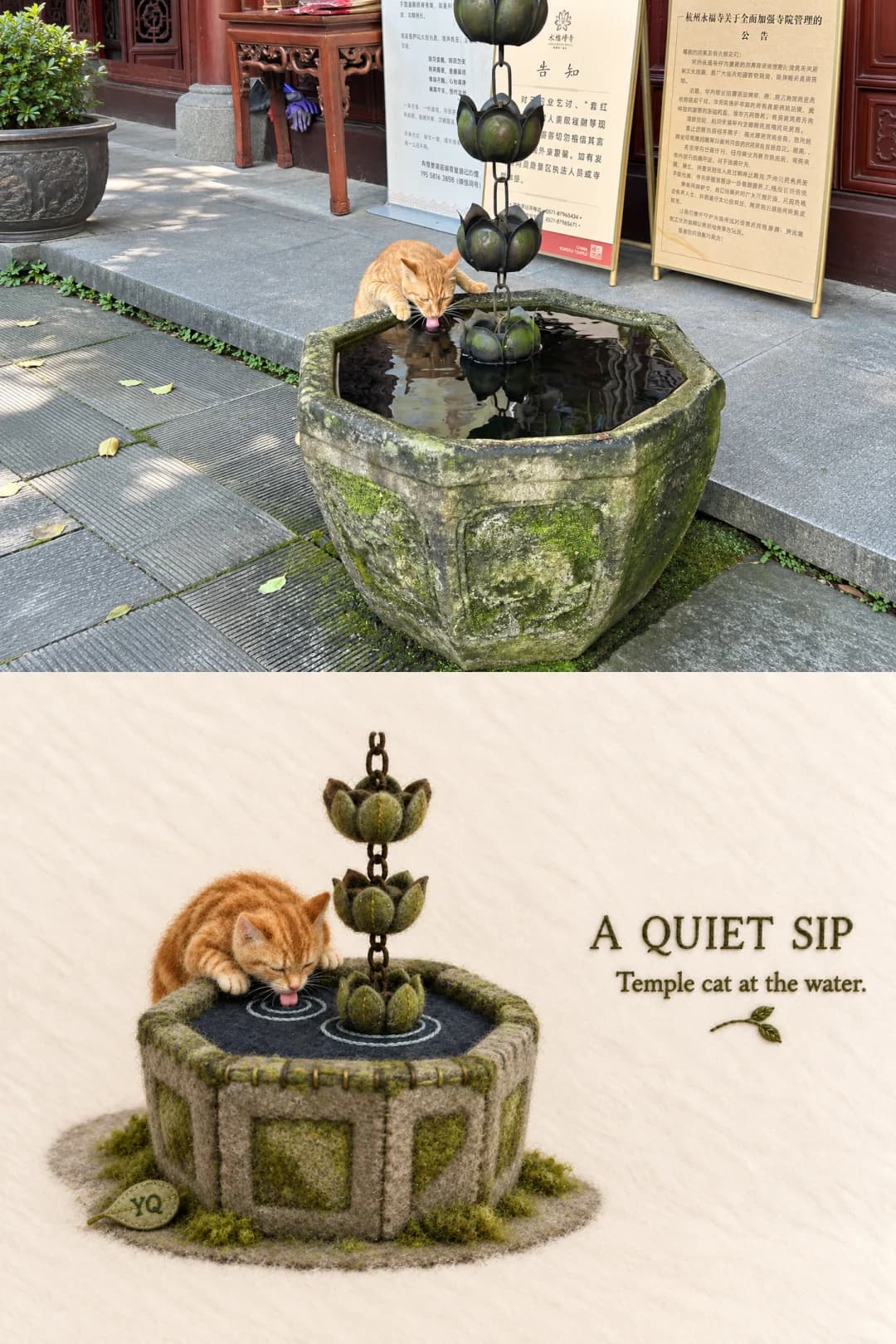
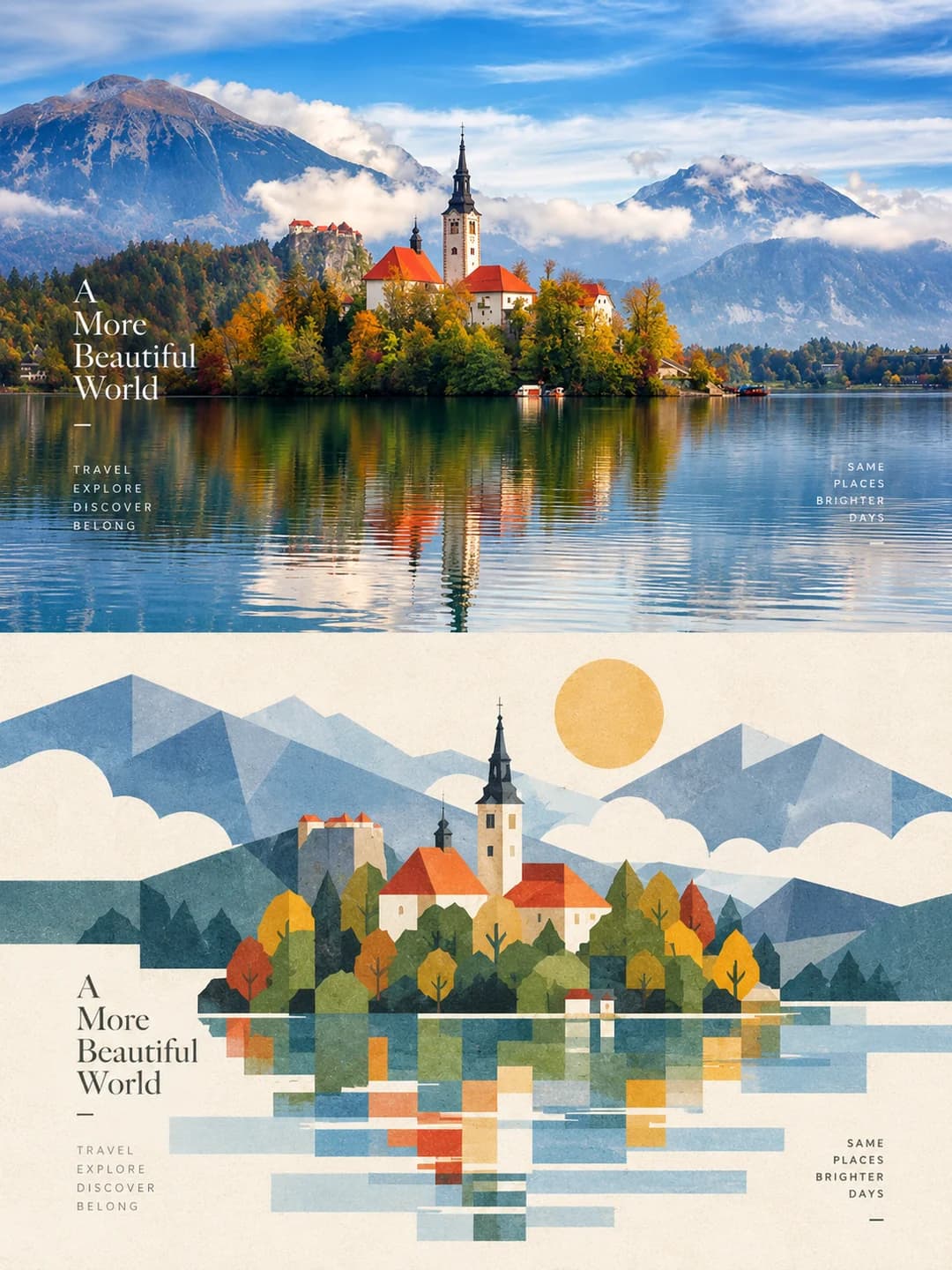
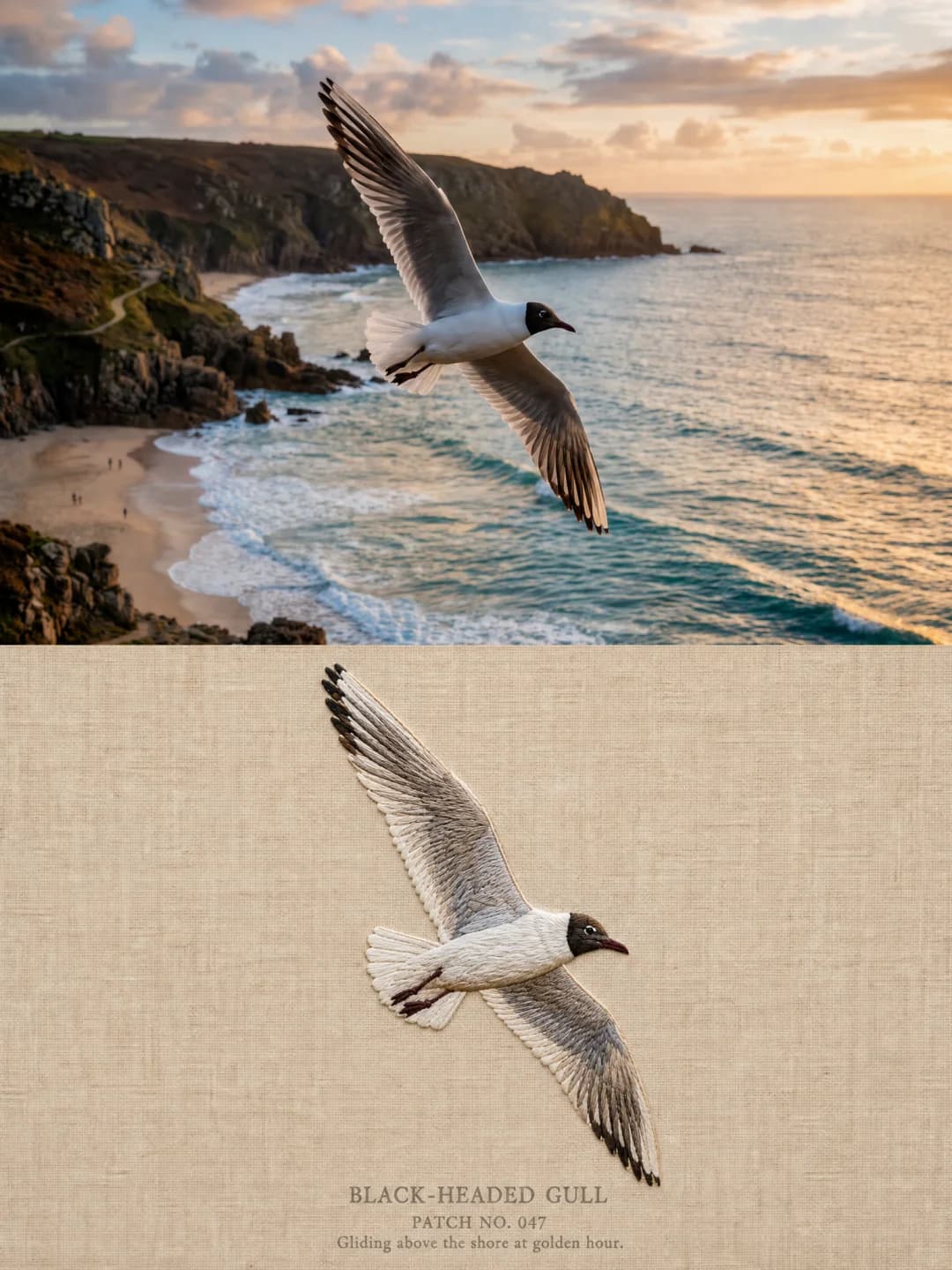
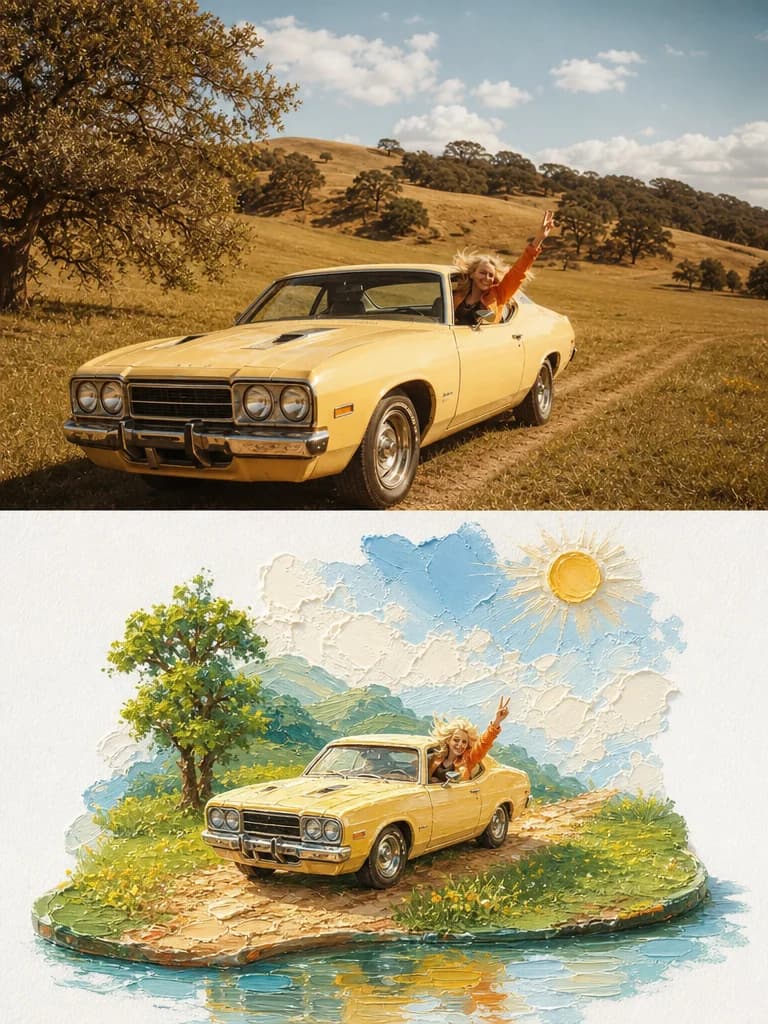
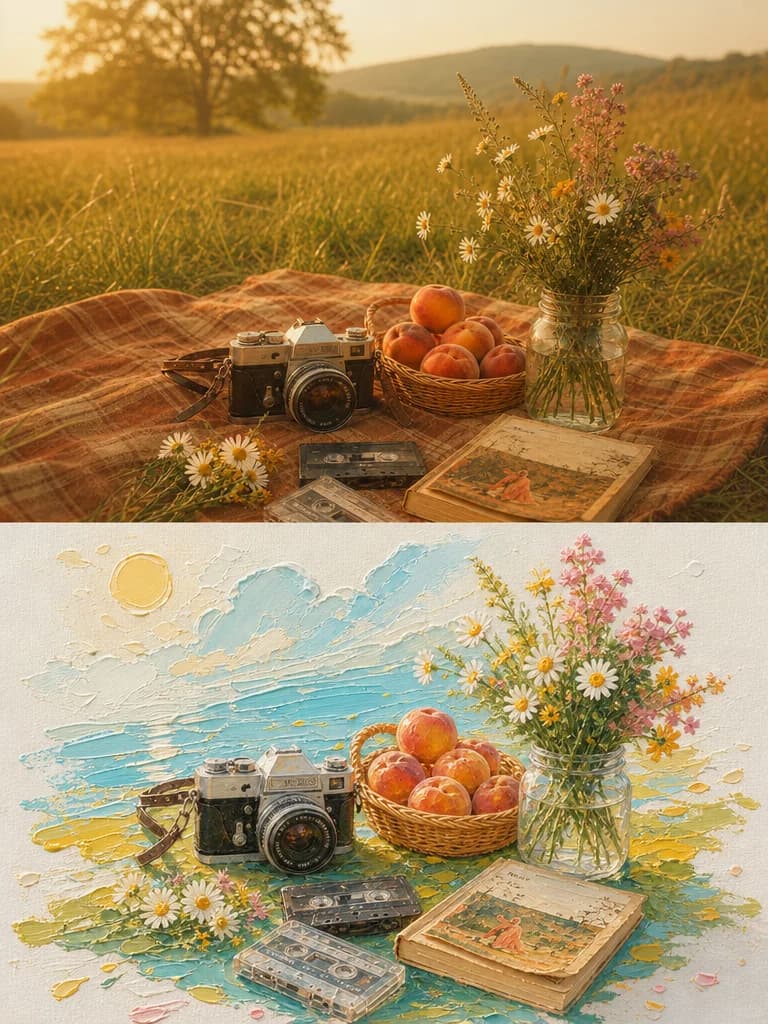
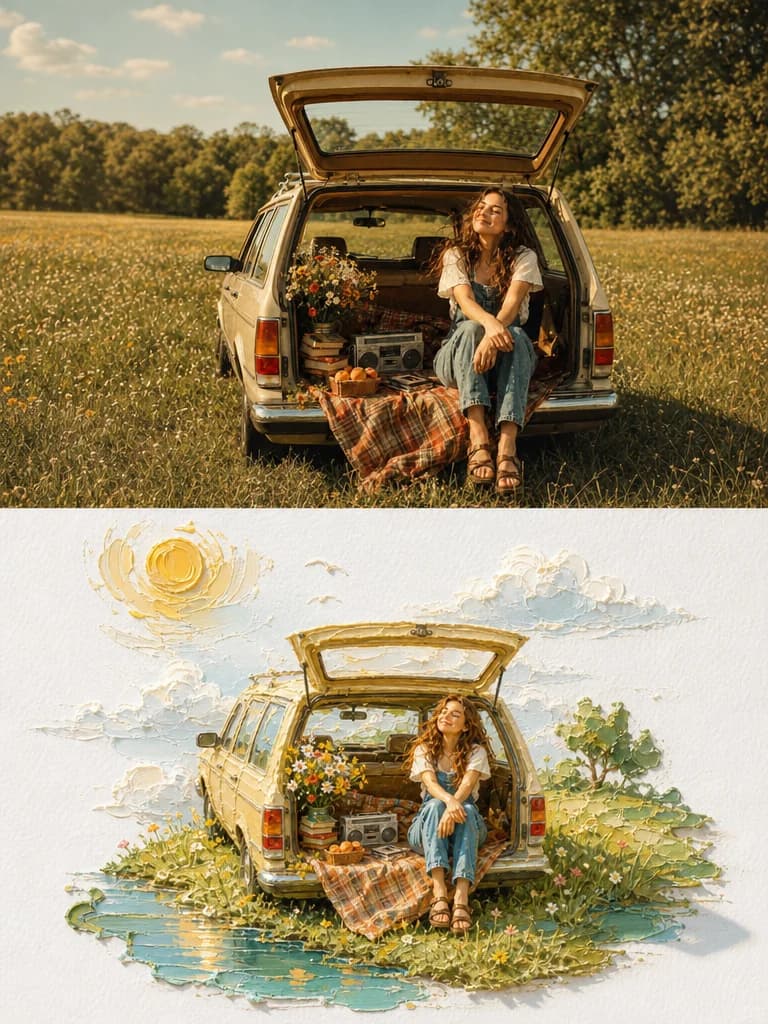
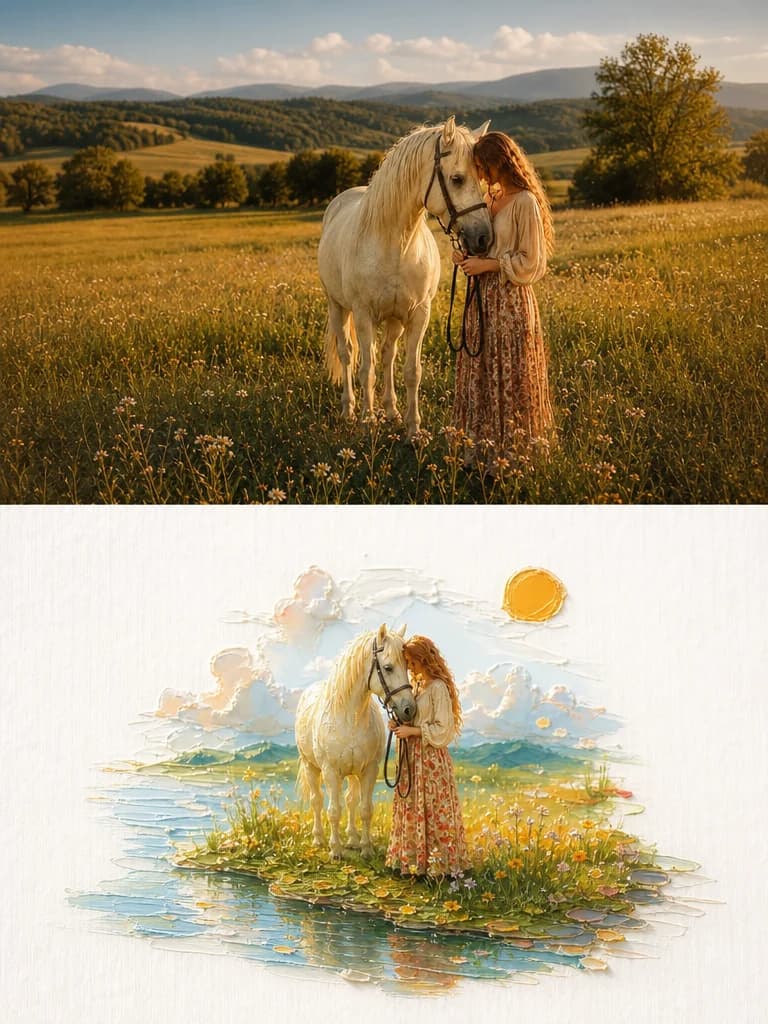
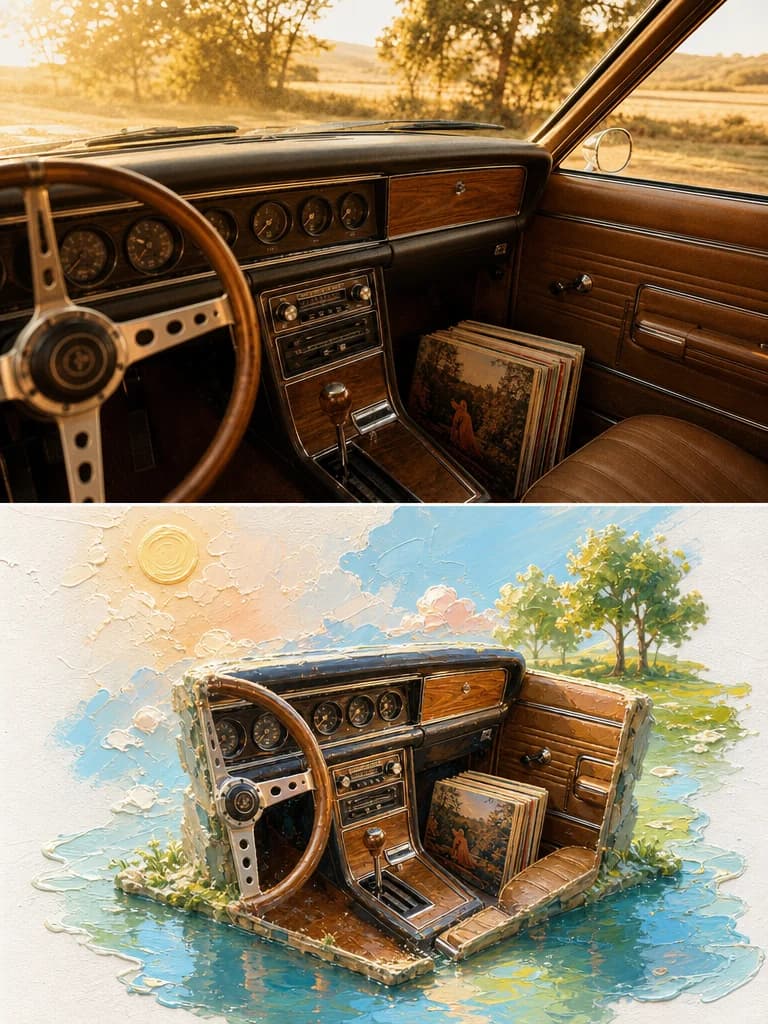
Upload a photo and get back a 3:4 poster: your photograph across the top, the same scene rebuilt underneath as a small three-dimensional landscape in thick oil paint, floating on a band of colour across bright white paper.
100 credits per image · about a minute · New accounts get 500 credits — 5 free images.
Try it with your own photo
New accounts get 500 credits — 5 free images.
Examples
Every image below was made with the prompt on this page.
What is a oil painting diorama poster?
An oil painting diorama poster splits a 3:4 frame into two halves of equal height. The top is your photograph, lightly graded towards an exhibition-print look and otherwise unaltered. The bottom rebuilds the same subject as a 3D impasto miniature landscape on bright white textured paper: thick brushwork, stacked colour, palette-knife marks and a sculptural sense of volume, with the subject carried on a single clear painted band that can read as water, ground, a path or a band of light. Reflections, ripples and a little impasto cloud or sun sit around it, and the palette is remixed from the photo's liveliest colours, brightened.
Works well with
A clear scene with a strong subject and a sense of place: a car in a field, a picnic laid out on a blanket, a person with an animal, a characterful interior. The lower half turns it into a small world, so photos that already read as a little scene work best.
Struggles with
Close-up portraits and flat, frontal subjects. There is no landscape to build from a face, and the effect's whole device — a subject floating on a painted band with reflections beneath it — needs a scene with ground and depth. Very dark or muted photographs also fight the brief, which pushes everything brighter and purer.
The prompt behind this tool
This is the full prompt, translated into English. Copy it and use it with any image model that accepts a reference photo.
Turn the photograph I upload into a single standalone high-end design poster — not a collage of several images. Use a vertical 3:4 composition split into two zones of strictly equal height, 50% each.

The top zone keeps the original photograph, preserving the subject's identity, structure and proportions, its real texture, the natural light and shadow and the original colour mood. Apply only light high-end photographic grading, so it carries the quality of an art magazine, an independent publication or an exhibition print. The sky, ground or surrounding environment may be extended naturally to fit the frame, but the subject must not be stretched, distorted or altered.

The lower zone takes the most recognisable subject, contours, posture and narrative relationships from the photograph and rebuilds them as a 3D impasto oil-painting miniature-landscape illustration poster. Do not copy the photograph mechanically. Instead, turn the subject into a refined, three-dimensional, almost touchable miniature landscape, reshaped with thick brushwork, stacked colour and a sculptural sense of volume. Keep the subject's core identity and key features while moderately improving the angle, the proportions and the detail so it suits being presented as a miniature.

Compose it with a large field of white space plus a centred or slightly off-centre diagonal main axis. On a bright white textured paper surface, let a clear, thickly painted band of colour — related to the theme of the original — carry the subject; it may become water, ground, a path, a band of light or an abstract slice of landscape. The subject and that band interact naturally, with reflections, ripples, specks of light or extending brushstrokes added according to the content. Keep only a little of the background: some thickly painted cloud, a sun, mist or another natural motif related to the theme, forming a light and poetic sense of spatial depth.

The painting language emphasises impasto oil × miniature object × clear luminosity. Keep the visible build-up of paint, palette-knife marks, undulating edges, paper texture and a half-handmade sense of modelling. Concentrate the impasto on the water, the clouds, the colour band and local highlights, so the subject reads as both refined and three-dimensional and as genuinely material oil paint.

For colour, take the brightest, liveliest, most alive colours from the photograph above and remix them rather than averaging the image. Lift the value and purity overall, using clear sky blue, lake teal, fresh green, warm yellow, coral orange and peach pink — bright hues derived naturally from the original — and let the crisp play of warm against cool produce a healing quality.
Frequently asked questions
- Will it change the people or the subject in my photo?
- Not in the top half — that is your photograph, with only light grading and, if the frame needs it, a natural extension of the sky or ground. The lower half is explicitly given licence to rework things: the prompt asks it to keep the subject's core identity and key features while moderately improving the angle, proportions and detail to suit a miniature. So expect a faithful likeness, not a pixel-accurate one.
- Why is there no headline or caption option?
- The source prompt never mentions text, and none of its sample images carries any. Rather than bolt on a headline field the prompt does not support, this effect ships without caption controls. It is one of three in this set with none.
- What is the coloured band under the subject?
- It is the device that makes the lower half work. The prompt asks for a single clear, thickly painted band of colour on white paper to carry the subject — it can read as water, ground, a path or a band of light depending on your photo, with reflections and ripples where they fit. It is why the result looks like a floating miniature rather than a cut-out.
- What kind of photo works best?
- One clear scene with a strong subject and a sense of place: a car in a field, a picnic laid out on a blanket, someone with an animal, an interior with character. The lower half rebuilds it as a small landscape, so a photo that already reads as a little world works best.
- Where do the colours come from?
- From your photo, then brightened. The prompt says to take the liveliest colours out of the original and remix them rather than average the image, lifting value and purity towards sky blue, lake teal, fresh green, warm yellow, coral and peach. A muted photograph will come back noticeably brighter than it went in.
- What size do I get?
- 2K is 1792 × 2400 pixels, which prints cleanly at poster size. 4K doubles that and costs 200 credits instead of 100.
- Can I use my own prompt instead?
- Not in this tool — it runs one fixed prompt. The full text is published on this page, so you can copy it and run your own variations anywhere that accepts image prompts.
- What happens to my photo?
- It is stored privately so the generator can read it, and deleted on a schedule. It is never made public, never shown to other users, and never used to train a model.