Crayon Travel Poster
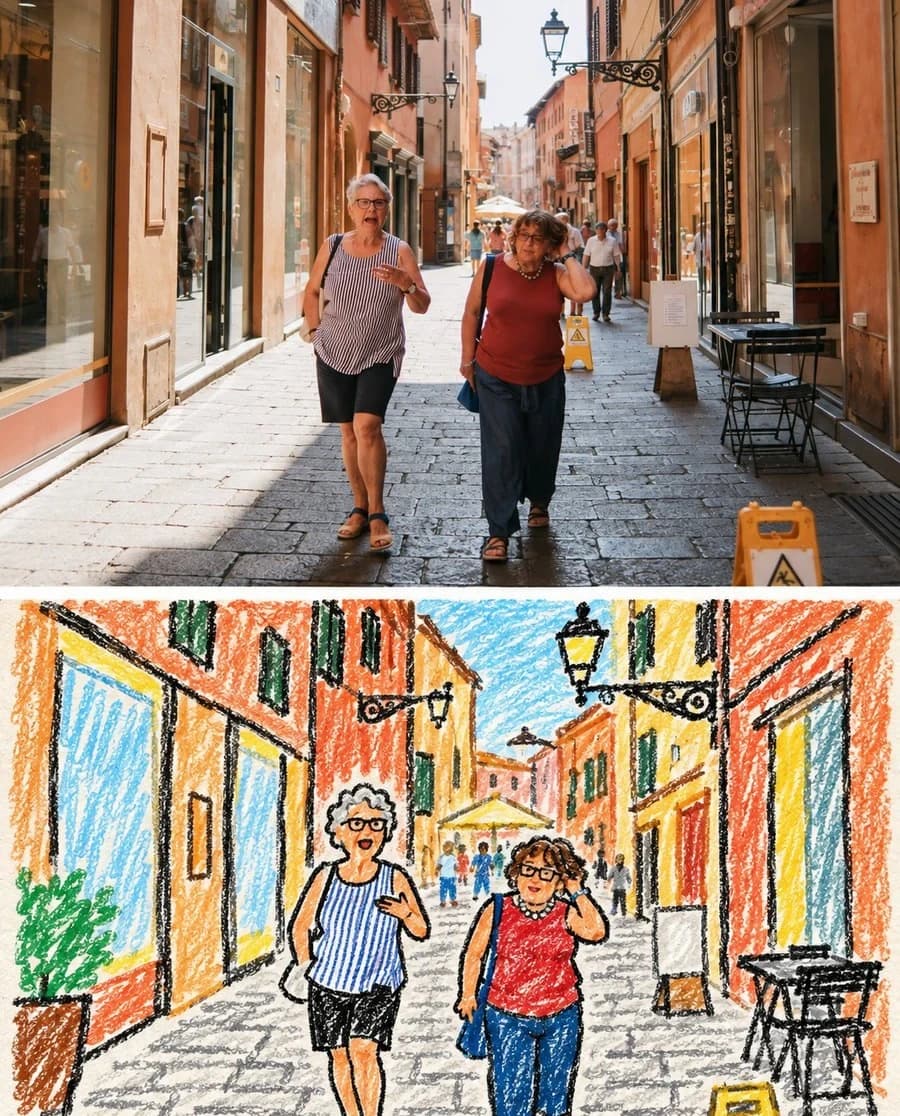
Your street photo on top, the same street redrawn below in children's crayon
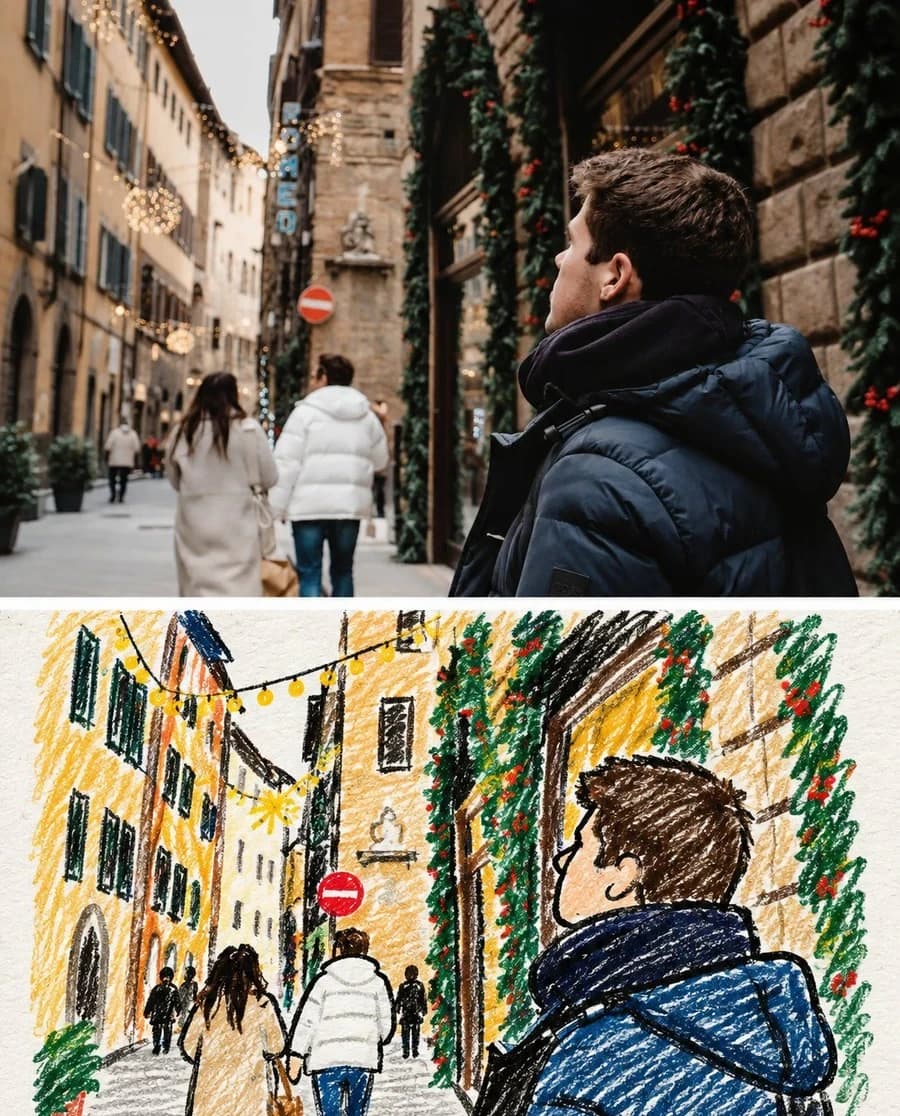
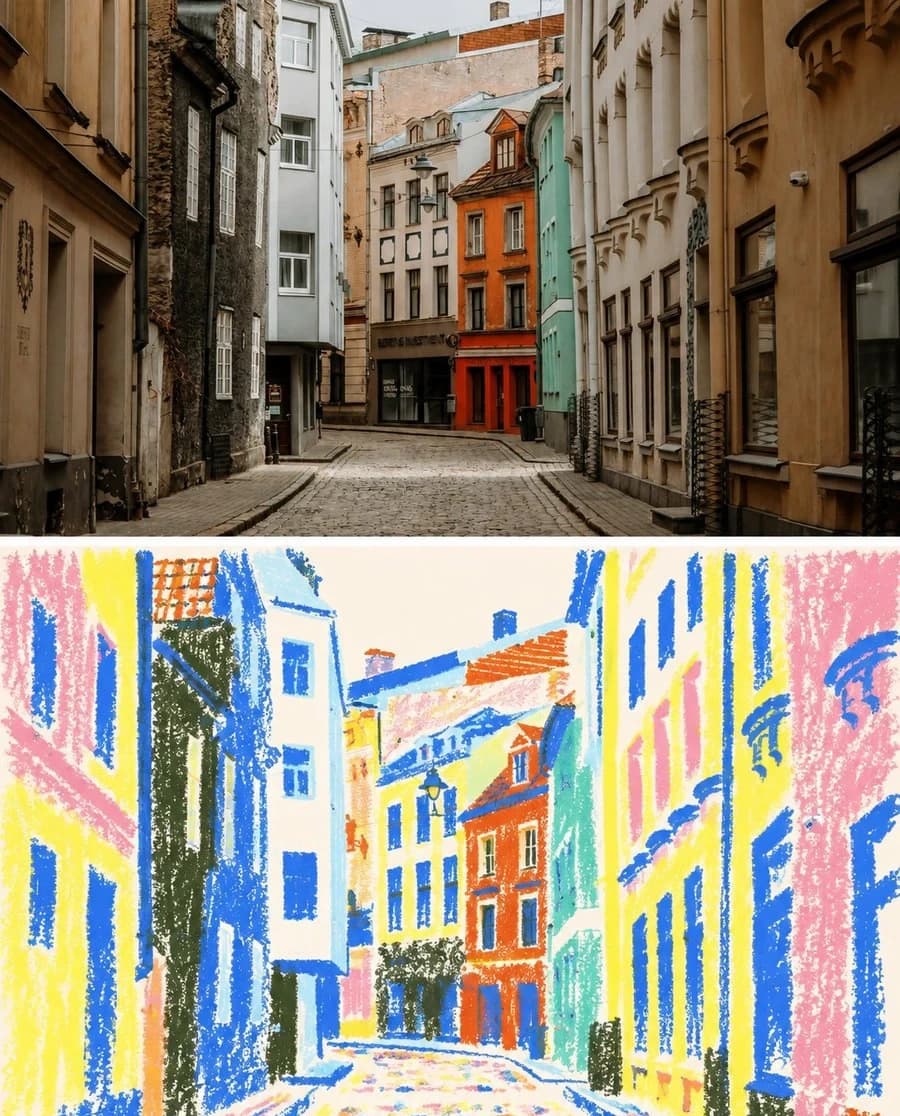
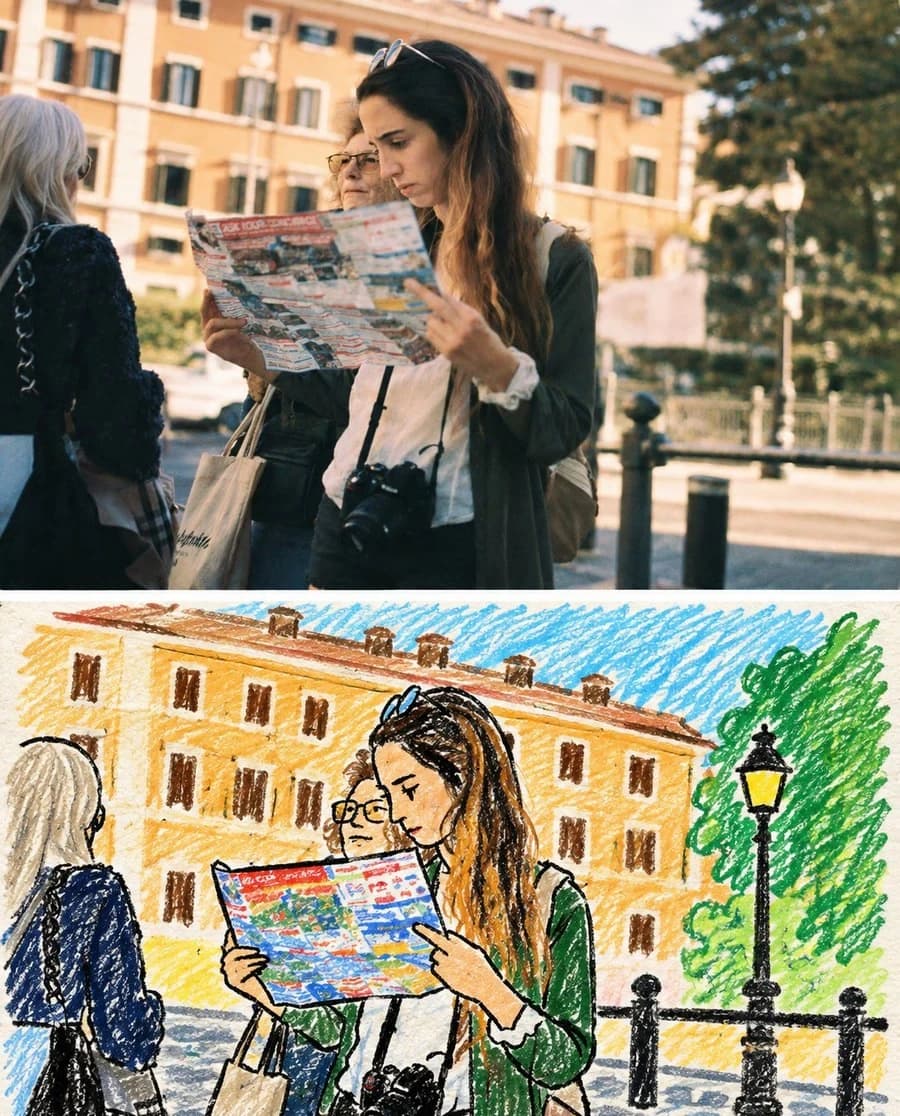
Upload a street photo and get back a 3:4 poster: your photograph across the top, the same street and the same people redrawn underneath in wax crayon on rough ivory paper — crooked outlines, visible grain, colours pushed bright.
100 credits per image · about a minute · New accounts get 500 credits — 5 free images.
Try it with your own photo
New accounts get 500 credits — 5 free images.
Examples
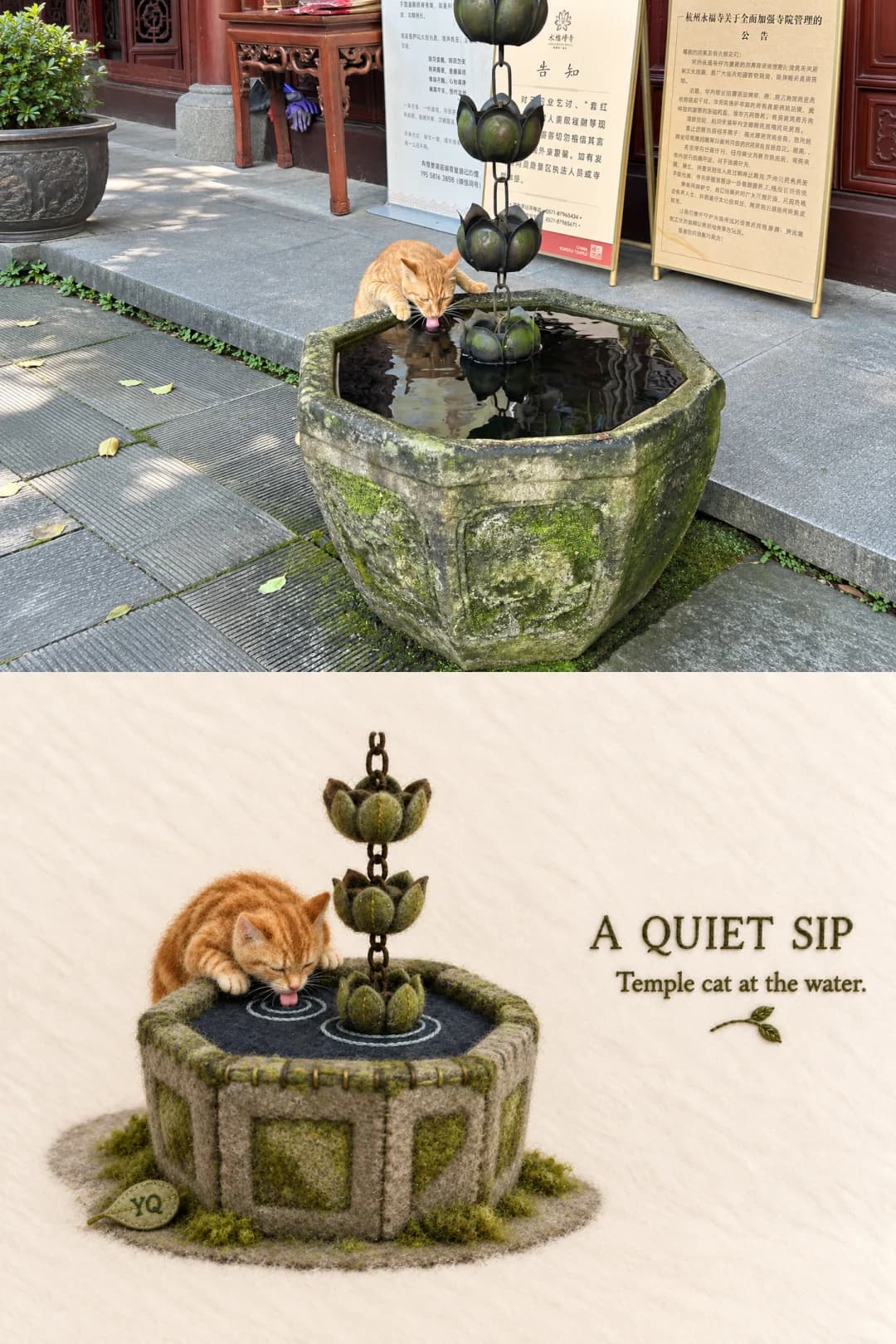
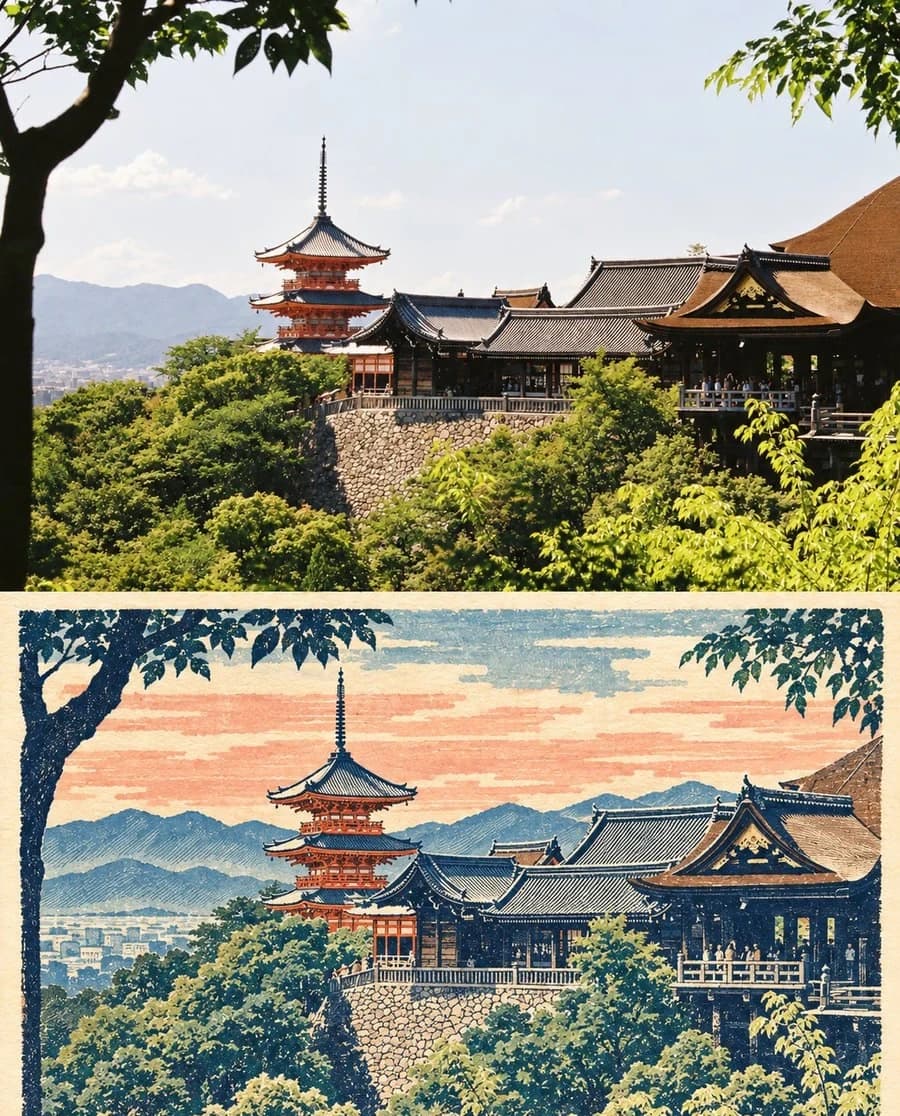
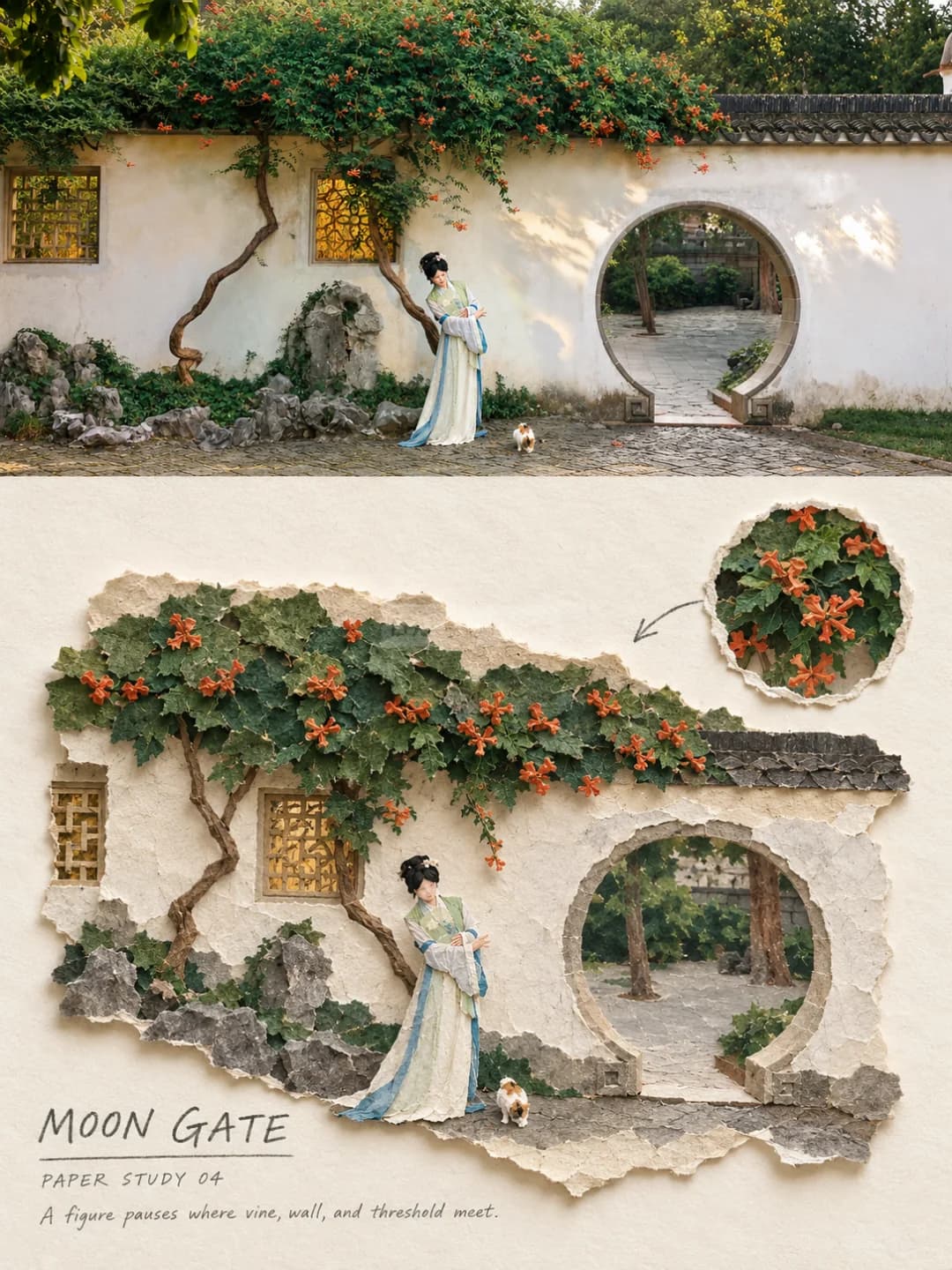
Every image below was made with the prompt on this page.
What is a crayon travel poster?
A crayon travel poster splits a 3:4 frame into two halves separated by a single thin white rule. The top half is your street photograph at high fidelity, keeping the people, clothing, action, buildings, light and perspective untouched. The bottom half redraws the same street as a childlike crayon city memory: wax crayon, coloured pencil and marker on rough ivory paper, with crooked heavy black outlines, obvious crayon grain, scrubbed uneven fill, strokes over the line and naive proportions. The number of figures, their positions, postures and clothing outlines are all preserved, so the drawing still corresponds to the photograph at a glance. It carries no text of any kind.
Works well with
Street scenes with people: a lane with figures walking, someone reading a map, a shopfront, a festive street at dusk. This is the one effect in the set designed around keeping people recognisable, so a photo with a person in it is the best case rather than the worst.
Struggles with
Wide landscapes, interiors and close-up portraits. The prompt is built on city detail — lane perspective, walls, lamps, cobbles, string lights — and on figures at full-body scale, so a face filling the frame has nothing for the crayon to work with. It also refuses to decorate: it will not invent landmarks, vehicles, people or animals that are not in your photo.
The prompt behind this tool
This is the full prompt, translated into English. Copy it and use it with any image model that accepts a reference photo.
Make one complete, standalone 3:4 vertical top-and-bottom travel redrawing poster. The top half preserves the uploaded travel street photograph at high fidelity, keeping the people, their clothing, their actions, the buildings, the street, the light, the colour, the perspective and the position of the subjects. Do not illustrate it. The bottom half redraws the same people and the same street as a "childlike crayon city memory".

Distil only the city details that are genuinely visible in the original photograph and that carry recognisable meaning — the perspective of a narrow lane, a warm-toned wall, windows, a street lamp, cobblestones, festival lights, railings, or the map in a tourist's hands. Choose them from the content of each photograph; do not apply a fixed mountain backdrop, cars or generic landmarks.

Preserve the number of main figures, their positions relative to each other, their postures, the direction of their movement, the outline of their clothing, and their relationship to the street. The figures may be simplified in a naive, childlike way, but they must correspond to the original photograph at a glance.

For the lower half, use children's wax crayon, coloured pencil and marker scribbled on rough ivory paper: crooked heavy black outlines, obvious crayon grain, repeated scrubbing, uneven fill, the occasional stroke over the line, naive perspective and innocent proportions — like a city drawn carefully by a child from the memory of a trip. Take the colours from the original photograph and push them to a more childlike saturation, but do not use one fixed palette across different photographs.

The two halves take roughly half each, separated by nothing more than a single clean thin white rule. The lower half must not trace the whole photograph at the same scale; it needs to distil at a smaller scale, or reorganise the figures and the most meaningful city details, and keep the breathing room of the ivory paper.

The lower half must be genuinely redrawn, not a photo filter. Do not invent additional landmarks, vehicles, people or animals. Do not add a title, subtitles, labels, a logo, a watermark, an original-image badge, an AI badge, garbled characters, a nine-up grid or a multi-image collage. Avoid polished vector illustration, 3D rendering, and a photorealistic lower half.
Frequently asked questions
- Will it change the people in my photo?
- Not in the top half — that is your photograph, kept at high fidelity down to clothing, action and position. The lower half is a deliberate redrawing, and this is the one effect in the set built around keeping people: the prompt requires the number of figures, their positions relative to each other, their postures, the direction they are moving and the outline of their clothes to survive, so they should be recognisable at a glance even when drawn like a child drew them.
- Why is there no title or caption option?
- Because the prompt bans text. Its closing line rules out titles, subtitles, labels, logos, watermarks, original-image and AI badges, and garbled characters. A child's drawing does not come with a headline, and adding one would break the conceit. It is one of two effects in this set with no caption controls.
- What kind of photo works best?
- Street scenes with people in them. A lane with figures walking, someone reading a map, a shopfront, a festive street at dusk. The effect was written around city detail — narrow-lane perspective, warm walls, lamps, cobbles, string lights — and it is at its best when there is a person to anchor the drawing.
- Is it really crayon, or watercolour?
- Crayon. Wax crayon, coloured pencil and marker on rough ivory paper, with visible grain, scrubbed fill and heavy crooked outlines. The post this effect came from was labelled watercolour, but the prompt asks for crayon and that is what the tool produces.
- Where do the colours come from?
- From your photo, then pushed brighter. The prompt extracts the original's colours and raises them to a more childlike saturation, and explicitly forbids reusing one fixed palette across different photographs — so a winter street and a summer lane come back in different registers.
- What size do I get?
- 2K is 1792 × 2400 pixels, which prints cleanly at poster size. 4K doubles that and costs 200 credits instead of 100.
- Can I use my own prompt instead?
- Not in this tool — it runs one fixed prompt. The full text is published on this page, so you can copy it and run your own variations anywhere that accepts image prompts.
- What happens to my photo?
- It is stored privately so the generator can read it, and deleted on a schedule. It is never made public, never shown to other users, and never used to train a model.