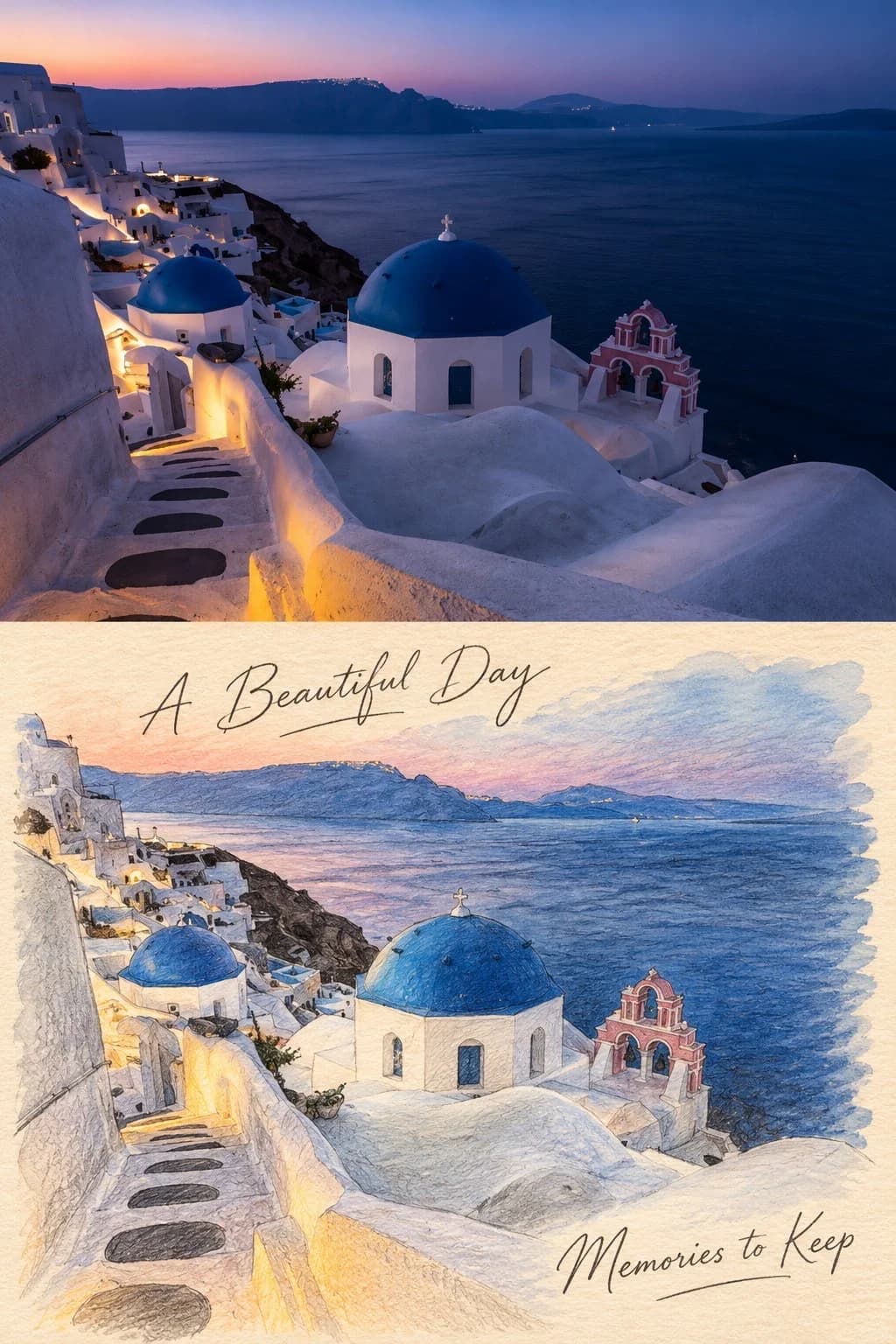
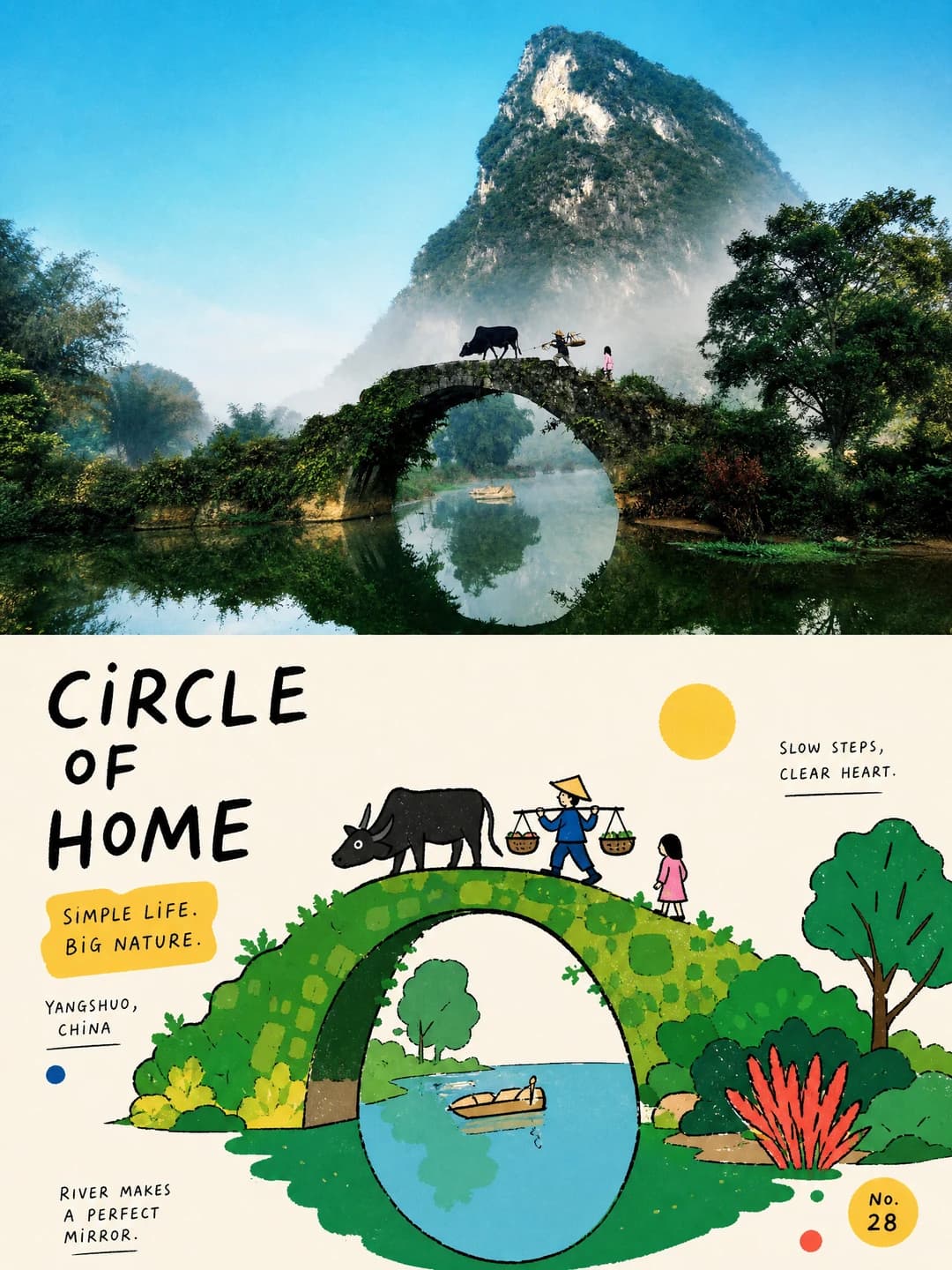
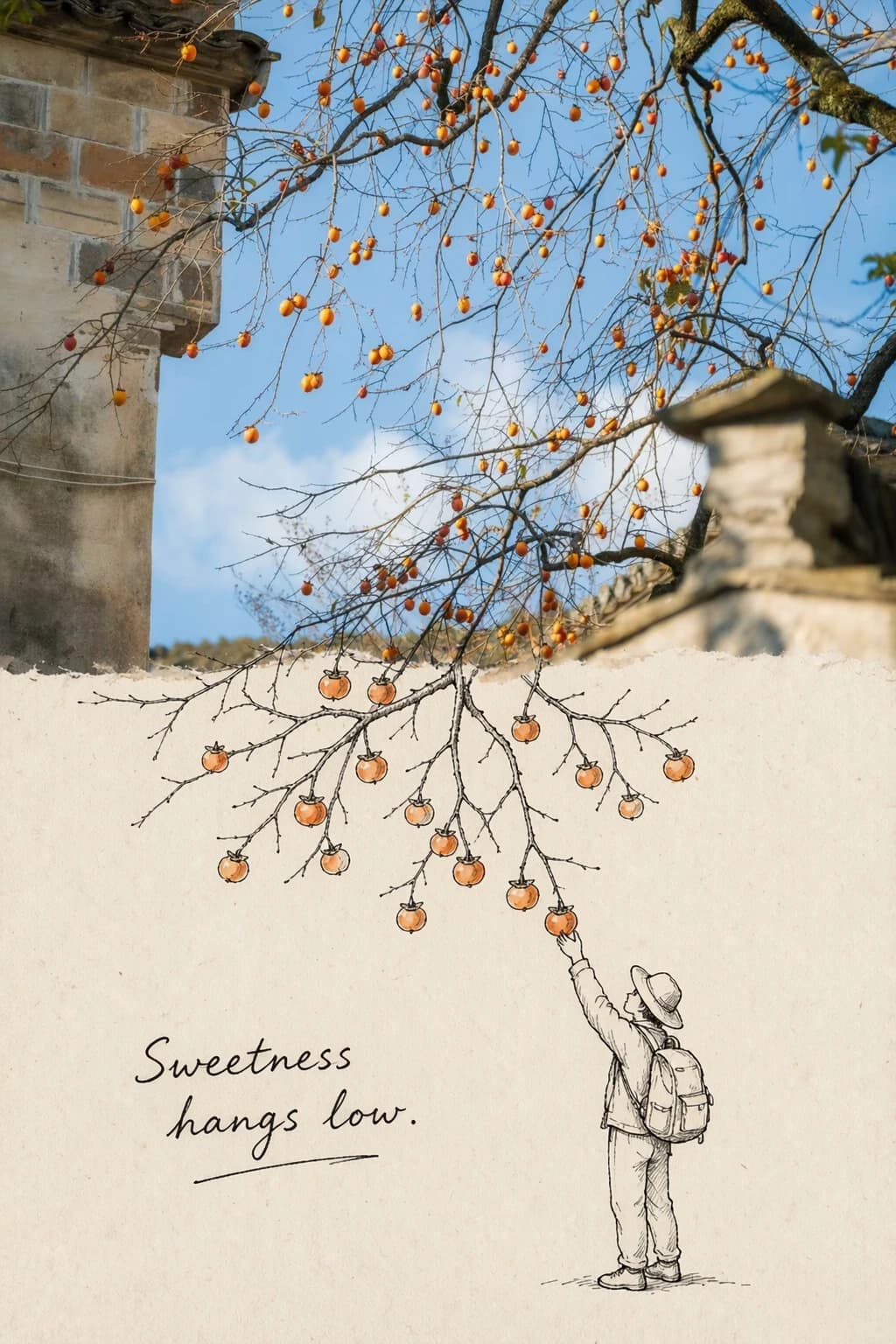
Vintage Picture Book Travel Poster
Your travel photo on top, and the same place drawn like an old European storybook below
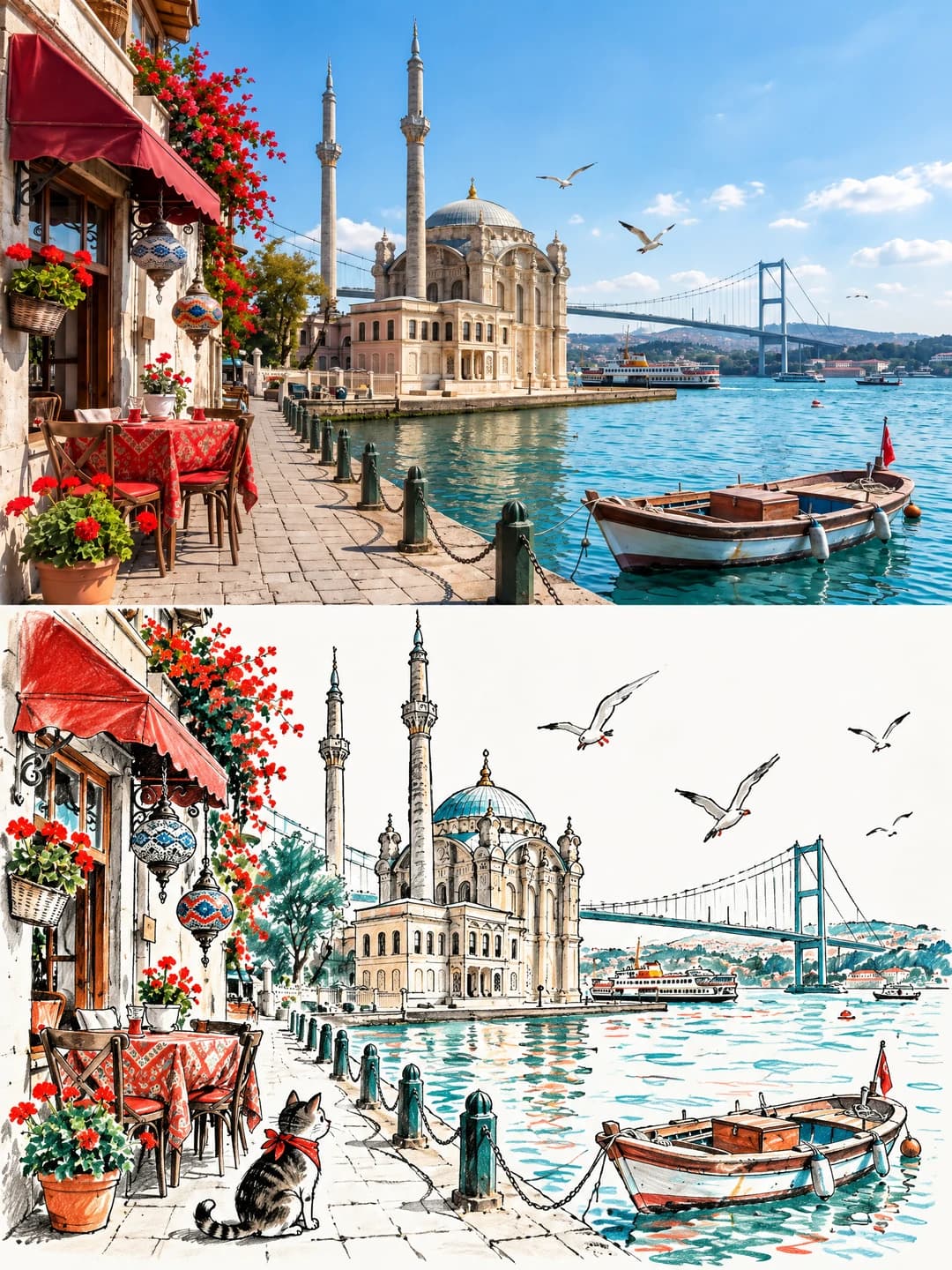
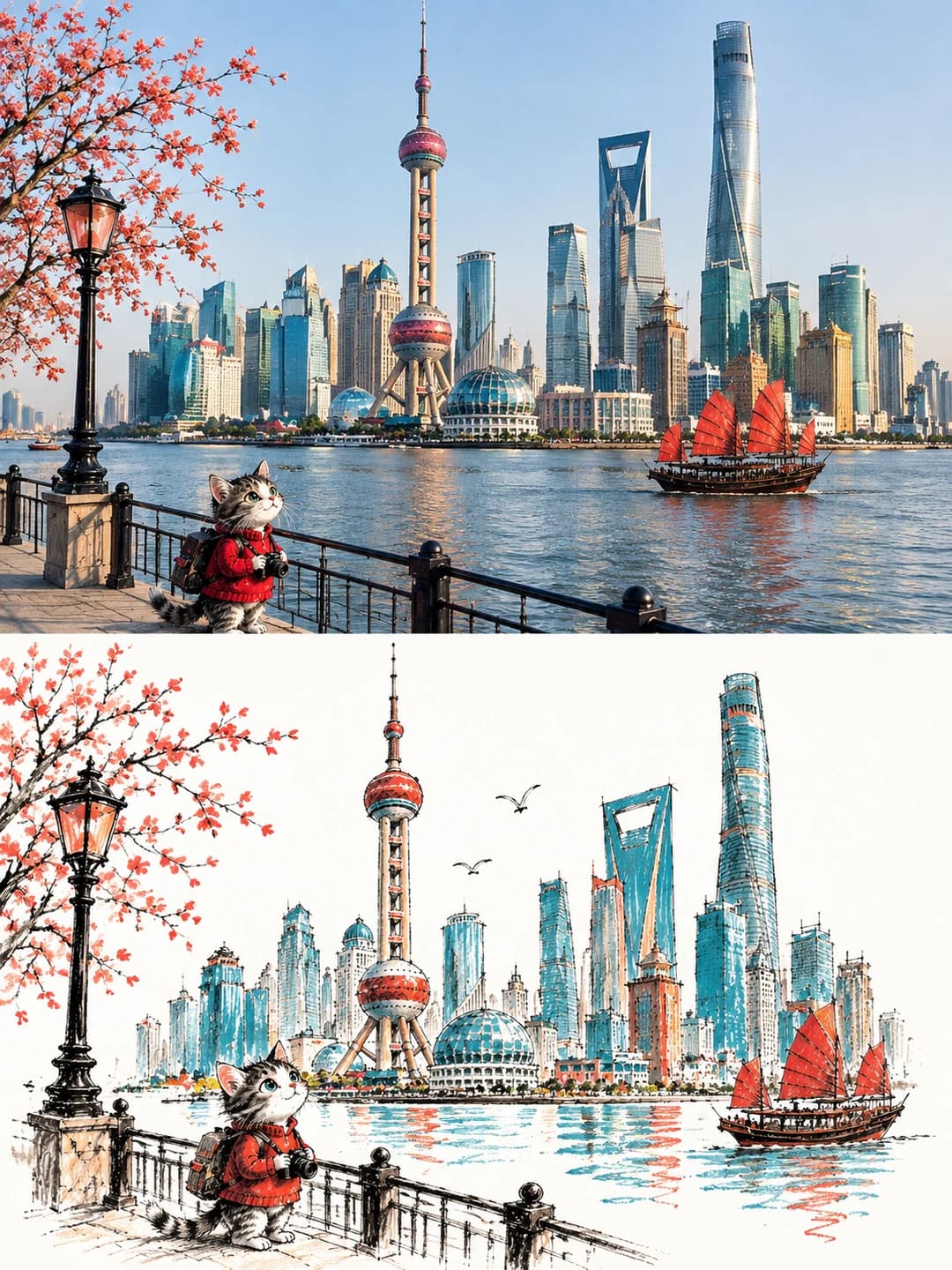
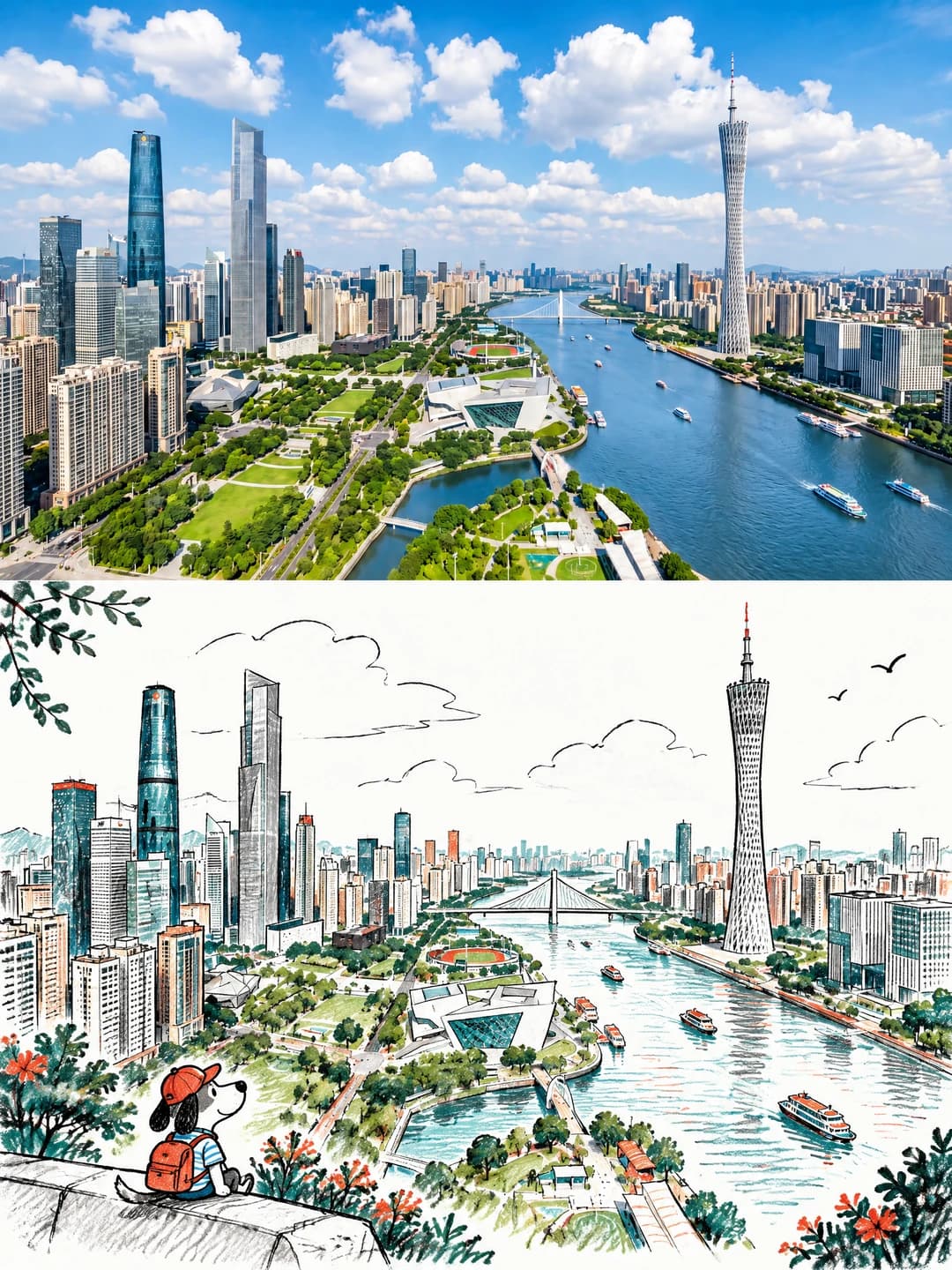
Upload a travel photo and get back a 3:4 poster. The top half is your photo, untouched; the bottom half redraws the same view in black ink, coloured pencil and a little gouache on bright white paper, often with a small animal traveller tucked in at the bottom.
100 credits per image · about a minute · New accounts get 500 credits — 5 free images.
Try it with your own photo
New accounts get 500 credits — 5 free images.
Examples
Every image below was made with the prompt on this page.
What is a Vintage Picture Book Travel Poster?
A vintage picture book travel poster is a 3:4 vertical image split exactly in half. The top half is your photo, unedited. The bottom half is the same scene redrawn in the manner of a mid-20th-century European storybook: wobbly black ink lines, rough pencil and charcoal shading, and grainy coloured pencil with touches of gouache, mostly turquoise and vermilion. Colour is deliberately sparse. The sky stays white, water is a few teal and red strokes, and buildings are only partly filled, so most of the page is bare paper. Where it fits, a small dressed-up animal traveller is added as a companion.
Which photos work well?
Travel photos with one recognisable landmark or skyline: a tower, a mosque, a bridge, a waterfront, a harbour with boats. Wide, landscape-shaped photos fit the top half best. Scenes with water and a clear sky suit it especially well, because the style turns them into a few loose strokes and lots of white.
Which photos struggle?
Close-up portraits — this is a place drawing, and faces are sketched loosely. Photos where the point is colour everywhere, like a sunset or a neon street: the prompt keeps the sky white and limits colour to a few accents, so that colour will not come through. Anything that needs a title or caption: the prompt forbids text. If you want warmer cream paper and a handwritten line, try the colored pencil travel poster; for a flat, rounded Korean-style drawing, the storybook illustration poster.
How to turn a photo into a Vintage Picture Book Travel Poster
- 1
Pick an effect
Browse the samples on each tool page to see exactly what you will get before you spend anything.
- 2
Upload your photo
JPEG, PNG or WebP, up to 12 MB. Your photo stays private and is never used to train anything.
- 3
Add your own caption
Most effects let you set the text that appears in the final image, in any language.
- 4
Download the result
You get a high-resolution image, yours to use. 2K is 100 credits, 4K is 200.
The prompt behind this tool
This is the full prompt, translated into English. Copy it and use it with any image model that accepts a reference photo.
Look carefully at the photo I upload and pick out its core subject, landmark buildings, people, animals and surroundings. Keeping the subject's features and the scene recognisable, re-create it as a travel illustration in the style of a mid-20th-century European storybook.

Style: black ink line work, rough pencil lines, charcoal shading, grainy coloured pencil and a little opaque gouache. Lines may bend, overlap and wobble, with the hand clearly visible. Buildings and the subject can be gently exaggerated, so it feels lively and playful, like a picture book.

Colour and white space: mainly turquoise, vermilion, charcoal black and pure white, for a strong warm-cool contrast. Colour it loosely, in broken, incomplete patches, and never fill the whole picture. The sky must stay mostly pure white, with no sky colour, gradients or painted clouds. Lakes, rivers, buildings and plants are shown only with scattered short pencil strokes, grainy marks and a few patches of gouache, letting plenty of white paper show through. Water is drawn as sparse teal lines, broken vermilion strokes and a few reflections, never a solid sheet of blue. Buildings are only partly coloured, with uncoloured walls and their structure carried by ink lines, hatching and shadow. The whole thing should be airy, light and casual, a hand drawing on white paper.

Content and composition: bring out the most recognisable subject in the photo, and work in two or three local details naturally, without piling them up. Where it suits, add a small animal traveller in simple clothes doing something playful near the bottom of the picture, as a supporting character; if the photo's subject is already an animal, keep it and do not add an unrelated one. Add a few plants and keep the composition natural and asymmetrical.

Layout: one 3:4 vertical before-and-after image. The top half (50%) shows the uploaded photo exactly as it is, unedited and unfiltered; the bottom half (50%) shows the matching vintage picture-book illustration. The two halves line up, with a clean divide, the subjects corresponding and nothing overlapping. The whole canvas is exactly 3:4.

Avoid: a heavily coloured sky, water filled in solid, flat even colour, a filled-in background, gradients, beige aged-paper texture, slick vector style, glossy 3D, over-realism, unrelated elements, text, borders, watermarks and extra panels.

The result: a vintage travel illustration that looks drawn straight onto white paper with a pen and coloured pencils, with colour only at the key points and plenty of irregular white space, colour that misses its lines, broken strokes and natural marks of the hand.
Frequently asked questions
Will it change my photo?
- The top half is meant to be your photo exactly as it is — the prompt asks for no edits and no filter. Image models sometimes redraw a photo anyway, so check the top half before you use it.
Where does the little animal come from?
- The prompt allows the model to add a small animal traveller in simple clothes, doing something playful near the bottom of the drawing, when it suits the scene. It is optional, so some results have one and some do not. If your photo is already of an animal, it keeps that animal instead of adding another.
Can I add a title or caption?
- No. The original prompt lists text among the things to avoid, and none of the creator's examples carry any words, so there is no text box. If you need a place name on it, add it afterwards in an editor.
Why is so much of the drawing left white?
- That is the style. The prompt asks for loose, broken colouring, a white sky, and water drawn as a few strokes rather than painted blue, so it reads like pen and pencil on paper, not a finished painting.
Where do the colours come from?
- Mostly from the prompt, not your photo. It works in turquoise, vermilion, charcoal and white, so a blue-sky photo comes back with a white sky and teal-and-red water. Green trees and a few local colours do carry over in small amounts.
Does it work for people?
- People in the scene are kept as small sketched figures. It is not a portrait tool; for a close-up of a face, the likeness will be loose.
What size do I get and how long does it take?
- A 3:4 vertical image: 2K (1792×2400) for 100 credits or 4K for 200 credits. It usually takes 60 to 90 seconds.
What happens to my photo?
- It is stored privately, used only to make your image, deleted on a schedule, and never used for training. The full prompt is on this page if you would rather run it elsewhere.