
2Slides 标志
Preview

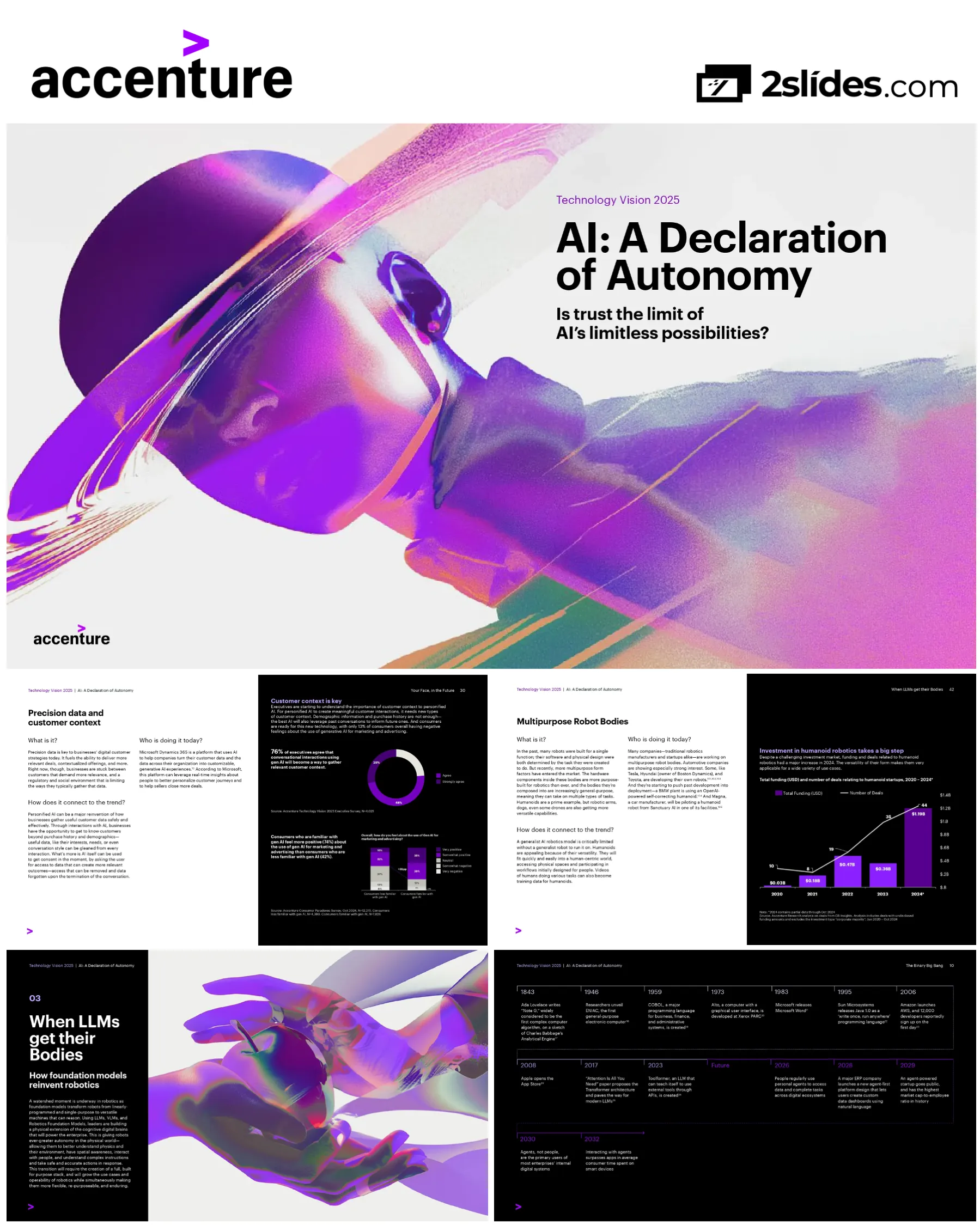
Accenture Technology Vision 2025 PPT: "AI: A Declaration of Autonomy"

67 张幻灯片

Accenture Technology Vision 2025 - AI: A Declaration of Autonomy

145 点赞
0 下载

快速导航

标签

AI
Artificial intelligence
Technology vision
2025 trends
Digital transformation

分享幻灯片

描述

主要主题

Accenture Technology Vision 2025 - AI: A Declaration of Autonomy

主要优势

  • •Comprehensive analysis of 2025 AI trends transforming businesses and industries
  • •Data-backed insights from global executive surveys and research
  • •Practical guidance for organizations at different adoption stages (early adopter, slow approach, preparing to start)
  • •Future-focused scenarios demonstrating real-world AI applications
  • •Framework for building trust in AI systems across technology, data, and people
  • •Roadmaps for implementing AI cognitive digital brains and autonomous systems

目标受众

  • •C-level executives and technology leaders
  • •IT decision-makers and enterprise architects
  • •Digital transformation teams
  • •AI strategy and implementation professionals
  • •Industry leaders across sectors (financial services, healthcare, retail, manufacturing, etc.)
  • •Research and innovation teams
  • •Human resources leaders navigating workforce AI integration

使用场景

  • •AI strategy development and roadmap planning
  • •Executive presentations on technology trends
  • •Digital transformation initiative kickoffs
  • •Team training on emerging AI capabilities
  • •Investment decision-making for AI projects
  • •Industry benchmarking and competitive analysis
  • •Stakeholder communication on AI transformation

独特价值主张

  • •Focus on AI autonomy as the next evolutionary step beyond automation
  • •Four key trend deep dives with actionable implications and next steps
  • •Integration of trust as a foundational element of AI success
  • •Blend of research data, case studies, and future scenarios
  • •Adaptable guidance for organizations at different adoption maturity levels
  • •25 years of Accenture's technology trend expertise distilled into actionable insights
  • •Holistic approach covering technology, people, processes, and ethics

幻灯片页面 (67)

每张幻灯片页面的详细视图,包括布局、关键内容和视觉元素。

页面 1
Title Slide

Cover Page - AI: A Declaration of Autonomy

内容

Title slide introducing Accenture's 2025 Technology Vision focused on AI autonomy and trust

布局结构

Bold title design with Accenture logo, main theme statement, and visual accent element

关键视觉元素

  • •Accenture brand logo
  • •Main title 'AI: A Declaration of Autonomy'
  • •Subtitle 'Is trust the limit of AI's limitless possibilities?'
  • •Abstract visual graphic element
页面 2
Introduction/Foreword

Foreword

内容

Introduction to the 25th edition of Technology Vision, highlighting AI as the new digital and 2025 as the year of scaled AI

布局结构

Single-column text layout with paragraph formatting and key points emphasized

关键视觉元素

  • •Accenture logo
  • •Page header with vision title
  • •Visual separator element
页面 3
Agenda/Table of Contents

Contents

内容

Table of contents listing the four key trends with corresponding page numbers

布局结构

Grid layout with icon-based section previews and page number indicators

关键视觉元素

  • •Icon-based trend previews
  • •Page number indicators
  • •Color-coded sections
  • •Visual grid arrangement
页面 4
Introduction/Overview

Introduction - AI: A Declaration of Autonomy

内容

Overview of AI generalization as the key trend, distinguishing from AGI and introducing cognitive digital brains

布局结构

Single-column text with section headers and paragraph breaks

关键视觉元素

  • •Section header formatting
  • •Page navigation indicators
  • •Clean white background for readability
页面 5
Concept Explanation

The Generalization of AI

内容

Exploration of AI's growing pervasiveness in daily life and business, with examples of current applications

布局结构

Text-heavy single-column layout with subheadings for key concepts

关键视觉元素

  • •Subheading formatting
  • •Paragraph separation
  • •Consistent typography hierarchy
页面 6
Framework Explanation

A Cognitive Digital Brain at Every Level

内容

Explanation of how cognitive digital brains operate at individual, business, industry, and national levels

布局结构

Text layout with four key dimensions described in separate sections

关键视觉元素

  • •Section breaks for different levels
  • •Emphasized key terms
  • •Logical flow formatting
页面 7
Component Breakdown

What makes a Cognitive Digital Brain?

内容

Breakdown of the four interconnected layers (Knowledge, Models, Agents, Architecture) that compose cognitive digital brains

布局结构

Text-based layout with bullet points for each layer

关键视觉元素

  • •Bullet point formatting for layers
  • •Emphasized layer names
  • •Descriptive text alignment
页面 8
Key Concept Explanation

The Only Limit is Trust

内容

Discussion of trust as the critical enabler for AI autonomy, with analogies and business implications

布局结构

Single-column text with narrative flow and key points highlighted

关键视觉元素

  • •Emphasized key statements
  • •Paragraph separation for different trust dimensions
  • •Consistent visual style
页面 9
Implementation Framework

Pathways to a Stronger Foundation

内容

Three key dimensions for building trust: systems and data, AI itself, and people-driven trust

布局结构

Text layout with three main sections each addressing a trust dimension

关键视觉元素

  • •Section headers for each trust dimension
  • •Descriptive text blocks
  • •Visual consistency with previous pages
页面 10
Trend Preview

Technology Vision Trends Introduction

内容

Overview of the four key trends explored in the report and their transformative impacts

布局结构

Text-based layout with brief descriptions of each trend

关键视觉元素

  • •Bold trend names
  • •Concise descriptions
  • •Page navigation indicators
页面 11
Timeline

01 The Binary Big Bang - Timeline

内容

Historical timeline of software development milestones leading to the current AI revolution

布局结构

Horizontal timeline layout with years and corresponding technology milestones

关键视觉元素

  • •Chronological timeline format
  • •Year indicators
  • •Milestone descriptions
  • •Visual timeline line
页面 12
Trend Analysis

The Binary Big Bang - The Big Picture

内容

Analysis of how foundation models are transforming software development and digital ecosystems

布局结构

Text layout with paragraph formatting and key examples

关键视觉元素

  • •Section header
  • •Example highlights
  • •Consistent typography
页面 13
Framework Explanation

The Binary Big Bang - Key Pillars

内容

Explanation of abundance, abstraction, and autonomy as the three pillars of the new technology paradigm

布局结构

Text-based layout with each pillar addressed in separate sections

关键视觉元素

  • •Bold pillar names
  • •Descriptive text blocks
  • •Logical flow formatting
页面 14
Technology Overview

The Binary Big Bang - The Technology

内容

Introduction to the three key technologies driving the trend: Agentic Systems, Digital Core, Generative UI

布局结构

Bullet-point list of technology categories with brief descriptions

关键视觉元素

  • •Bullet point formatting
  • •Bold technology names
  • •Concise descriptions
页面 15
Technology Deep Dive

Agentic Systems

内容

Detailed explanation of agentic systems, their capabilities, and current implementations

布局结构

Text layout with subsections for 'What is it?', 'How does it connect?', and 'Who is doing it?'

关键视觉元素

  • •Subsection headers
  • •Emphasized key terms
  • •Research paper count chart
页面 16
Technology Deep Dive

Digital Core

内容

Explanation of composable digital core architecture and its role in enabling AI agent autonomy

布局结构

Text layout with standard subsection format and data visualization

关键视觉元素

  • •Subsection headers
  • •Bar chart showing enterprise AI agent capabilities
  • •Data source citation
页面 17
Technology Deep Dive

Generative UI

内容

Overview of generative UI concepts, benefits, and current implementations by Google, Vercel, etc.

布局结构

Text layout with standard subsections and survey data visualization

关键视觉元素

  • •Subsection headers
  • •Pie chart showing executive timeline expectations
  • •Data source citation
页面 18
Implications Analysis

The Binary Big Bang - The Implications

内容

Analysis of how the new technology paradigm will disrupt the app model and business workflows

布局结构

Single-column text with paragraph formatting and key implications highlighted

关键视觉元素

  • •Emphasized key points
  • •Paragraph separation for different implications
  • •Consistent visual style
页面 19
Impact Analysis

The Binary Big Bang - Implications for Customer Interactions

内容

Exploration of how generative UI and agentic systems will transform customer experiences and business models

布局结构

Text-based layout with examples and future scenarios

关键视觉元素

  • •Example highlights
  • •Scenario descriptions
  • •Visual consistency
页面 20
Action Plan/Guidance

The Binary Big Bang - What's Next

内容

Actionable guidance for organizations at different adoption stages (early adopter, slower approach, preparing to start)

布局结构

Sectioned layout with clear headings for each adoption stage

关键视觉元素

  • •Bold section headers
  • •Bullet point recommendations
  • •Trust preservation section
页面 21
Future Scenario/Case Study

The Binary Big Bang - A Portrait of the Future

内容

Narrative scenario showing how a pizza chain operations employee uses AI agents to develop a new business opportunity

布局结构

Story-based text layout with narrative flow

关键视觉元素

  • •Narrative formatting
  • •Visual image of the scenario
  • •Engaging storytelling structure
页面 22
Trend Title Page

02 Your Face, in the Future - Title Page

内容

Title page for the second trend focusing on AI personality and brand differentiation

布局结构

Bold title design with trend name, subtitle, and visual background

关键视觉元素

  • •Large trend title
  • •Subtitle 'Differentiating when every interface looks the same'
  • •Background visual element
  • •Accenture branding
页面 23
Timeline

Your Face, in the Future - Timeline

内容

Historical timeline of brand personality and customer interaction innovations

布局结构

Dual timeline layout (historical and future projections) with year indicators

关键视觉元素

  • •Color-coded timeline sections
  • •Year indicators
  • •Milestone descriptions
  • •Visual timeline structure
页面 24
Trend Analysis

Your Face, in the Future - The Big Picture

内容

Analysis of the risk of generic AI experiences and the opportunity to infuse brand personality into AI systems

布局结构

Text-based layout with paragraph formatting and key points emphasized

关键视觉元素

  • •Emphasized key statements
  • •Paragraph separation for different points
  • •Visual consistency
页面 25
Case Study/Examples

Your Face, in the Future - Emerging Efforts

内容

Examples of successful personified AI implementations by Instagram, SiriusXM, and others

布局结构

Text layout with case examples and key insights

关键视觉元素

  • •Example highlights
  • •Quotes from industry leaders
  • •Research citation
页面 26
Future Vision

Your Face, in the Future - The Personified Business

内容

Vision for how personified AI will create new customer relationships and brand experiences

布局结构

Text-based layout with narrative descriptions of future scenarios

关键视觉元素

  • •Scenario descriptions
  • •Emphasized benefits
  • •Consistent typography
页面 27
Technology Overview

Your Face, in the Future - The Technology

内容

Introduction to three key technologies: Personified AI, Multimodal Models, Precision Data & Context

布局结构

Bullet-point list of technology categories

关键视觉元素

  • •Bullet point formatting
  • •Bold technology names
  • •Concise descriptions
页面 28
Technology Deep Dive

Personified AI

内容

Detailed explanation of personified AI capabilities, implementation approaches, and examples like GPT-4o

布局结构

Text layout with standard subsections and data visualization

关键视觉元素

  • •Subsection headers
  • •Line chart showing research paper growth
  • •Data source citation
页面 29
Technology Deep Dive

Multimodal AI Models

内容

Overview of multimodal AI capabilities (text, image, audio, video) and current implementations

布局结构

Text layout with standard subsections and research data

关键视觉元素

  • •Subsection headers
  • •Line chart showing research interest growth
  • •Data source citation
页面 30
Technology Deep Dive

Precision Data & Customer Context

内容

Explanation of how precision data enables meaningful personified AI interactions while maintaining privacy

布局结构

Text layout with subsections and survey data visualizations

关键视觉元素

  • •Subsection headers
  • •Bar charts showing executive and consumer attitudes
  • •Data source citations
页面 31
Implications Analysis

Your Face, in the Future - The Implications

内容

Analysis of trust implications for personified AI, including data privacy, transparency, and explainability

布局结构

Text-based layout with three key trust pillars addressed

关键视觉元素

  • •Section headers for trust pillars
  • •Example highlights
  • •Emphasized key points
页面 32
Action Plan/Guidance

Your Face, in the Future - What's Next

内容

Actionable guidance for organizations at different adoption stages for implementing personified AI

布局结构

Sectioned layout with clear headings for each adoption stage

关键视觉元素

  • •Bold section headers
  • •Bullet point recommendations
  • •Trust preservation section
页面 33
Future Scenario/Case Study

Your Face, in the Future - A Portrait of the Future

内容

Narrative scenario showing how a personified AI mortgage broker creates a differentiated customer experience

布局结构

Story-based text layout with narrative flow

关键视觉元素

  • •Narrative formatting
  • •Visual image of the scenario
  • •Engaging storytelling structure
页面 34
Trend Title Page

03 When LLMs get their Bodies - Title Page

内容

Title page for the third trend focusing on AI-powered robotics and physical autonomy

布局结构

Bold title design with trend name, subtitle, and visual background

关键视觉元素

  • •Large trend title
  • •Subtitle 'How foundation models reinvent robotics'
  • •Background visual element
  • •Accenture branding
页面 35
Timeline

When LLMs get their Bodies - Timeline

内容

Historical timeline of robotics development milestones leading to current foundation model-powered robots

布局结构

Horizontal timeline layout with years and corresponding robotics innovations

关键视觉元素

  • •Chronological timeline format
  • •Year indicators
  • •Milestone descriptions
  • •Visual timeline line
页面 36
Trend Analysis

When LLMs get their Bodies - The Big Picture

内容

Analysis of how foundation models are transforming robots from task-specific to general-purpose machines

布局结构

Text-based layout with paragraph formatting and key insights

关键视觉元素

  • •Emphasized key statements
  • •Example of Figure 01 robot
  • •Visual consistency
页面 37
Framework Explanation

When LLMs get their Bodies - Three Evolutions

内容

Explanation of three key robotics evolutions: contextual understanding, communication, and planning & action

布局结构

Text layout with three clearly defined sections

关键视觉元素

  • •Bold section headers
  • •Descriptive text blocks
  • •Research citations
页面 38
Market Trend Analysis

When LLMs get their Bodies - Generalist Robots

内容

Analysis of the rise of generalist robots, hardware evolution, and business model implications

布局结构

Text-based layout with paragraph formatting and market data

关键视觉元素

  • •Emphasized market projections
  • •Industry example highlights
  • •Research citations
页面 39
Technology Overview

When LLMs get their Bodies - The Technology

内容

Introduction to three key technologies: Foundation Models for Robotics, Robot Training/Data Collection, Multipurpose Robot Bodies

布局结构

Bullet-point list of technology categories

关键视觉元素

  • •Bullet point formatting
  • •Bold technology names
  • •Concise descriptions
页面 40
Technology Deep Dive

Foundation Models for Robotics / Embodied AI

内容

Detailed explanation of embodied AI, its capabilities, and leading implementations by Google Research

布局结构

Text layout with standard subsections and research data

关键视觉元素

  • •Subsection headers
  • •Line chart showing research paper growth
  • •Data source citation
页面 41
Technology Deep Dive

Robot Training / Data Collection

内容

Overview of robotics training data challenges, solutions like Open X-Embodiment dataset, and ongoing data collection approaches

布局结构

Text layout with standard subsections and data visualizations

关键视觉元素

  • •Subsection headers
  • •Two bar charts showing dataset growth
  • •Data source citation
页面 42
Technology Deep Dive

Multipurpose Robot Bodies

内容

Explanation of general-purpose robot hardware developments, humanoid designs, and current deployments

布局结构

Text layout with standard subsections and investment data

关键视觉元素

  • •Subsection headers
  • •Bar chart showing funding trends
  • •Data source citation
页面 43
Implications Analysis

When LLMs get their Bodies - The Implications

内容

Analysis of responsible AI, business model, and sustainability implications for robotics adoption

布局结构

Text-based layout with three key implication sections

关键视觉元素

  • •Section headers for each implication area
  • •Example highlights
  • •Emphasized key points
页面 44
Business Model Analysis

When LLMs get their Bodies - Business Models & Sustainability

内容

Exploration of robotics-as-a-service models and sustainability considerations for AI-powered robots

布局结构

Text layout with two main sections

关键视觉元素

  • •Section headers
  • •Example company highlights
  • •Sustainability strategy examples
页面 45
Action Plan/Guidance

When LLMs get their Bodies - What's Next

内容

Actionable guidance for organizations at different adoption stages for robotics implementation

布局结构

Sectioned layout with clear headings for each adoption stage

关键视觉元素

  • •Bold section headers
  • •Bullet point recommendations
  • •Trust preservation section
页面 46
Future Scenario/Case Study

When LLMs get their Bodies - A Portrait of the Future

内容

Narrative scenario showing how a robotic fleet specialist uses AI-powered robots across multiple industries

布局结构

Story-based text layout with narrative flow

关键视觉元素

  • •Narrative formatting
  • •Visual image of the scenario
  • •Engaging storytelling structure
页面 47
Trend Title Page

04 The New Learning Loop - Title Page

内容

Title page for the fourth trend focusing on human-AI collaboration and learning cycles

布局结构

Bold title design with trend name, subtitle, and visual background

关键视觉元素

  • •Large trend title
  • •Subtitle 'How people and AI are defining a virtuous cycle of learning, leading, and creating'
  • •Background visual element
  • •Accenture branding
页面 48
Timeline

The New Learning Loop - Timeline

内容

Historical timeline of automation and workforce technology milestones leading to current AI collaboration models

布局结构

Horizontal timeline layout with key historical and future projection points

关键视觉元素

  • •Chronological timeline format
  • •Year indicators
  • •Milestone descriptions
  • •Visual timeline line
页面 49
Trend Analysis

The New Learning Loop - The Big Picture

内容

Analysis of the virtuous cycle between humans and AI, contrasting traditional automation with AI collaboration

布局结构

Text-based layout with paragraph formatting and key insights

关键视觉元素

  • •Emphasized key statements
  • •Contrast between automation and collaboration
  • •Visual consistency
页面 50
Benefits Analysis

The New Learning Loop - Three Advantages

内容

Explanation of three key advantages of human-AI collaboration: infinite skills, engagement navigation, and change leadership

布局结构

Text layout with three clearly defined sections

关键视觉元素

  • •Bold section headers
  • •Example highlights
  • •Research citations
页面 51
Organizational Impact

The New Learning Loop - Change Leadership

内容

Exploration of how human-AI collaboration empowers employees to drive organizational change and innovation

布局结构

Text-based layout with paragraph formatting and case examples

关键视觉元素

  • •Case study highlights
  • •Emphasized key points
  • •Logical flow structure
页面 52
Technology Overview

The New Learning Loop - The Technology

内容

Introduction to three key technologies: Accessibility of Automation, Agentic Workflows, Physical Copilots

布局结构

Bullet-point list of technology categories

关键视觉元素

  • •Bullet point formatting
  • •Bold technology names
  • •Concise descriptions
页面 53
Technology Deep Dive

Accessibility of Automation

内容

Detailed explanation of how generative AI is democratizing automation capabilities for all employees

布局结构

Text layout with standard subsections and survey data

关键视觉元素

  • •Subsection headers
  • •Bar chart showing executive accessibility plans
  • •Data source citation
页面 54
Technology Deep Dive

Agentic Workflows

内容

Overview of agentic workflow concepts, benefits, and current implementations by Kognitos, Microsoft, etc.

布局结构

Text layout with standard subsections and research data

关键视觉元素

  • •Subsection headers
  • •Line chart showing executive interest growth
  • •Data source citation
页面 55
Technology Deep Dive

Physical Copilots

内容

Explanation of physical AI assistants (robots, exoskeletons) and their impact on physical work environments

布局结构

Text layout with standard subsections and survey data

关键视觉元素

  • •Subsection headers
  • •Bar chart showing executive use case expectations
  • •Data source citation
页面 56
Implications Analysis

The New Learning Loop - The Implications

内容

Analysis of talent strategy implications, including skills redefinition, training needs, and innovation incentives

布局结构

Text-based layout with three key implication sections

关键视觉元素

  • •Section headers for each implication area
  • •Example highlights
  • •Research citations
页面 57
Action Plan/Guidance

The New Learning Loop - What's Next

内容

Actionable guidance for organizations at different adoption stages for implementing human-AI collaboration

布局结构

Sectioned layout with clear headings for each adoption stage

关键视觉元素

  • •Bold section headers
  • •Bullet point recommendations
  • •Trust preservation section
页面 58
Future Scenario/Case Study

The New Learning Loop - A Portrait of the Future

内容

Narrative scenario showing how a fashion brand uses AI tools to empower designers and drive innovation

布局结构

Story-based text layout with narrative flow

关键视觉元素

  • •Narrative formatting
  • •Visual image of the scenario
  • •Engaging storytelling structure
页面 59
Author/Acknowledgements

Authors

内容

List of report authors and research team members with leadership photos

布局结构

Grid layout with author names, titles, and team member listings

关键视觉元素

  • •Lead author photo
  • •Team member name listings
  • •Clear typography hierarchy
页面 60
About/Methodology

About the Technology Vision

内容

Explanation of Accenture's 25-year Technology Vision tradition and research methodology

布局结构

Text-based layout with paragraph formatting and methodology details

关键视觉元素

  • •Bold section headers
  • •Methodology bullet points
  • •Consistent visual style
页面 61
Trend Evolution

The Ongoing Story

内容

Visual representation of how current trends build on previous Technology Vision themes

布局结构

Visual diagram layout with connecting themes

关键视觉元素

  • •Interconnected theme diagram
  • •Color-coded theme categories
  • •Visual connection lines
页面 62
Research Methodology/Data

Executive Survey Demographics

内容

Detailed breakdown of survey participants by country, company size, and industry

布局结构

Table and bullet-point layout with demographic data

关键视觉元素

  • •Data tables
  • •Percentage indicators
  • •Clear data categorization
页面 63
References/Citations

References (Part 1)

内容

First section of reference citations for research sources, case studies, and data

布局结构

Numbered list layout with consistent citation formatting

关键视觉元素

  • •Numbered reference list
  • •Consistent citation format
  • •Hyperlink indicators
页面 64
References/Citations

References (Part 2)

内容

Second section of reference citations continuing from previous page

布局结构

Continued numbered list layout with consistent citation formatting

关键视觉元素

  • •Continued numbering
  • •Consistent citation format
  • •Hyperlink indicators
页面 65
References/Citations

References (Part 3)

内容

Third section of reference citations continuing from previous page

布局结构

Continued numbered list layout with consistent citation formatting

关键视觉元素

  • •Continued numbering
  • •Consistent citation format
  • •Hyperlink indicators
页面 66
References/Citations

References (Part 4)

内容

Fourth section of reference citations continuing from previous page

布局结构

Continued numbered list layout with consistent citation formatting

关键视觉元素

  • •Continued numbering
  • •Consistent citation format
  • •Hyperlink indicators
页面 67
Company Information/Disclaimer

About Accenture

内容

Company information, services overview, and Accenture Research description

布局结构

Text-based layout with paragraph formatting and company details

关键视觉元素

  • •Accenture logo
  • •Bold section headers
  • •Disclaimer text
  • •Copyright information

常见问题

关于此幻灯片和基础演示文稿内容的常见问题。

Who is this presentation template intended for?

This template is designed for C-level executives, technology leaders, digital transformation teams, and AI strategy professionals who need to understand and communicate 2025 AI trends and their business implications.

What are the four key trends covered in this presentation?

The four trends are: The Binary Big Bang (AI-powered software transformation), Your Face, in the Future (AI personality and brand differentiation), When LLMs get their Bodies (AI-powered robotics), and The New Learning Loop (human-AI collaboration).

Does this template provide actionable guidance for implementation?

Yes, each trend section includes 'What's Next' guidance tailored to three adoption stages: early adopters, organizations taking a slower approach, and those just preparing to start.

What type of data and research supports the insights in this presentation?

The insights are backed by a global survey of 4,021 executives across 21 industries, analysis of academic papers and earnings calls, and case studies of current AI implementations by leading organizations.

How does this presentation address AI trust and ethics?

Trust is positioned as the foundational element of AI success, with dedicated sections on building trust across systems/data, AI itself, and people, plus specific trust preservation guidance for each trend.

Can this template be adapted for specific industries or company sizes?

Yes, the content is designed to be relevant across industries and includes guidance scalable for companies of all sizes, from less than $5 billion to $50 billion+ in revenue.

Does the presentation include real-world examples and future scenarios?

Each trend section includes current implementation examples from leading companies and a 'Portrait of the Future' narrative scenario demonstrating practical applications of the trend.

What makes this template different from other AI trend presentations?

This template offers a unique focus on AI autonomy rather than just automation, provides a holistic framework including technology, people, and trust, and draws on Accenture's 25 years of technology trend expertise.

2slides

Create Your Own Slides

Turn your ideas into professional presentations in seconds with 2slides AI.

几秒钟内创建世界级幻灯片

参考专业设计,选择您的风格,生成具有完美文本渲染的幻灯片。由 Nano Banana 提供支持——立即开始创建您的演示文稿。

© 2026 2slides。保留所有权利。