This page is not translated into your language yet, so you are reading the English version.
Vintage Stamp Postcard
Your photo on top, a hand-carved stamp of the same scene below
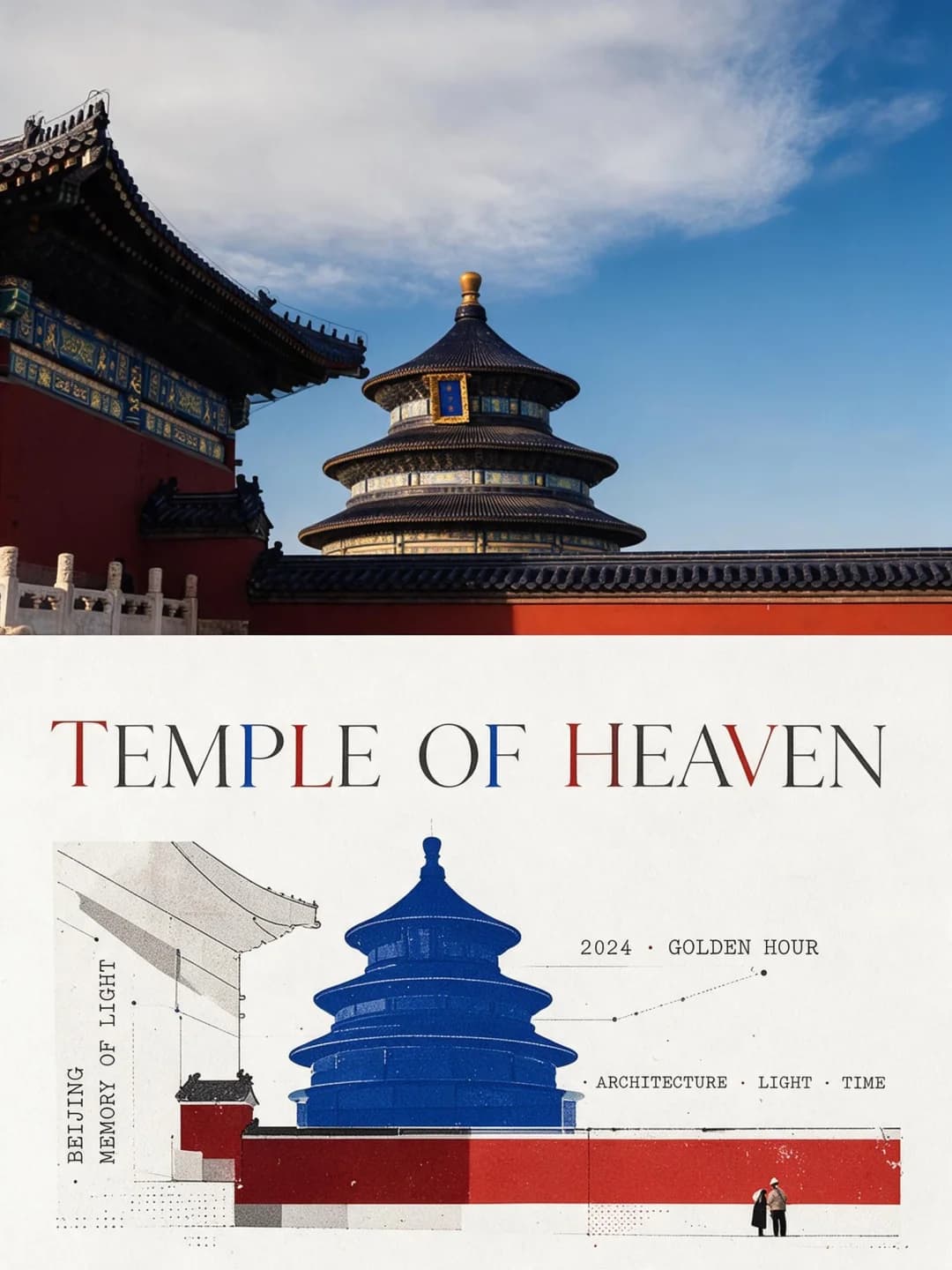
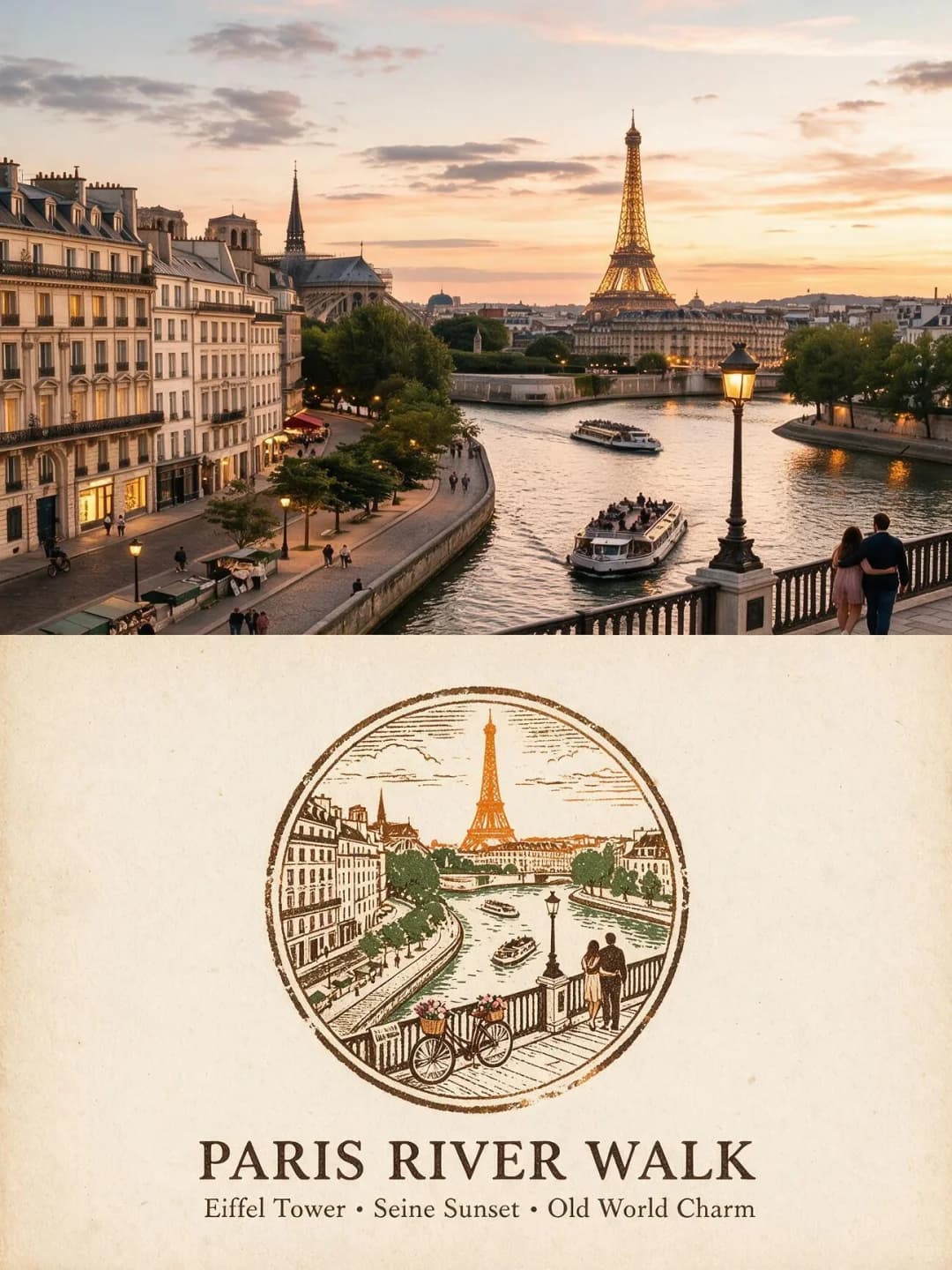
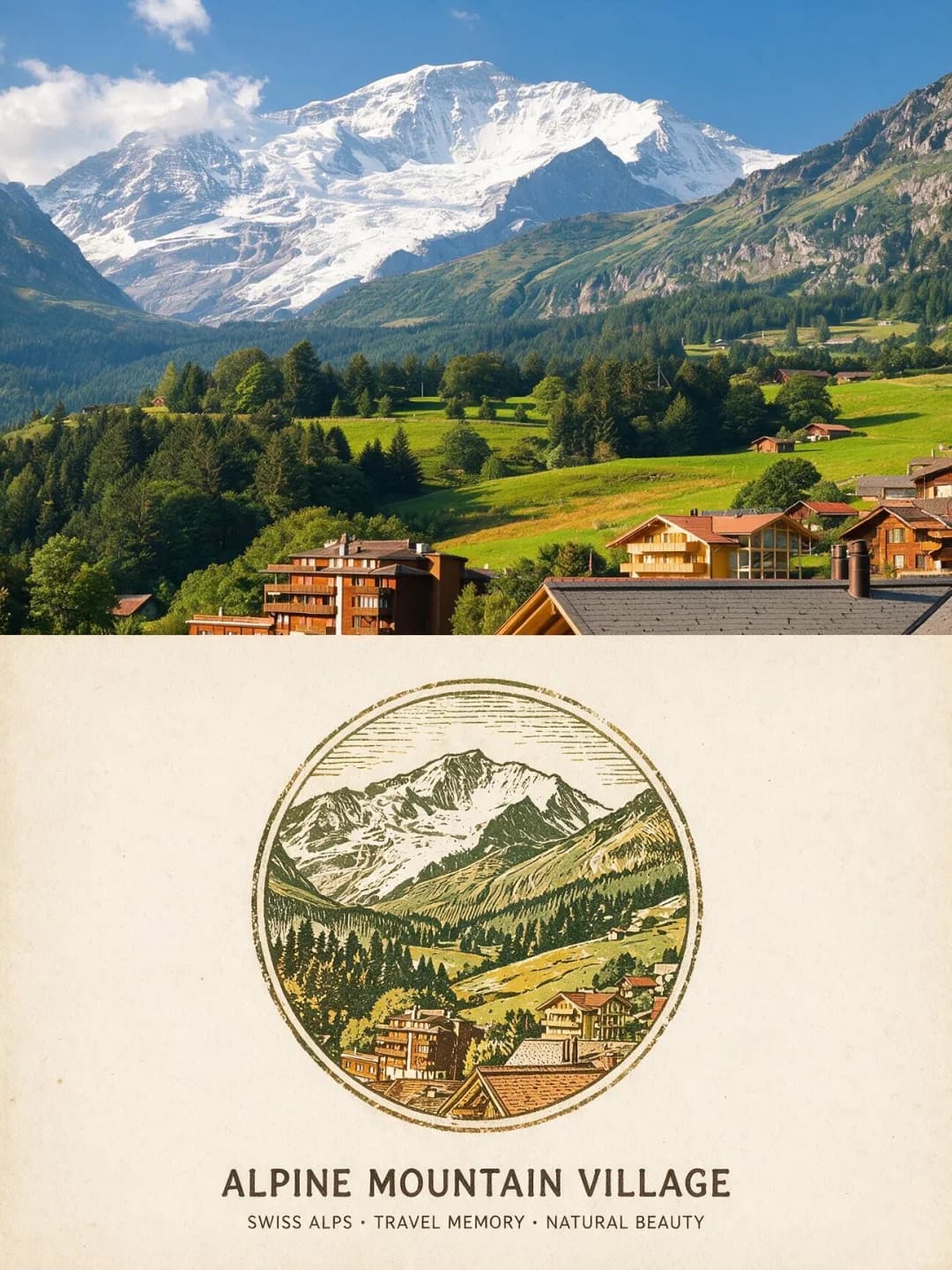
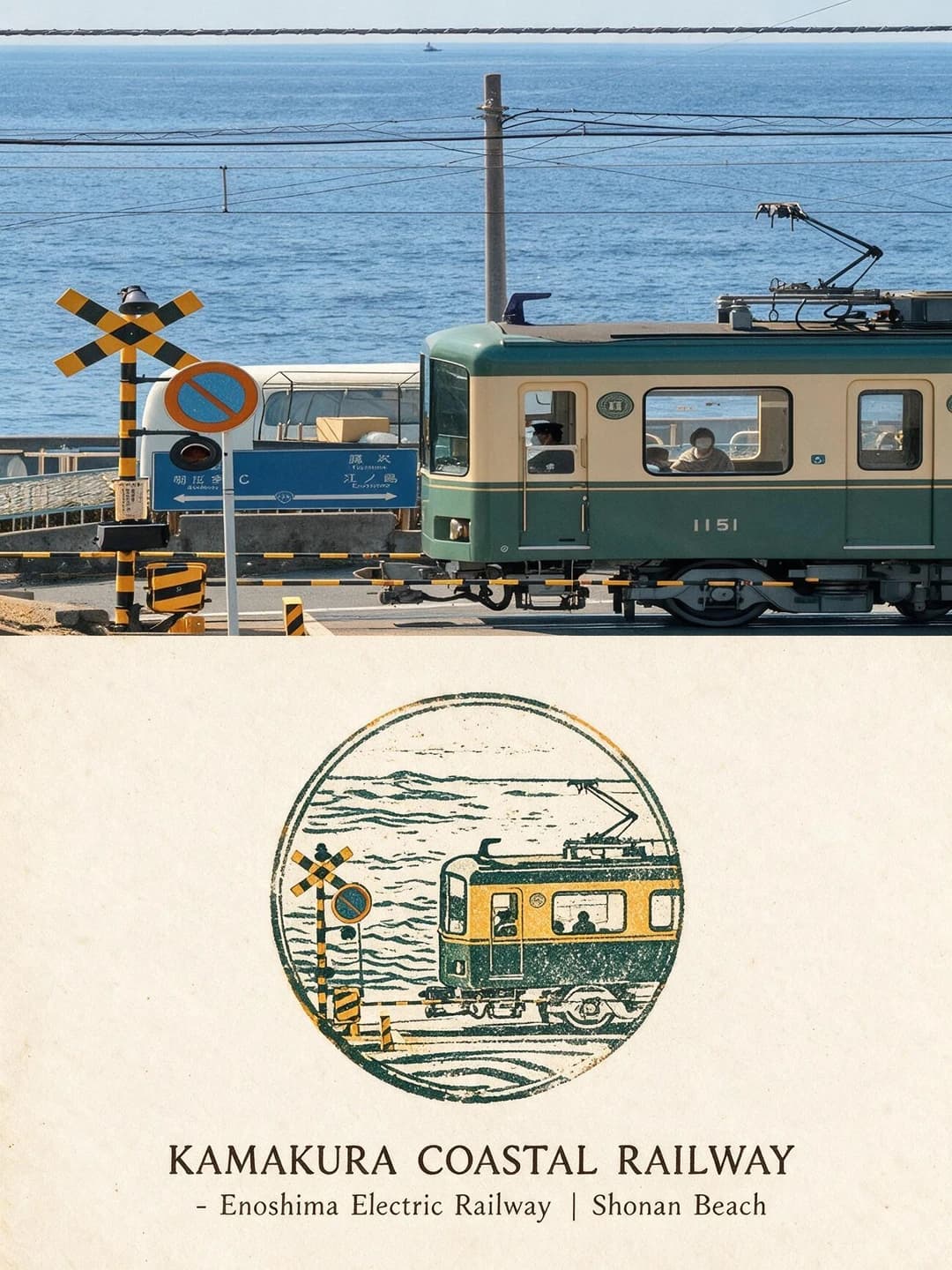
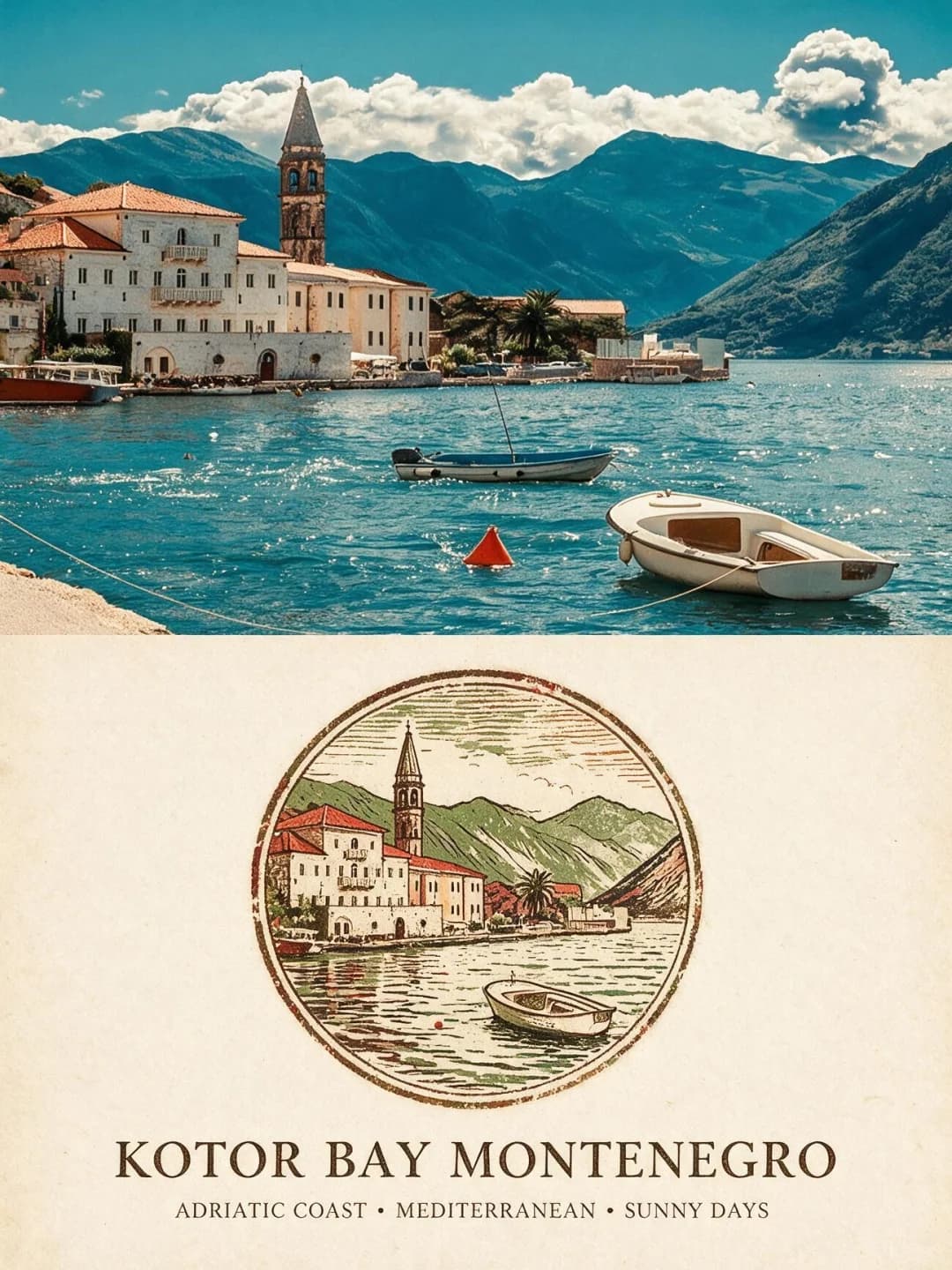
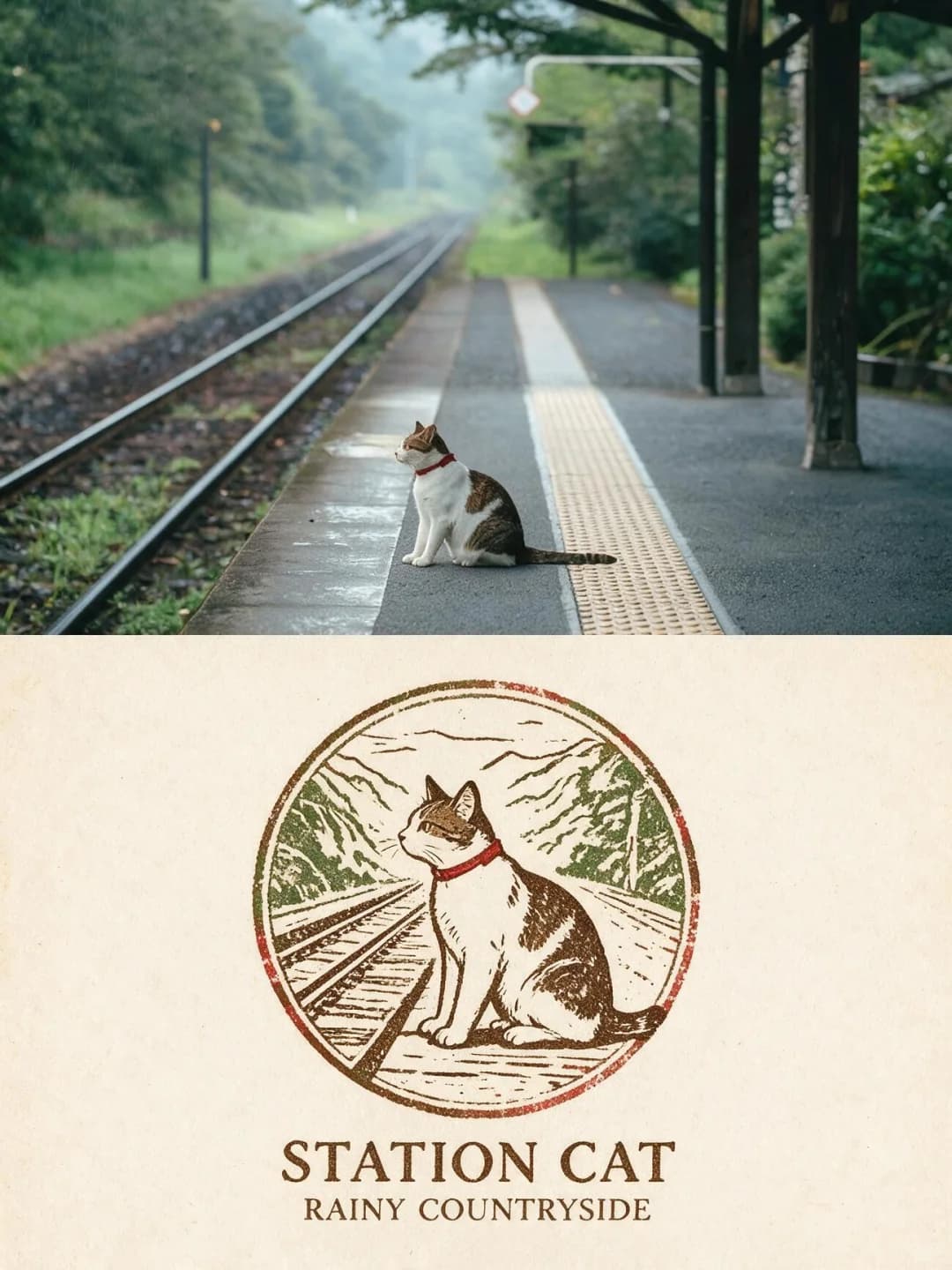
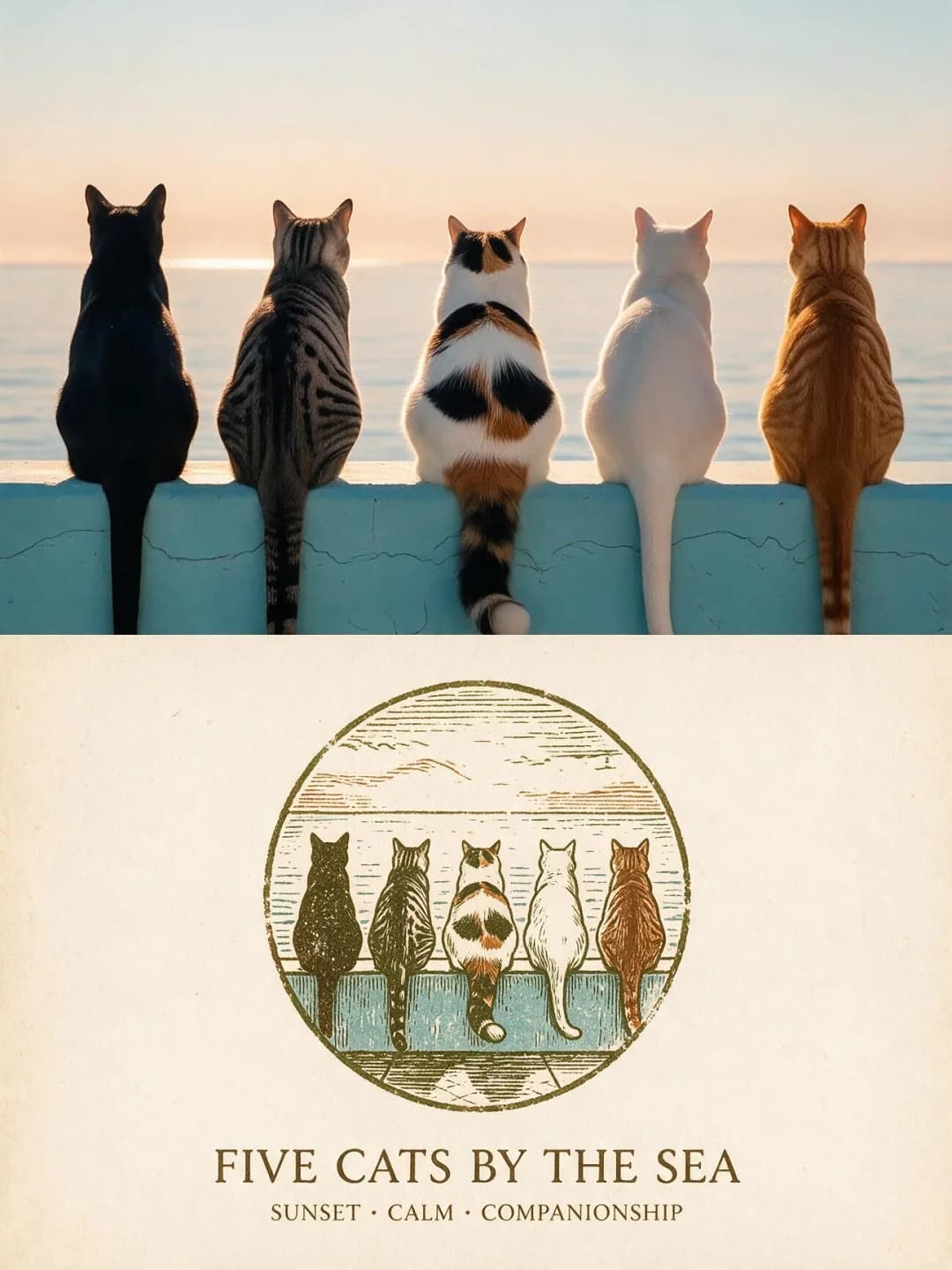
Upload a photo and get back a 3:4 postcard: your original shot on top, the same scene hand-carved into a woodcut stamp below, with your own caption underneath.
100 credits per image · about a minute · New accounts get 500 credits — 5 free images.
Try it with your own photo
New accounts get 500 credits — 5 free images.
Examples
Every image below was made with the prompt on this page.
What is a vintage stamp postcard?
A vintage stamp postcard splits a 3:4 frame in half. The top half keeps your original photograph untouched. The bottom half is aged ivory paper carrying a round commemorative stamp — the same scene redrawn as a woodcut rubber stamp, in two or three faded ink colours pulled from your photo, with the uneven inking and slight misregistration of a stamp pressed by hand. Underneath it sits your caption, set like a line from a mid-century travel journal.
Works well with
Works best on photos with a clear subject and a readable background: a landmark, a train, a street, a pet, a small group of people. Travel shots are the sweet spot, because the stamp reads as a place you visited.
Struggles with
Struggles with very dark photos, heavy motion blur, dense crowds where no single subject dominates, and screenshots or images that are mostly text. The stamp needs recognisable shapes to carve.
The prompt behind this tool
This is the full prompt, translated into English. Copy it and use it with any image model that accepts a reference photo.
Generate a vertical 3:4 vintage commemorative postcard from the reference photo provided. The reference photo is the only basis for the whole composition: every person, animal, plant and object in it must be preserved exactly — the same count, the same poses, the same physical features, the same relationships to one another. Do not add a subject and do not remove one.

Split the frame into two equal halves, with the dividing line at the exact vertical centre:
The top half carries the original photograph in full, with all of its real photographic texture, cropped horizontally only as far as the frame requires. Nothing inside the photo may be altered.
The bottom half is warm, aged ivory paper. On it, distil the photo's core subject — plus one or two of its most recognisable background details — into a single round vintage commemorative stamp, centred.

The stamp keeps only the three to five most essential subjects and omits the rest. It must sit entirely within the bottom half of the frame: it may not cross the centre line and it may not overlap the photograph above.

Render the stamp strictly as a hand-carved rubber stamp crossed with an etched print: describe the scene in broken lines of uneven weight with naturally worn, ragged edges, simplifying realistic detail to a minimum while fully preserving each subject's silhouette, posture and instant recognisability. Take two or three dominant colours from the original photo and convert them into slightly faded old stamp-ink shades — brick red, ochre, turmeric yellow, olive green and deep brown are typical of old stamps. Reproduce the marks of a stamp genuinely pressed by hand: ink that varies in density, colour plates that register slightly off, and patches where the ink skipped and the bare paper shows through.

Directly beneath the stamp, draw two horizontal blank bands, centred: the upper one wider, the lower one narrower, with a gap between them. These bands are where a caption will later be written by hand, so their interiors must be clean, empty paper containing no letters, words, numerals or symbols.

The overall mood is mid-twentieth century: an old travel journal, a field notebook of nature observations, a well-franked postcard — warm and nostalgic.

Strictly forbidden: altering, adding or removing any subject from the original photo; incongruous styles such as slick modern vector art, anime, watercolour bleed, thick impasto oil paint, 3D rendering or glossy icons; a left-right split instead of a top-bottom one; and any watermark, platform play button, Chinese subtitles, QR code or heavy black border.
Frequently asked questions
- Will it change the people or animals in my photo?
- It should not. The prompt tells the model to keep every subject, their poses and how they relate to each other, and to neither add nor remove anyone. The top half is your photograph, adapted only by cropping.
- Can I choose the text on the postcard?
- Yes, and you should. Type your own title and keyword line and the model sets them as written. If you leave them blank it draws two empty bands instead, so you can add the caption yourself later.
- Why is the caption in English in all the samples?
- Only because the samples happen to be. You can type your caption in any language and it will be set as you wrote it.
- What size do I get?
- 2K is 1792 × 2400 pixels, which prints cleanly at postcard size. 4K doubles that and costs 200 credits instead of 100.
- How long does it take?
- Usually 60 to 90 seconds. It is a large image and the model is doing two quite different jobs in one frame.
- Can I use my own prompt instead?
- Not in this tool — it runs one fixed, tested prompt. The full text is published on this page, so you can copy it and run your own variations anywhere that accepts image prompts.
- What happens to my photo?
- It is stored privately so the generator can read it, and deleted on a schedule. It is never made public, never shown to other users, and never used to train a model.
- What if I don't like the result?
- Every generation is a fresh roll, so running the same photo again gives you a different stamp. Results vary most with the source photo — a clear single subject gives the most reliable postcard, a dense crowd the least. Credits are only refunded when a generation fails outright and you receive nothing.